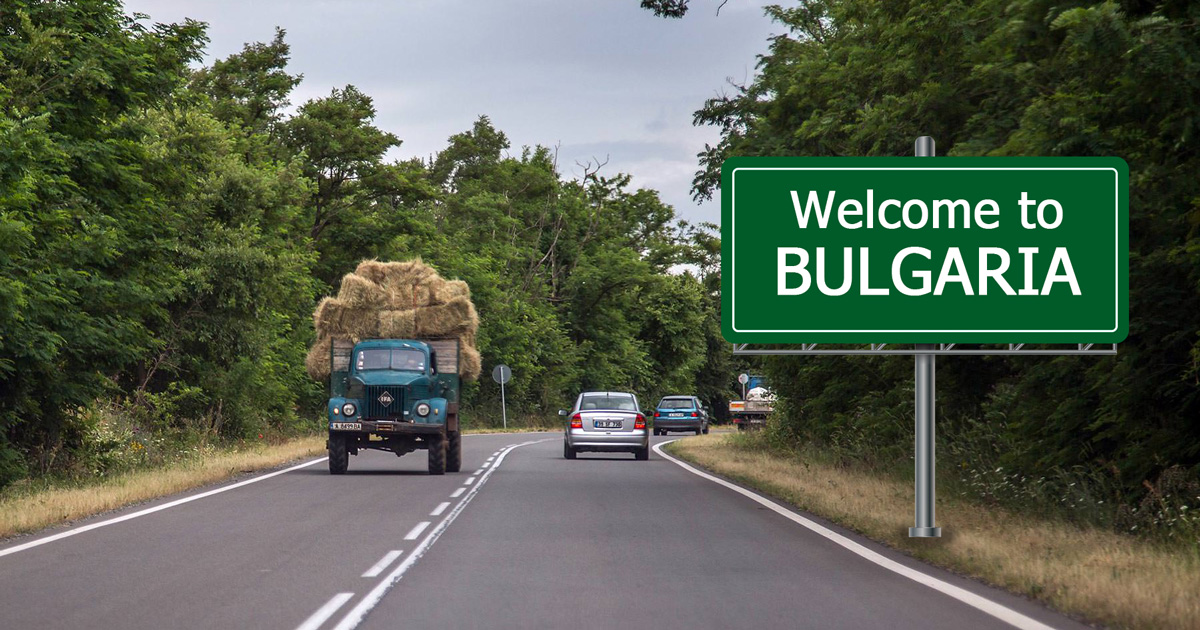
Bulgaria is well suited to independent travel by car. Driving gives you an easy way to combine seaside resorts, historic towns, mountain regions, monasteries and natural attractions that are not always convenient to reach by public transport.
You can use your own car or rent one in Bulgaria. In either case, it is worth checking the required documents, road charges, parking rules and local traffic regulations in advance. Mountain roads, resort areas and winter driving require particular attention.
Contents:
- What You Need for a Road Trip to Bulgaria
- Bulgaria Vignette: Price and Rules
- How Much Does a Road Trip Around Bulgaria Cost?
- Roads in Bulgaria: What to Expect Behind the Wheel
- Speed Limits in Bulgaria
- Basic Traffic Rules
- Fines in Bulgaria
- Parking in Bulgaria
- Car Rental in Bulgaria
- What You Should Have in the Car
- Traveling Around Bulgaria by Car in Winter
- What to Do in Case of a Breakdown or Accident
- Road Trip Routes Around Bulgaria
- Useful Tips for a Road Trip Around Bulgaria
- Is It Worth Traveling Around Bulgaria by Car?
What You Need for a Road Trip to Bulgaria
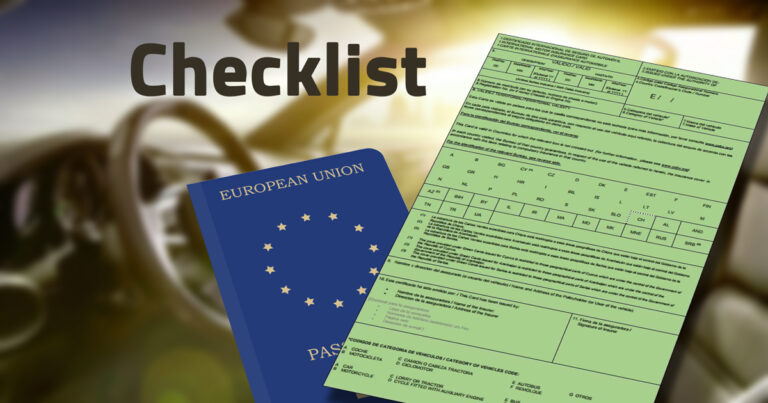
Before your trip, check your vehicle documents, driving licence and insurance. The exact requirements depend on the country that issued your licence and on who owns the vehicle.
For citizens of EU countries, a valid national driving licence is recognised in Bulgaria. For drivers from other countries, the rules may differ, so it is better to check the requirements for the country where your licence was issued. When renting a car, the rental company’s own terms and conditions also apply.
If the car belongs to someone other than the driver or to a company, it is worth preparing documents confirming your right to use the vehicle in advance. For a rental car, the main documents are normally provided by the rental company.
The vehicle must have valid insurance. If you are traveling outside the EU, check the insurance coverage separately, especially if your route passes through several countries.
Bulgaria has used the euro since 1 January 2026. This is important when planning your budget and checking older travel articles: prices in the former local currency that still appear online may be outdated. Read more in the article: Money and Prices in Bulgaria in 2026
Bulgaria Vignette: Price and Rules
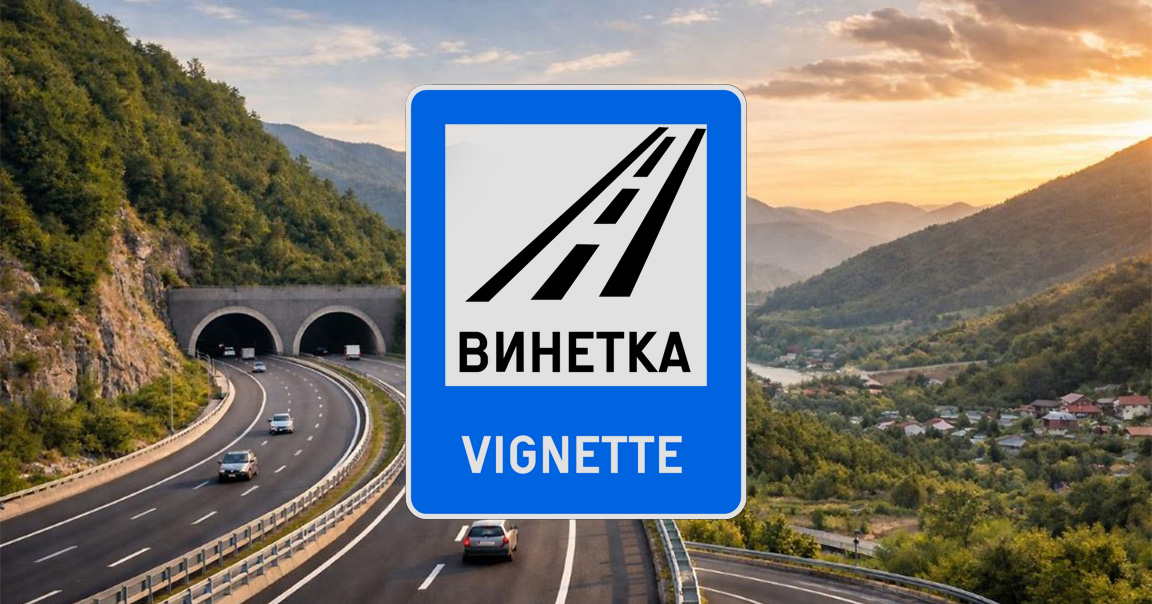
For passenger cars up to 3.5 tonnes, Bulgaria uses an electronic vignette on the tolled road network. It is not a paper sticker placed on the windscreen: the vignette is issued for the vehicle and linked to its registration number.
It is best to check the current rates directly before your trip on the BG Toll website, as road charges may change.
Vignette type |
Validity |
Price |
|---|---|---|
Daily |
1 day |
€5.30 |
Weekend |
Friday 12:00 to Sunday 23:59 |
€6.60 |
Weekly |
7 days |
€10.00 |
Monthly |
1 month |
€19.90 |
Three-month |
3 months |
€35.90 |
Annual |
1 year |
€64.50 |
The prices in the table apply to vehicles up to 3.5 tonnes. On the official BG Toll website, you can select the country of registration and enter the vehicle registration number when purchasing an electronic vignette.
For a trip lasting several days, a weekly vignette is usually sufficient. If your trip lasts only one or two days, compare the daily and weekend options with the weekly vignette. The weekend vignette is valid from Friday at 12:00 to Sunday at 23:59.
Enter the registration number and country of registration carefully when purchasing the vignette. Incorrect vehicle details may cause problems during inspections.
How Much Does a Road Trip Around Bulgaria Cost?
The exact cost of a road trip depends on the vehicle, season, route length and amount of paid parking. For a general idea, it is enough to consider several main expenses.
Expense |
Approximate cost |
|---|---|
Electronic vignette |
from €5.30 |
Euro 95 petrol |
about €1.66 per litre |
Diesel |
about €1.92 per litre |
Parking |
free or paid, depending on the city and season |
The average price of Euro 95 petrol in Bulgaria at the end of 2026 was about €1.66 per litre, while diesel was about €1.92. These are national averages, so the price at a particular fuel station may differ. Do not base your budget on one fixed fuel price for the entire season: petrol and diesel prices change.
Roads in Bulgaria: What to Expect Behind the Wheel
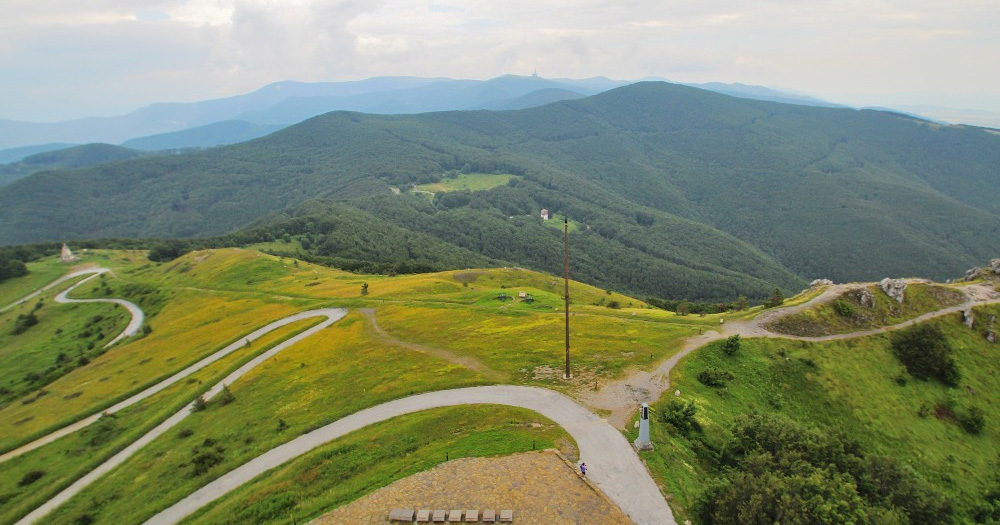
Bulgaria has modern motorways, regular intercity roads and narrow mountain routes. Road conditions can vary considerably even along the same journey.
On the main routes, driving is generally straightforward. Secondary mountain roads can be more demanding, with steep climbs and descents, bends, narrow sections and slower traffic.
When planning a road trip around Bulgaria, do not rely on distance alone. On a mountain road, 50 kilometres can take considerably longer than the same distance on a motorway.
Take particular care when driving at night or in bad weather. Before a long journey, it is useful to check the condition of the route, especially if it passes through mountain passes or small settlements.
You may also encounter agricultural machinery, cyclists and animals on the road. On secondary routes, do not expect the same driving speeds as on motorways.
Speed Limits in Bulgaria
The following basic speed limits apply to category B passenger cars:
Road type |
Maximum speed |
|---|---|
Built-up area |
50 km/h |
Outside built-up areas |
90 km/h |
Expressway |
120 km/h |
Motorway |
140 km/h |
If road signs impose a different limit, you must follow the posted signs. The basic limits for category B vehicles are confirmed by the Bulgarian State Agency for Road Safety.
Bulgaria uses both conventional speed enforcement and average-speed cameras on certain monitored sections. Exceeding the average speed is subject to the penalties prescribed by law for the corresponding speed violation.
Do not rely on the habit of local drivers flashing their headlights to warn others about speed cameras. Following the posted speed limit is safer than relying on warnings from oncoming vehicles.
Basic Traffic Rules
In Bulgaria, vehicles drive on the right-hand side of the road. Seat belts must be worn by everyone in the vehicle. Using a phone while driving is prohibited unless the driver uses a hands-free system.
Headlights or daytime running lights must also be switched on during the day. This rule applies to vehicles regardless of the season.
The permitted blood alcohol concentration for drivers is 0.5 per mille. Exceeding this limit can result in fines, while higher levels carry significantly more serious penalties.
For tourists, the simplest approach is to follow the rule that alcohol and driving do not mix. This is particularly important after wine tastings in Melnik, visits to wineries or an evening meal at a resort.
Fines in Bulgaria
Violations of traffic rules in Bulgaria can result in fines, while serious offences may also lead to temporary suspension of driving rights and other penalties. Tourists should pay particular attention to speed limits, seat belts, hands-free phone use and driving after consuming alcohol.
Below are some of the main fines that may be relevant to passenger-car drivers. The amounts have been converted to euros and rounded to the nearest €1, so they should be checked against the current table published by the Bulgarian State Agency for Road Safety before your trip.
Violation |
Fine |
Additional sanctions |
|---|---|---|
Exceeding the speed limit in a built-up area by up to 10 km/h |
€10 |
— |
Exceeding the speed limit in a built-up area by 11–20 km/h |
€26 |
— |
Exceeding the speed limit in a built-up area by 21–30 km/h |
€51 |
— |
Exceeding the speed limit in a built-up area by 31–40 km/h |
€205 |
Driving suspension may apply in cases provided by law |
Exceeding the speed limit in a built-up area by more than 40 km/h |
€307 |
Driving suspension for 2 months |
Exceeding the speed limit outside a built-up area by up to 10 km/h |
€10 |
— |
Exceeding the speed limit outside a built-up area by 11–20 km/h |
€26 |
— |
Exceeding the speed limit outside a built-up area by 21–30 km/h |
€51 |
— |
Exceeding the speed limit outside a built-up area by 31–40 km/h |
€153 |
— |
Exceeding the speed limit outside a built-up area by 41–50 km/h |
€205 |
— |
Exceeding the speed limit outside a built-up area by more than 50 km/h |
€307 |
Driving suspension for 3 months |
Using a phone while driving without hands-free |
€51 |
— |
Not wearing a seat belt |
€51 |
— |
Improper use of a child restraint system |
€51 |
— |
Improper overtaking without creating an immediate danger |
€26 |
— |
Improper overtaking creating an immediate danger |
€102 |
— |
Violation of right-of-way rules |
€51 |
— |
Driving in the emergency lane of a motorway or expressway |
€511 |
Driving suspension for 3 months |
Driving against traffic on a motorway or expressway |
€511 |
Driving suspension for 3 months |
Penalties can be significantly higher for repeated or systematic violations. In particular, the law provides for doubled or tripled fines for certain serious speeding offences, so the amounts shown in the table should not be treated as the maximum possible penalties for every violation.
Separate sanctions apply to driving under the influence of alcohol or drugs. Refusing to undergo an alcohol or drug test is also subject to serious penalties, so such offences should be considered separately from ordinary traffic fines.
Before your trip, always check the current fines on the website of the Bulgarian State Agency for Road Safety. The agency notes that its sanctions tables are updated periodically. You can also check for outstanding fines and other liabilities through the electronic services of the Bulgarian Ministry of Interior.
If a fine is issued electronically and is not appealed, a 30% discount may apply when it is paid within the statutory period. The exact payment conditions should also be checked using information from the Ministry of Interior, as they depend on the type of penalty notice issued.
Parking in Bulgaria
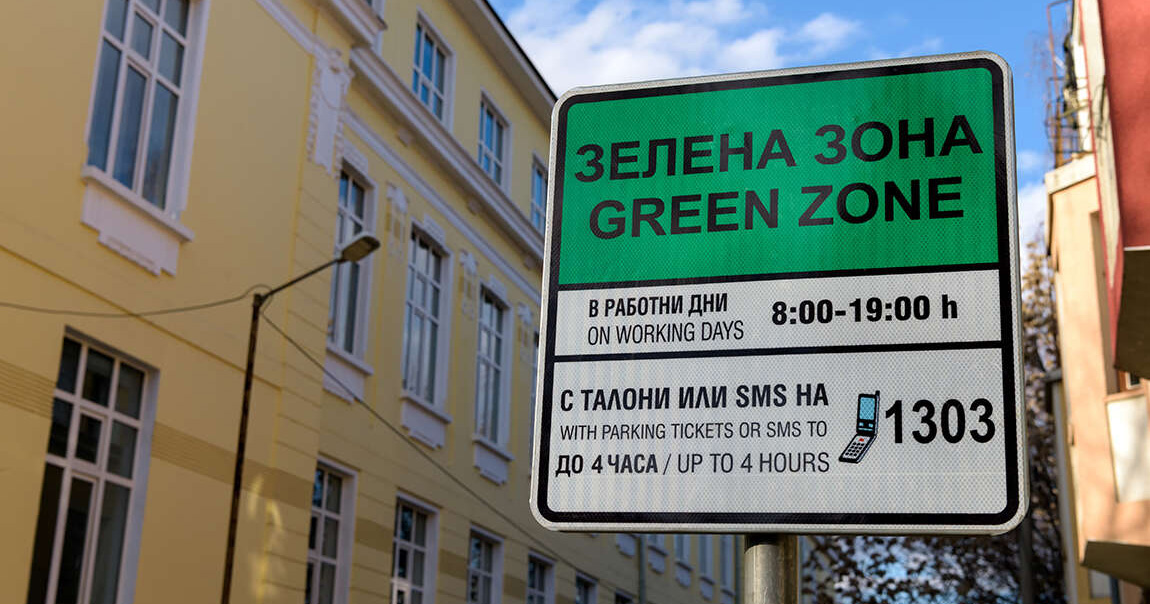
Parking can sometimes be a more serious issue than the journey between cities. Larger cities have paid parking zones, with the exact rules determined by the relevant municipal authority.
For example, Varna has blue and green parking zones with different rules and operating hours. In Burgas, the paid green zone operates on an extended daily schedule during the summer.
Free parking does not necessarily mean that you can leave your car anywhere. Municipal enforcement services operate in cities, and wheel clamps and tow trucks may be used. Do not leave your car on a pavement, near an intersection, in front of an entrance or in a space clearly intended for another type of vehicle. If a sign or road marking requires payment, use the designated payment method.
When planning a road trip around Bulgaria, it is useful to search for accommodation based not only on price and location but also on parking availability. In the historic centres of Plovdiv, Nessebar, Veliko Tarnovo and other cities, it is often more convenient to leave the car outside the central area.
Car Rental in Bulgaria
If you fly to Bulgaria, you can rent a car at the airport or in the city. For traveling around the country, it is usually more convenient to collect the car immediately after arrival, especially if your itinerary includes mountain areas, small towns and natural attractions.
Before signing the rental agreement, check:
- the deposit amount;
- insurance and the excess;
- any mileage limit;
- the fuel policy;
- conditions for an additional driver;
- whether driving into other countries is permitted;
- whether there are restrictions on certain roads;
- the vehicle return conditions.
If you are planning a trip from Bulgaria to Greece, Romania or Turkey, agree on cross-border travel with the rental company in advance. Having the legal right to enter a neighbouring country does not automatically mean that your rental agreement allows you to do so.
When collecting the car, take photos of the bodywork, wheels, windows and interior. Also check the fuel level and record any existing damage.
What You Should Have in the Car
Passenger cars in Bulgaria are required to carry a mandatory emergency kit. It includes a warning triangle, first-aid kit, fire extinguisher and reflective vest.
Before a long journey, it is also useful to check the spare wheel or repair kit, tyre pressure, fluid levels and windscreen wipers.
In winter, carry windscreen washer fluid suitable for low temperatures, a tow rope, gloves, a flashlight and snow chains. Bulgarian road authorities also recommend keeping a reserve of fuel and checking the technical condition of the vehicle in advance.
Traveling Around Bulgaria by Car in Winter
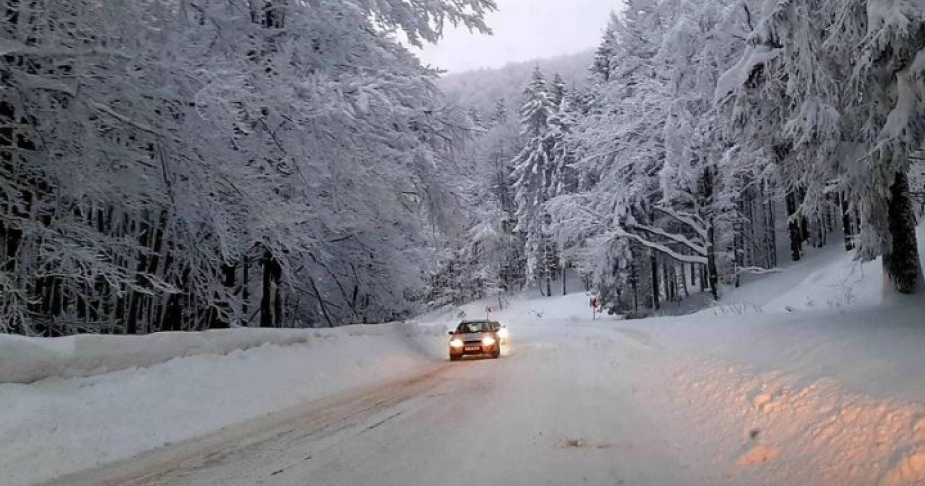
A car remains a convenient way to travel in winter, but the route requires more careful planning. This is particularly important when traveling in the Rila, Pirin, Rhodope and other mountain regions.
From 15 November to 1 March, the vehicle must be equipped with tyres intended for winter conditions or tyres with a tread depth of at least 4 mm. Studded tyres are prohibited. Snow chains are permitted, and their use may become mandatory in appropriate road conditions.
Before driving into the mountains, check the weather forecast and road conditions. If snow or ice is expected, allow extra time for the journey and avoid planning long drives after dark.
What to Do in Case of a Breakdown or Accident
If your car breaks down on the road, first make sure the passengers are safe and mark the stopped vehicle appropriately. On motorways, it is particularly important not to use the emergency lane for driving or stopping unless necessary.
If you leave the vehicle because of a breakdown or technical problem, you should wear a reflective vest. Place the warning triangle at an appropriate distance from the vehicle. On motorways and roads where the permitted speed is above 90 km/h, the requirements specify a greater distance for the warning sign.
In the event of an accident or a situation that poses a danger to people, you can call the European emergency number 112. It is used to contact the police, ambulance service and fire brigade.
If the vehicle is rented, also notify the rental company and follow the terms of the rental agreement.
Road Trip Routes Around Bulgaria
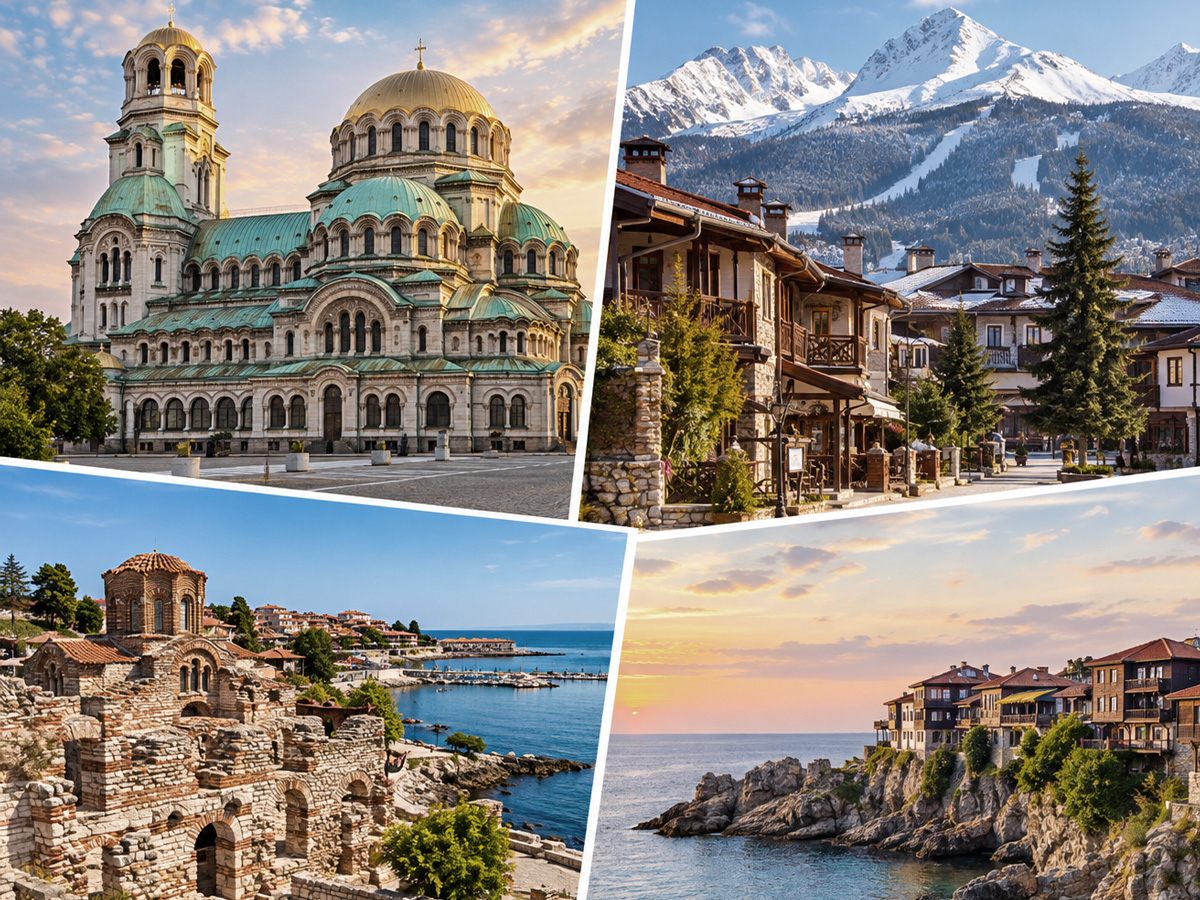
A car is particularly useful for traveling around Bulgaria if you want to combine several regions in one trip. Below are several ready-made routes with approximate road distances to make it easier to estimate the journey time.
Sofia – Rila Monastery – Bansko
The distance from Sofia to Rila Monastery is about 120 km, while the distance from the monastery to Bansko is approximately 90–95 km. The complete route from Sofia via Rila Monastery to Bansko is about 215 km, excluding additional trips around the area.
This trip is best planned for at least 2 days if you want to visit the monastery without rushing and spend some time in Bansko. In winter, allow extra time: after the main road, the route enters a mountainous section with bends and potentially difficult weather conditions.
Sofia – Plovdiv – Veliko Tarnovo
Sofia is about 157 km from Plovdiv, while Plovdiv is about 207 km from Veliko Tarnovo. The total route is approximately 364 km, excluding additional driving within the cities and surrounding areas.
This is a convenient option for discovering historic Bulgaria. Allow around 3 days for the route so that the trip does not turn into continuous driving between cities.
Sofia – Melnik – Sandanski
Sofia is about 155–160 km from Sandanski, while the distance from Sandanski to Melnik is approximately 21–22 km. If you travel from Sofia via Sandanski to Melnik, the total distance is about 180 km one way.
This route is well suited to an independent trip through southwestern Bulgaria. You can add the Rozhen Monastery, Rupite and other local attractions, so it is worth allowing 2–3 days for the route.
Burgas – Sozopol – Nessebar
Sozopol is about 35 km south of Burgas, while the road distance between Sozopol and Nessebar is approximately 66 km. The complete Burgas – Sozopol – Nessebar route is therefore about 100 km.
This is one of the convenient options for a road trip along the Bulgarian Black Sea coast. In summer, however, allow for heavy traffic and limited parking in popular resort towns.
Sofia – Rila Monastery – Melnik – Sandanski
A more extensive route through southwestern Bulgaria can be planned via Rila Monastery, Melnik and Sandanski. Sofia is about 120 km from Rila Monastery, while the distance to the Melnik and Sandanski area depends on the road and stops you choose, so it is reasonable to allow several hundred kilometres for the complete loop.
This route is best completed in 3–4 days, especially if you want to do more than simply tick attractions off a list and actually walk around Melnik, visit the monastery and spend some time in Sandanski. When planning, do not focus only on kilometres: mountain and secondary roads require more time.
Useful Tips for a Road Trip Around Bulgaria
Before starting your trip:
- check your driver’s and vehicle documents;
- check the insurance requirements;
- purchase an electronic vignette;
- check that the registration number is entered correctly on the vignette;
- download offline maps;
- check parking availability at your accommodation in advance;
- allow for mountainous terrain when estimating journey times;
- do not plan an overly tight itinerary for a single day;
- check road conditions and the weather before driving in winter;
- if you rent a car, carefully read the rental agreement and insurance conditions.
In larger cities, it does not always make sense to use a car for every journey. Sometimes it is more convenient to leave the car in a car park and continue on foot. Between cities and natural attractions, however, a car gives you considerably more freedom.
Is It Worth Traveling Around Bulgaria by Car?
A car is particularly convenient for an independent trip if you plan to visit several regions or attractions outside major cities. You can change your route as you go, stop in small towns and avoid depending on bus schedules.
At the same time, a car brings additional expenses and requires attention to parking. During the resort season, finding a free space in popular towns can be difficult, while in the mountains you need to take road and weather conditions into account.
If you arrange the vignette in advance, check parking rules, prepare your documents and avoid trying to drive mountain routes too quickly, a road trip around Bulgaria becomes a convenient way to discover not only the seaside resorts but also the country’s inland regions.