In 2026, Bulgaria switched to the euro, so tourists no longer need to deal with the lev when paying for accommodation, food and transport. However, changing the currency has not automatically made holidays cheaper or more expensive. Your spending depends on the resort, the season, where you stay and your travel habits.
Prices in Bulgaria can vary even within the same city. Lunch at a restaurant popular with locals will cost less than dinner at a seafront restaurant. At large supermarket chains, the prices of everyday groceries are generally more predictable than those at small shops in tourist areas.
Visitors who have been coming to Bulgaria for years are particularly likely to notice price increases. After the switch to the euro, some independent retailers, especially in resort areas, simply replaced lev price tags with euro prices while keeping the same numbers. Some independent restaurants along the coast also raised their prices noticeably. However, this does not mean that every business did the same or that every product became more expensive by the same amount.
This guide covers Bulgaria’s currency, whether it is better to pay by card or in cash, how much groceries, restaurant meals, beach services, excursions and transport cost, and how much to budget for your trip.
Contents
- Bulgaria Currency in 2026
- Is Bulgaria Cheap or Expensive for a Holiday?
- Comparing Prices Across Bulgaria
- How Prices Change with the Seasons
- Cards, Apple Pay, Google Pay or Cash
- ATMs and Fees
- Grocery Prices and Restaurant Meals
- Drink and Beer Prices
- Beach Umbrella and Sunbed Prices
- Excursion Prices
- Taxis, Public Transport and Other Expenses
- Tipping in Bulgaria
- How Much Money to Bring on Holiday
- Frequently Asked Questions
Bulgaria Currency in 2026
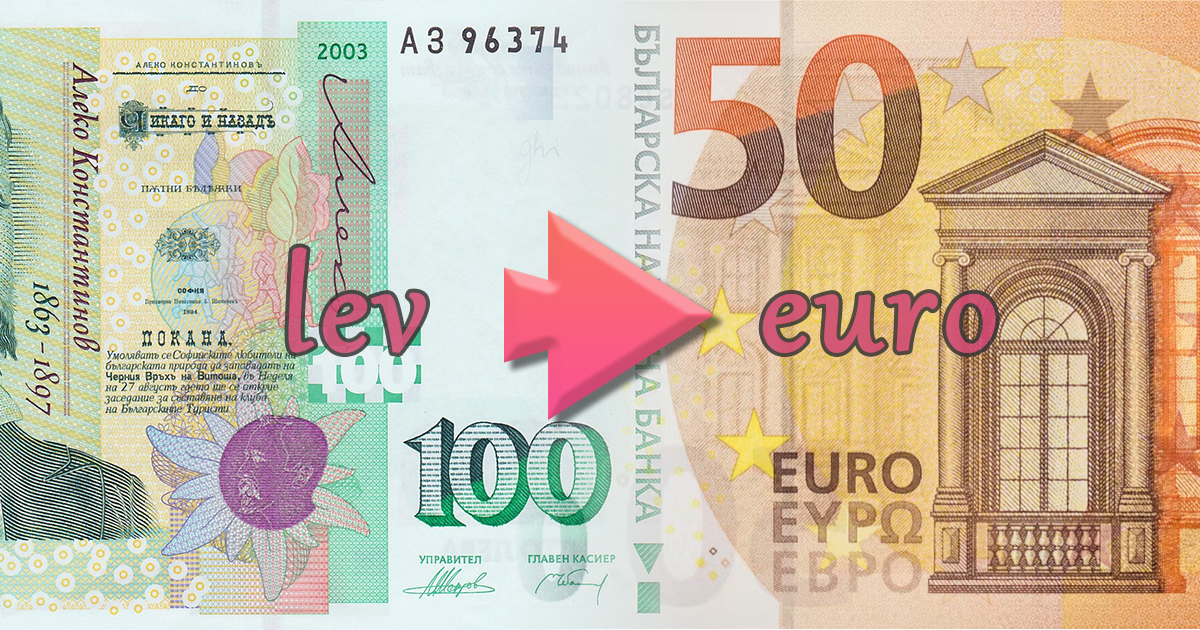
Since 1 January 2026, Bulgaria’s official currency has been the euro (€). It replaced the Bulgarian lev at the fixed conversion rate of €1 = 1.95583 lev. This is not a market exchange rate that changes daily, but the official rate established for the currency changeover. The information is published on the European Commission website.
Everyday payments are made using euro banknotes, coins and bank cards. The mandatory period during which prices had to be displayed in both lev and euro ended on 8 August 2026.
If you still have lev left over from a previous trip, you can exchange it for euros. The Bulgarian National Bank (BNB) exchanges lev banknotes and coins at the official rate without a fee and with no time limit. Commercial banks have been allowed to charge for this service since 30 June 2026. More details are available on the Bulgarian National Bank website.
Is Bulgaria Cheap or Expensive for a Holiday?
Bulgaria remains a destination where holiday costs can vary considerably. You can eat at inexpensive cafés, buy groceries at supermarkets and use public transport, but staying in popular resort areas can be significantly more expensive. The difference is particularly noticeable between places away from the main tourist streets and restaurants overlooking the sea.
Compared with previous visits, some travellers have noticed not only the currency change but also higher prices. In some resorts, independent shops have kept the same number on the price tag but changed the currency. For example, an item that cost 5 lev may now be sold for €5. There have also been cases of prices at independent coastal restaurants rising to one and a half times their previous level after conversion.
These are observations about specific businesses and shops, not a universal trend across the country. In April 2026, the European Central Bank noted that the overall effect of the euro changeover on consumer prices was limited and largely one-off, although changes were more noticeable in the services sector. Read the ECB overview of Bulgaria’s euro changeover for details.
Large supermarket chains, including Lidl, did not change their price tags as noticeably during the transition to the euro. Grocery prices continued to depend on the brand, promotions and product category. Shopping at supermarkets can therefore make it easier to control spending than eating every day at restaurants on the seafront.
What Affects the Cost of a Holiday?
- Region. Sofia, the Black Sea resorts, smaller historic towns and mountain areas differ in accommodation costs, food prices and entertainment.
- Season. Demand for accommodation, beach services and excursions at popular resorts is higher in July and August.
- Food. Supermarket groceries and simple cafés cost less than full-service restaurants.
- Transport. Public transport is considerably cheaper than taking frequent taxi rides.
- Accommodation. A seafront hotel, an apartment with a kitchen and accommodation farther from the beach will result in different budgets.
- Activities. Beach umbrellas and sunbeds, boat trips, excursions and equipment rental can significantly increase your spending.
Comparing Prices Across Bulgaria
When comparing holiday costs, look beyond supermarket prices to include restaurants, accommodation and seasonal activities. Sofia and popular seaside resorts in the height of summer are often among the more expensive options overall. Eating out in Plovdiv and Veliko Tarnovo is generally cheaper than in the capital, although actual prices depend on the establishment.
The Black Sea Coast
At resorts such as Sunny Beach, Golden Sands and Sozopol, your total spending depends heavily on location. Seafront restaurants, beachfront bars and shops near large hotels cater primarily to tourists. More affordable cafés and grocery shops are often found away from the promenade.
Beach services and activities are additional expenses. If you rent an umbrella and sunbeds every day, eat at restaurants every evening and book excursions, your spending can add up quickly. Staying in an apartment with a kitchen and preparing some of your own meals can help keep costs down.
Sofia
In the capital, a significant share of holiday spending goes on public transport, museums, cafés and restaurants. According to Numbeo data for 2026, a meal at an inexpensive restaurant costs around €13 on average, while a three-course dinner for two at a mid-range restaurant costs about €50, excluding drinks. Grocery prices are not always much higher than in other major cities, but cafés and activities can be more expensive.
Sofia is convenient for a short trip without a car. The metro and surface public transport make it easy to reach the main districts without relying on taxis. Staying near a metro station and choosing cafés away from the central tourist streets will make your budget easier to manage.
Plovdiv
Plovdiv often works out cheaper than Sofia for eating out. The same 2026 Numbeo data puts a meal at an inexpensive restaurant at around €8, while a three-course dinner for two at a mid-range restaurant costs about €40, excluding drinks. Coffee and beer at local establishments are also often cheaper than in the capital.
Prices in the tourist-focused Old Town can be higher than the Plovdiv average. To save money, simply move away from the busiest streets and choose places where local residents eat.
Veliko Tarnovo
Veliko Tarnovo is a good choice for a weekend break combining historic sights with walks around the city. A meal at an inexpensive restaurant costs around €10, while a three-course dinner for two at a mid-range restaurant is about €41, excluding drinks. Coffee and local beer are generally cheaper than in Sofia.
Food in the tourist centre and near Tsarevets Fortress can cost more than in residential areas. However, a short visit does not require much spending on transport if you choose accommodation within walking distance of the main attractions.
Mountain Areas
Prices in the mountains depend on whether you visit for hiking in summer or skiing in winter. At Bansko and other popular ski resorts, accommodation and food are only part of the budget: you also need to account for lift passes, equipment rental, lessons and transfers. During the winter season, these costs can make up a large share of your spending.
Costs are often lower in summer, especially if you plan to hike and do not use the lifts every day. For example, an adult return ticket for the Bansko gondola costs €27. Current lift and ski-pass prices are covered in this guide to skiing prices in Bansko for 2026/27.
How Prices Change with the Seasons
The most noticeable seasonal differences occur at seaside and ski resorts. In July and August, demand is high for coastal apartments, hotels, organised excursions and beach spots. During the shoulder season, particularly in May, early June, September and October, accommodation is often cheaper and resorts are quieter.
Supermarket prices and many everyday goods do not necessarily fluctuate as much. Seasonal differences are more noticeable in tourist services: accommodation, organised excursions, boat trips and some activities are affected by demand and operators’ opening schedules.
July and August
- Demand for seaside accommodation is at its highest, so good-value options get booked quickly.
- Beach areas, boat trips and popular excursions operate at full capacity, but you should allow for them in your budget.
- It is particularly easy to spend more than planned at seafront restaurants and in tourist districts.
- At popular resorts, budget separately for sunbeds, umbrellas and activities rather than considering only accommodation and food.
The Shoulder Season
- It is easier to find more affordable accommodation on the coast, especially outside public holidays.
- Some seasonal restaurants, tour operators and beach services operate reduced hours or close altogether.
- Seasonal price differences in Sofia, Plovdiv and Veliko Tarnovo are generally smaller than at seaside resorts.
- Spring and autumn are often more comfortable than the hot summer months for walking around cities and visiting historic sights.
Winter follows a different seasonal pattern: spending at ski resorts is highest during busy skiing periods, especially around the holidays. If skiing is the main purpose of your trip, budget separately for lift passes and equipment rental.
Cards, Apple Pay, Google Pay or Cash
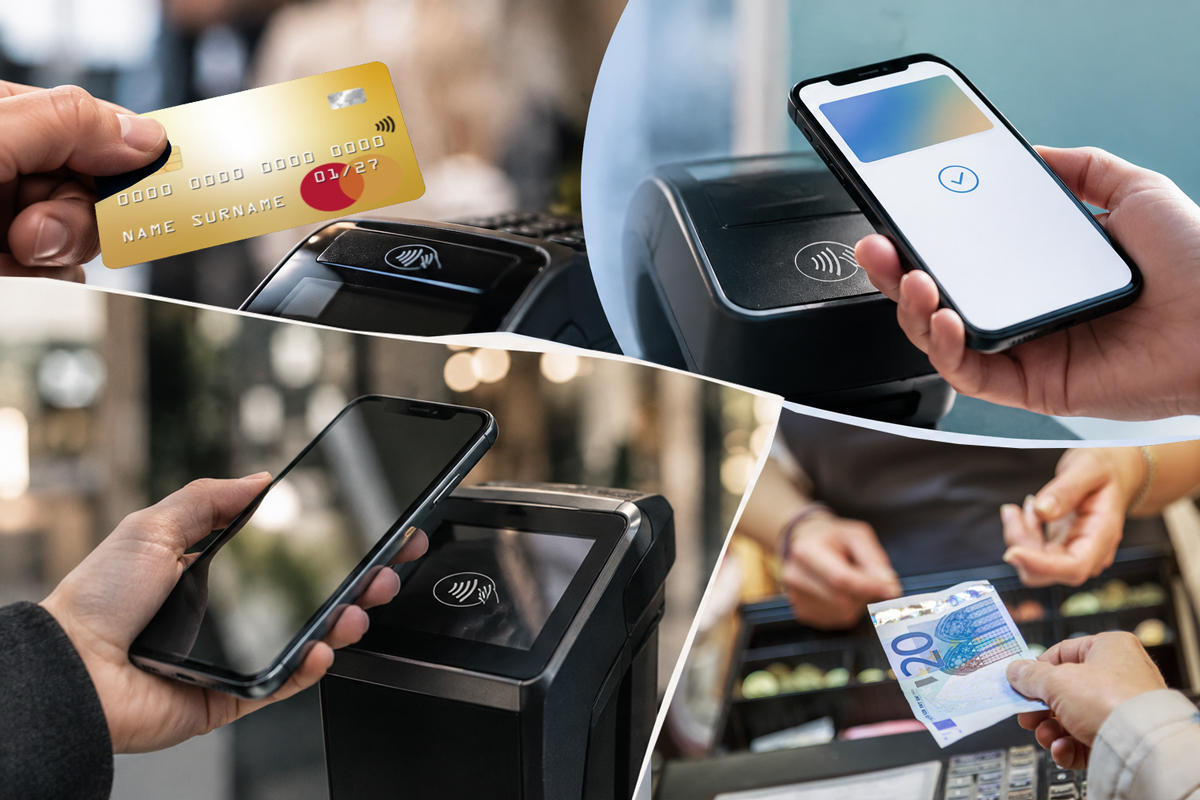
Bank cards are suitable for most everyday expenses. They are convenient for paying at supermarkets, hotels, chain restaurants and large shops. Contactless payments are widely accepted in cities and popular tourist areas.
If your card supports Apple Pay or Google Pay, you can also pay using your phone or watch wherever the terminal accepts the relevant contactless payment method. Availability depends on your bank, payment network and the individual terminal.
However, it is not advisable to rely entirely on cards. Small cafés, markets, independent vendors, some car parks and small shops may accept cash only or prefer it. Cash is also useful for tips and small purchases.
A practical approach is to pay for major purchases by card and carry €20-50 in cash for everyday small expenses. If you plan to visit smaller towns, shop at markets or stay away from major resorts, it is worth carrying a little more.
Before travelling, check your bank’s terms: foreign transaction fees, its exchange rate and any cash withdrawal limits. If your card is linked to an account in another currency, the final amount depends not only on the Bulgarian bank or payment terminal but also on the terms set by your card issuer.
ATMs in Bulgaria and Fees
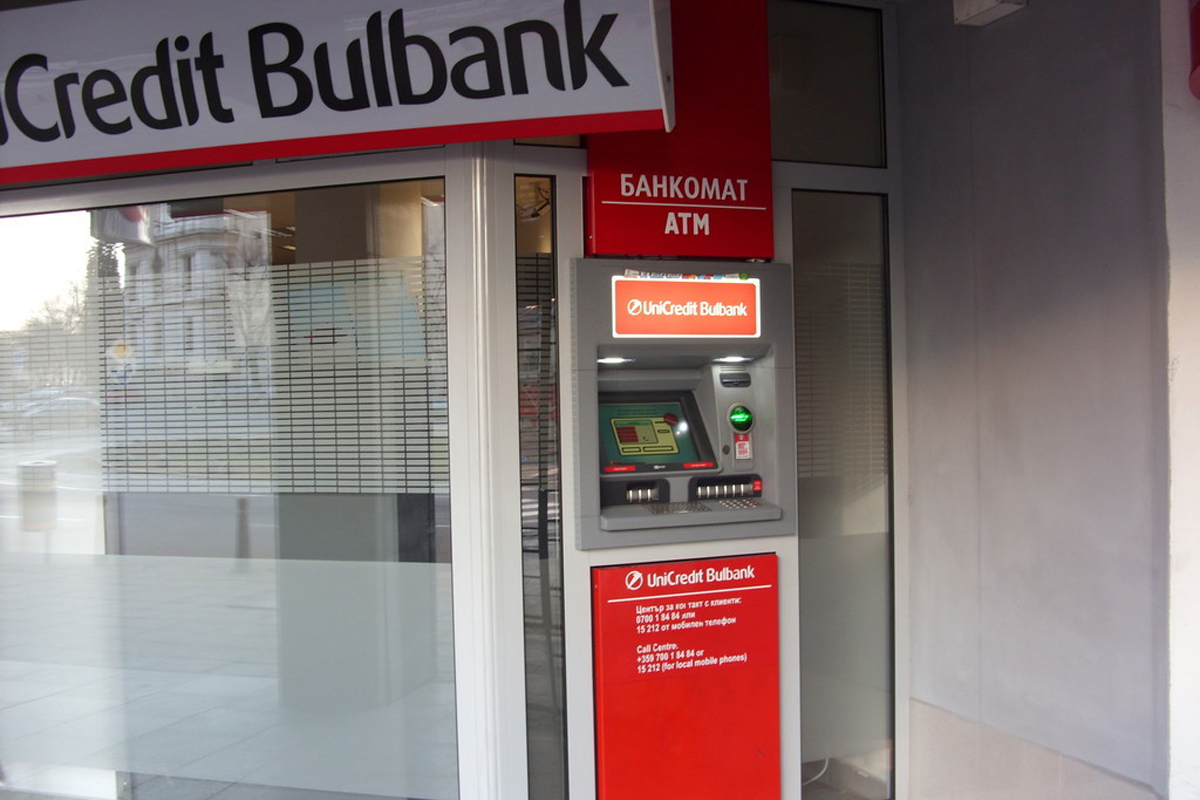
ATMs are available in Sofia, major cities and tourist areas. You will find them near bank branches, shopping centres, transport hubs and resorts. For cash withdrawals, it is best to use an ATM operated by a well-known bank, preferably inside or near a branch, rather than a standalone machine in a tourist venue.
Two types of fees may apply when withdrawing cash: the ATM operator’s fee and your own bank’s fee. The amount depends on the machine, your card and your bank account plan, so there is no single fee that applies to every traveller. If the ATM displays a fee before you confirm the transaction, review it and cancel the withdrawal if the terms are unfavourable.
Pay attention if the ATM offers to convert the amount into your card’s currency. This service is known as dynamic currency conversionDynamic currency conversion (DCC) is a service in which an ATM or payment terminal converts the amount into your card's currency using its own exchange rate, which may be less favourable than the rate offered by your card issuer.. It is usually better to choose to be charged in euros and decline the ATM’s offer to convert the amount into your account currency.
Grocery Prices and Restaurant Meals
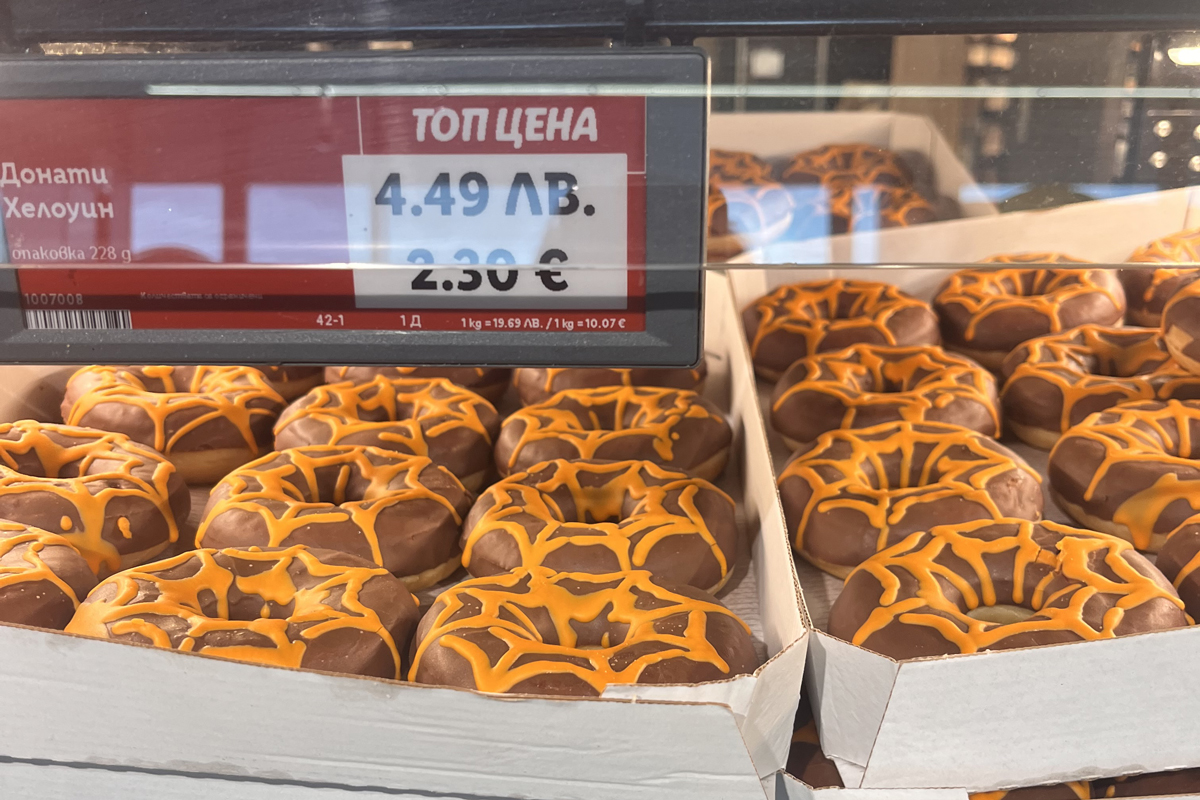
Grocery prices in Bulgaria depend on the supermarket chain, brand, region and current promotions. Lidl and other large supermarkets are convenient places to compare prices for everyday shopping. Small shops near beaches and hotels may be more convenient, but some items can cost more.
The following prices for groceries in Sofia provide a useful reference. They are ranges from the user-submitted price database published on Numbeo. Actual prices vary by shop.
Product |
Approximate Price |
|---|---|
Milk, 1 litre |
€1.35-2 |
White bread, 500 g |
€1-2 |
Eggs, 12 |
€2.50-5 |
Chicken breast, 1 kg |
€5-10 |
Local cheese, 1 kg |
€7-15 |
Potatoes, 1 kg |
€1 |
Water, 1.5 litres |
€0.50-1.50 |
Restaurant prices depend on the city and location. In Sofia, a meal at an inexpensive restaurant generally costs €10-20 per person, a lunch menu is around €6-10, and a three-course dinner for two at a mid-range restaurant costs €40-80, excluding drinks. Sunny Beach also has budget-friendly places away from the seafront, but bills at restaurants overlooking the sea can be considerably higher.
At resorts, the prices of salads and main courses vary particularly widely between restaurants. On menus in Sunny Beach, shopska salad can cost €6-9, while dishes and starters at more upscale establishments can be even more expensive. These are not national averages, but examples of prices you may encounter in popular tourist areas.
You do not need to give up restaurants entirely to avoid overspending. Alternate meals out with supermarket shopping, and check the menu and prices before ordering. In tourist areas, menus are often displayed at the entrance, so you can estimate the cost of a meal before sitting down.
Drink and Beer Prices
Drinks are considerably cheaper in supermarkets than in bars and restaurants. This is particularly true of water, beer and soft drinks, which tend to cost more at resort venues because of their location and service.
Drink |
In a Shop |
In a Café or Restaurant |
|---|---|---|
Water, 1.5 litres |
€0.50-1.50 |
Depends on the size and establishment |
Local beer, 0.5 litres |
€0.65-1.50 |
€2-5 |
Cappuccino |
– |
€2-4 |
Soft drink, 0.33 litres |
Depends on the brand |
€1.50-3 |
These ranges are based on price data for Sofia and Bulgaria, as well as menus from establishments in Sunny Beach. At resort bars, a 0.5-litre beer often costs €3-5, while the same volume is considerably cheaper in a supermarket. Imported brands, craft beers and cocktails may cost more.
Beach Umbrella and Sunbed Prices
At many organised beaches in Bulgaria, you pay separately for an umbrella and sunbed unless they are included in your hotel stay. Prices depend on the particular beach and section.
For example, in the southern part of Sunny Beach, the price was €5.10 for an umbrella and €5.10 for each sunbed. One umbrella and two sunbeds for a couple therefore cost €15.30 per day. Rates vary at other beaches: some offer cheaper sets, while others charge more. Official prices for individual beaches are available on the Bulgarian Ministry of Tourism website.
Before paying, check exactly what the listed price covers: one sunbed, one umbrella or a set. In some sections, prices may also depend on how close you are to the sea. If you plan to spend every day on the beach, this can become a significant expense. At €15 per set, renting one for a week would cost around €107.
The most obvious way to save is to use a free section of the beach where you are allowed to bring your own beach equipment. Beach promenades have plenty of towels (€5-12) and basic umbrellas (€10-20) for sale.
Excursion Prices in Bulgaria
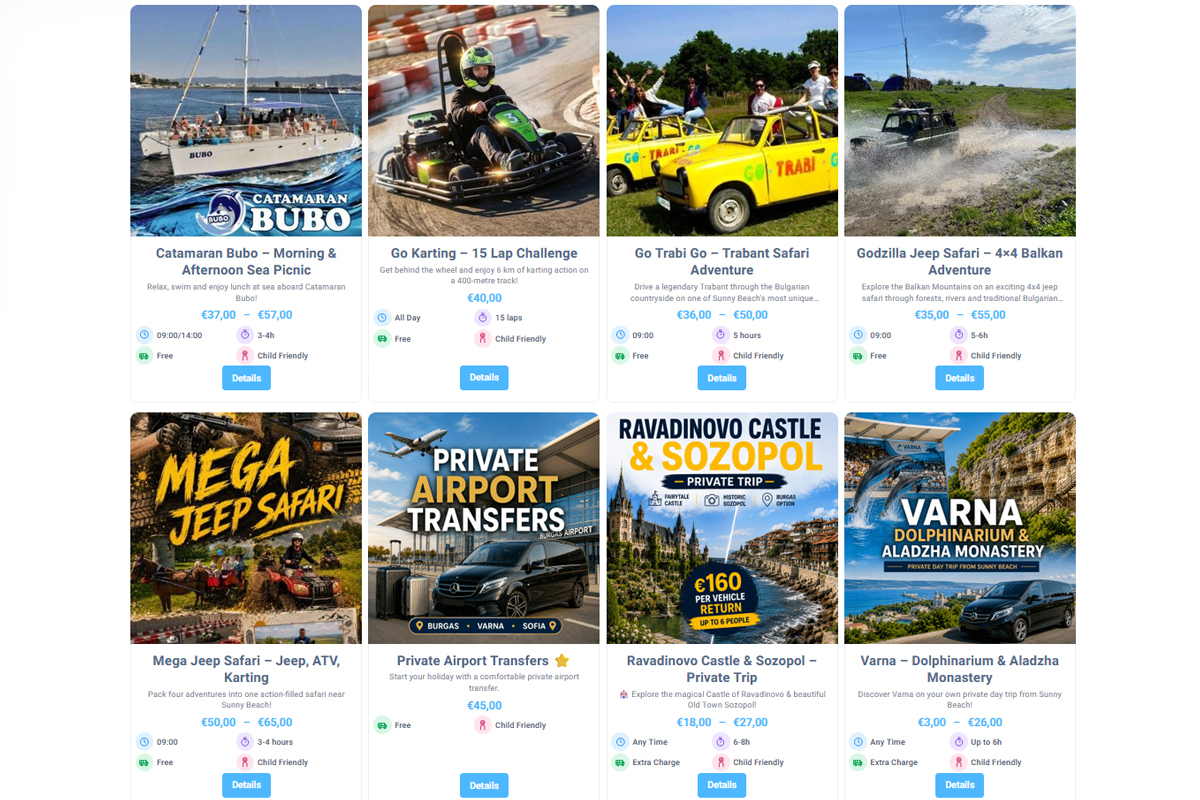
Excursions are another expense that is easy to overlook when planning a budget. Seaside resorts offer boat trips, excursions to Nessebar and Sozopol, evening shows, fishing trips and full-day tours. Prices depend on the duration, food, transfers and whether admission to attractions is included.
In Sunny Beach, group catamaran trips with food and drinks in 2026 are offered at around €47-57 per adult. Shorter excursions and guided walks around Nessebar can cost from €22, while combined tours with a boat trip are around €39. These are prices from individual operators, not standard rates across all resorts.
Use the following ranges as a planning guide:
Activity |
Approximate Price per Person |
|---|---|
Walking tour of a historic town |
€20-25 |
Boat trip or short cruise |
€30-60 |
Half-day excursion with transfers |
€30-65 |
Private yacht trip |
From €200 per group |
Before booking, check whether transfers, food, drinks and entrance tickets are included. The lowest price does not always mean you are getting the same experience: two excursions with similar names can differ considerably in duration and itinerary.
To save money, compare an organised tour with making the same trip independently by public transport. For nearby towns such as Nessebar, travelling on your own can be a convenient alternative, especially if you do not need a guide.
Taxis, Public Transport and Other Expenses
Taxi fares depend on the city, distance, time of day and operator’s rates. For 2026, Sofia Municipality set the following minimum and maximum rates per kilometre:
Rate |
Minimum |
Maximum |
|---|---|---|
Daytime |
€0.73/km |
€1.24/km |
Night-time |
€0.84/km |
€1.52/km |
These are the official per-kilometre limits, not the total cost of every journey. The fare may also include an initial charge and waiting time. The figures are published on the Sofia Municipality portal.
Before getting into a taxi, check the company name, the rate displayed on the sticker and the taximeter. If you book a car through an app or by phone, ask for the estimated fare in advance. Avoid getting into a vehicle if the rate is not visible or the driver quotes an unclear price.
Public transport in major cities is generally cheaper than taxis. In Sofia, a single ticket costs around €0.80, and buses, trams, trolleybuses and the metro are convenient for most journeys within the city. If you expect to make several trips in one day, compare the cost of individual tickets with the available travel passes. Fares vary between resorts and intercity routes.
If you fly into Sofia, the cost of travelling from the airport depends on the transport option you choose. For routes, tickets and journey times, see the article “How to Get from Sofia Airport to the City Centre”.
Mobile connectivity can also be part of your travel budget, especially if you plan to use maps, navigation and mobile data frequently. Options for SIM cards and eSIMs, prices and activation details are covered in the article on mobile connectivity and internet in Bulgaria.
Tipping in Bulgaria
Tipping in Bulgaria is not subject to a single mandatory percentage, but tips are often left in cafés and restaurants for good service. A common guideline is 5-10% of the bill if you are happy with the service and a service charge has not already been included.
At an inexpensive café, rounding up the bill is enough. At a full-service restaurant, you can leave 10% if the service meets your expectations. Tipping in taxis is not compulsory; many passengers simply round up the fare.
- Restaurants. Check whether a service charge is already included so you do not pay twice.
- Cafés. A small tip or rounding up the bill is perfectly acceptable.
- Hotels. Tipping staff is at the guest’s discretion; there is no mandatory rate.
- Taxis. Rounding up the fare is enough if you are happy with the ride.
If you pay by card, do not assume the terminal will offer an option to add a tip. It is more convenient to keep a few small euro notes and coins for this purpose.
Tip Calculator
The calculator works with any currency. Enter all amounts in the same currency.
How Much Money to Bring on Holiday in Bulgaria
Your Bulgaria travel budget depends on whether breakfast is included in your accommodation, how often you eat at restaurants, whether you plan to rent beach sunbeds and how many excursions you intend to take. The two examples below can help you plan your spending. These are estimated ranges, not fixed prices for every hotel and restaurant.
A Week at the Seaside for Two
Consider a seven-night stay at a popular resort during the high season, such as July or August. Assume that a couple stays in an apartment or mid-range hotel, buys some food at a supermarket, eats at restaurants several times and takes one paid excursion.
Expense for Two |
Weekly Budget |
|---|---|
Accommodation, 7 nights |
€450-900 |
Meals and groceries |
€280-450 |
Drinks and coffee |
€70-140 |
One umbrella and two sunbeds for 5 days |
€75-80 |
One boat trip or excursion per person |
€60-120 |
Local transport and a few taxi rides |
€40-100 |
Small expenses and tips |
€30-70 |
Total, excluding travel to the resort |
€1005-1860 |
This scenario is for a couple who are not trying to spend as little as possible but also do not eat at expensive restaurants every day. Cooking for yourselves, staying farther from the sea and avoiding daily sunbed rentals will bring the total down. A seafront hotel, restaurant meals every day and additional excursions will increase your spending.
Accommodation may be noticeably cheaper during the shoulder season, although some beach services and excursions operate on reduced schedules. It is best to compare budgets based on the specific month and the activities you have planned.
A Weekend in Sofia for Two
For a two-night city break, you can allow for the following expenses, excluding flights and intercity transport. The estimate assumes mid-range accommodation, meals at cafés and restaurants, walks around the city and a few paid activities.
Expense for Two |
Weekend Budget |
|---|---|
Accommodation, 2 nights |
€120-240 |
Meals and groceries |
€80-140 |
Coffee, drinks and snacks |
€25-50 |
Public transport and taxis |
€15-40 |
Museums and activities |
€20-60 |
Small expenses and tips |
€15-30 |
Total, excluding travel to Sofia |
€275-560 |
If you stay in an apartment with a kitchen, use the metro and focus on free attractions, your spending will be closer to the lower end of the range. Central accommodation, several restaurant dinners and taxi rides will push the total up.
How Much Cash Should You Carry?
You do not need to carry your entire holiday budget in cash. For everyday expenses, €20-50 is usually convenient, while larger purchases can be paid for by card or phone. If you plan to visit markets, smaller towns or places where cards are not accepted everywhere, it is worth carrying more cash.
It makes sense to keep most of your money on a card and carry cash separately, so losing your wallet does not leave you without access to all your funds. Before travelling, check your bank’s fees for foreign payments and cash withdrawals.