
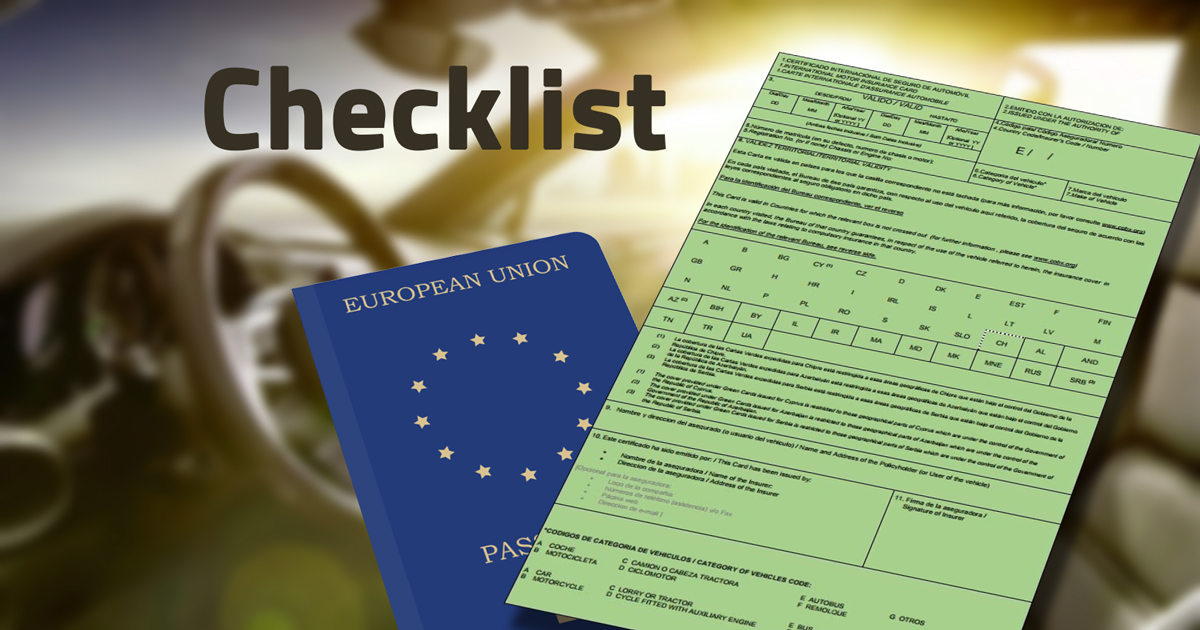
What to take with you before the trip
Before leaving, run through this short checklist. It helps avoid a situation where everything is ready for the trip except one document that is needed at the border.
If you live or are on holiday in Bulgaria, a trip to a neighbouring country rarely requires a large set of documents. However, the requirements depend not only on your destination. Your citizenship, whether you have a Bulgarian residence permit or permanent residence permit (hereafter simply referred to as a residence permit), the document you travel with and your means of transport all matter.
After Bulgaria and Romania fully joined the Schengen Area on 1 January 2025, trips to Greece and Romania are subject to the rules for travel within the Schengen Area. Turkey and North Macedonia remain external destinations, so border controls apply when entering these countries. When returning to Bulgaria from either country, you cross the Schengen external border again.
In any case, you need to carry a valid identity document. If you are travelling by car, you will also need the vehicle registration documents, a driving licence and proof of insurance. A rental car requires one more step: permission from the rental company to take the vehicle across the border.
Contents
- What documents do you need when travelling abroad from Bulgaria?
- If you have a Bulgarian residence permit but a non-EU passport
- Greece from Bulgaria: documents and border crossing
- Romania from Bulgaria: documents and border crossing
- Turkey from Bulgaria: documents, visa and border crossing
- North Macedonia from Bulgaria: documents and visa
- Which passport do you need and what changes depending on your citizenship?
- Travelling from Bulgaria in a rental car
- Money, bank cards and mobile connectivity
- Travel insurance for trips abroad
- Customs: what can you take across the border?
- Travelling with children
- Travelling with a dog or cat
- Frequently asked questions
What documents do you need when travelling abroad from Bulgaria?
The basic set of documents depends on where you are going. Greece and Romania are within the Schengen Area, while trips to Turkey and North Macedonia involve crossing an external Schengen border.
EU citizens only need a valid passport or national ID card when travelling within the EU and Schengen Area. Children must also have their own passport or ID card. When travelling to Turkey, Bulgarian citizens are among those allowed to enter with a national ID card; ordinary passport holders can enter visa-free for up to 90 days within any 180-day period.
Citizens of non-EU countries generally need a valid passport. If you hold a Bulgarian residence permit, you must carry both your passport and your residence permit card. A residence permit does not replace a passport and does not determine the visa regime of a third country.
For travelling by car, prepare:
- vehicle registration certificate;
- valid driving licence;
- vehicle documents and proof of insurance;
- Green CardGreen Card - an international insurance document confirming that the vehicle has valid insurance for travelling abroad., if required for the destination;
- power of attorney or permission from the owner if the vehicle belongs to someone else;
- for a rental car – written permission from the rental company to take the vehicle out of Bulgaria.
Within the EU, compulsory third-party motor insurance is valid in other EU countries. The European Commission also recommends carrying your insurance documents, even though insurance coverage can normally be verified through the vehicle registration number. Detailed rules are available in the section on driving abroad.
Destination |
Border regime |
Main documents |
What matters for the car |
|---|---|---|---|
Greece |
Internal Schengen border |
Passport or ID; for non-EU citizens – passport and residence permit |
Driving licence, registration, insurance |
Romania |
Internal Schengen border |
Passport or ID; for non-EU citizens – passport and residence permit |
Driving licence, registration, insurance |
Turkey |
External Schengen border |
Passport or eligible ID, visa or visa-free status depending on citizenship |
Registration, Green Card, power of attorney if required |
North Macedonia |
External Schengen border |
Passport or ID depending on citizenship, residence permit or visa if required |
Registration, insurance, Green Card |
If you have a Bulgarian residence permit but a non-EU passport
This is one of the most important situations for foreigners living in Bulgaria. The rules depend not only on where you live, but also on your citizenship, type of residence permit and destination country.
For travel to Greece or Romania, a valid Bulgarian residence permit confirms your legal right to stay in Bulgaria and facilitates travel within the Schengen Area. You still need to carry your passport. Separate rules apply to non-EU citizens with a valid residence permit issued by a Schengen country when staying in other Schengen countries.
North Macedonia has a special regime for travellers with a Bulgarian residence permit. Citizens of non-EU countries who hold a temporary or permanent residence permit in an EU or Schengen country may stay in North Macedonia for up to 15 days per entry, subject to an overall limit of 90 days within any 180-day period. No visa is required under this regime.
The situation is different for Turkey. A Bulgarian residence permit does not by itself make a non-EU citizen eligible for visa-free travel. You need to check the requirements applicable to your citizenship. The Turkish Ministry of Foreign Affairs publishes a separate visa requirements table by citizenship.
When returning to Bulgaria from Turkey or North Macedonia, a non-EU citizen with a residence permit must present both their passport and valid residence permit. The EESThe EES is an electronic system that records entries and exits of non-EU citizens when they cross the external borders of the Schengen Area. has been fully operational at the Schengen external borders since 10 April 2026, but holders of valid residence permits are among the categories that are not registered in the EES as ordinary short-stay visitors.
Greece from Bulgaria: documents and border crossing
Bulgaria and Greece are both part of the Schengen Area. Following the removal of internal land border checks on 1 January 2025, there are no routine person checks at the border between the two countries.
This does not mean that you can leave your documents at home. Police checks are possible within the Schengen Area, and travellers must be able to prove their identity with a valid document. EU citizens therefore only need a passport or national ID card, while foreigners with a Bulgarian residence permit need both their passport and residence permit card.
If you are travelling by private car, you need a valid driving licence, vehicle registration documents and insurance. For vehicles registered in the EU, compulsory third-party liability insurance is valid in other EU countries.
If your journey starts in Bulgaria and continues through Greece to another Schengen country, there are no additional passport procedures at the Greek border.
For medical expenses, EU citizens and people covered by the European health insurance system may find it useful to carry the European Health Insurance Card (EHIC). It provides access to medically necessary state healthcare on the same terms as residents of the country you are visiting, but it does not replace travel insurance and does not cover services such as repatriation or private healthcare.
Romania from Bulgaria: documents and border crossing
Romania has also been fully part of the Schengen Area since 1 January 2025. The land border between Bulgaria and Romania is an internal Schengen border, so there are no systematic document checks there.
A valid passport or ID remains an essential travel document. The Romanian Border Police states that after internal border controls were abolished, officers may still carry out non-systematic checks within their powers, so you should keep a valid identity document with you.
For travelling by car, the standard set is sufficient: driving licence, registration document and valid insurance. If the car belongs to someone else, it is sensible to carry documents confirming your right to use the vehicle.
For non-EU citizens with a Bulgarian residence permit, the same principle applies as when travelling to other Schengen countries: carry your passport and valid residence permit.
Detailed information about the Schengen regime and internal borders is published by the Romanian Border Police.
Turkey from Bulgaria: documents, visa and border crossing
Turkey is the most important destination in this article in terms of travel documents. It is not part of the internal Schengen regime, so travelling there from Bulgaria means crossing an external border.
The main rule is that entry requirements depend on citizenship. For example, Turkish authorities allow Bulgarian citizens to enter with a national ID card or ordinary passport without a visa for up to 90 days within any 180-day period. Requirements for citizens of other countries may differ, so having a Bulgarian residence permit does not by itself grant visa-free entry.
Turkish legislation also sets passport validity requirements. For foreigners, the standard rule requires the document to remain valid for at least 60 days beyond the permitted period of stay. For example, with a 90-day visa-free stay, this calculation means that the passport should be valid for at least 150 days at the time of entry. The Turkish Ministry of Foreign Affairs separately recommends travelling with a passport valid for at least 6 months from the date of arrival.
Current rules and the list of countries are published on the website of the Turkish Ministry of Foreign Affairs. Passport validity requirements are explained on a separate passport validity page.
What documents do you need when travelling to Turkey by car?
For a foreign-registered vehicle, Turkish customs requires vehicle documents and insurance valid in Turkey. The Bulgarian Ministry of Foreign Affairs lists a passport or ID, the vehicle registration document and a Green Card valid in Turkey among the required documents.
If the driver is not the owner of the vehicle and the owner is not present in the car when crossing the border, a power of attorney may be required. Turkish customs also accepts certain documents for rental cars, including the rental agreement.
This is particularly important when travelling in a car rented in Bulgaria. The rental company’s permission must specifically cover Turkey, and the vehicle documents must confirm the driver’s right to use the car outside Bulgaria.
Detailed requirements for vehicles are published in the Turkish Customs section on the temporary import of vehicles.
North Macedonia from Bulgaria: documents and visa
North Macedonia is not part of the EU or Schengen Area, so travelling there from Bulgaria involves crossing an external Schengen border.
EU citizens do not need a visa to enter North Macedonia. The country’s Ministry of Foreign Affairs also confirms that EU citizens may enter with a valid national ID card.
For non-EU citizens, the passport is the key document. If you have a Bulgarian residence permit, you do not need a separate visa for a short trip: you may stay for up to 15 days per entry, subject to an overall limit of 90 days within any 180-day period.
For other non-EU citizens, requirements depend on their citizenship and the basis for entry. A Bulgarian residence permit should therefore not be treated as a universal substitute for a visa.

If you are travelling to North Macedonia by car
A vehicle with foreign registration must have valid insurance coverage. The National Insurance Bureau of North Macedonia lists the Green Card as the main document for foreign-registered vehicles when no recognised equivalent insurance coverage applies for the country concerned.
Make sure North Macedonia is covered by your Green Card and that the vehicle details match the registration document. If you do not have valid proof of insurance, border insurance can be purchased at the border.
Rules for using foreign-registered vehicles are also enforced by the Customs Administration of North Macedonia.
Which passport do you need and what changes depending on your citizenship?
The most common mistake when preparing for a trip is to focus on the country of residence rather than citizenship. Someone may live in Bulgaria and hold a Bulgarian residence permit, but travel on a passport issued by a country whose citizens need a visa for Turkey. In that case, the Bulgarian residence permit does not remove the Turkish visa requirement.
For EU citizens, the situation is simpler. A valid passport or national ID card is sufficient for Greece and Romania. EU citizens may also enter North Macedonia with an ID card. Turkey separately allows Bulgarian citizens to enter with an ID card.
For non-EU citizens, the rules are different:
- for Greece and Romania, carry your passport and valid Bulgarian residence permit;
- for North Macedonia, your passport and residence permit provide access to the special short-stay regime of up to 15 days per entry;
- for Turkey, first determine the visa regime based on your citizenship, then check the passport validity requirements;
- when returning to Bulgaria from Turkey or North Macedonia, present your passport and valid Bulgarian residence permit.
For short trips across the Schengen external border, passports held by non-EU citizens are generally subject to validity requirements: the document must remain valid for at least 3 months after the intended date of departure from the Schengen Area and must have been issued within the previous 10 years, unless an exception applies to the specific category of traveller.
Detailed rules for non-EU citizens are available on the Your Europe page on travel documents and entry requirements.
Travelling from Bulgaria in a rental car
A standard driving licence is not enough when the vehicle is rented. The rental company remains the owner of the car and must authorise its use outside Bulgaria.
Request permission before the trip. The rental agreement or a separate document should list the countries you are allowed to visit, and the vehicle must have the required insurance coverage. Major Bulgarian rental companies treat international travel as a separate service.
Before collecting the car, make sure you have:
- passport or ID;
- driving licence;
- rental agreement;
- permission for international travel;
- vehicle documents;
- insurance documents required under the rental agreement;
- Green Card, if required for the destination.
The European Commission specifically notes that if a rental car will be used in several countries, the rental company must be informed in advance. It must provide the appropriate documents, insurance and permission for the trip. Detailed rules are available in the Your Europe guide to renting a car abroad.
Money, bank cards and mobile connectivity
The four destinations use different currencies. Greece uses the euro, Romania uses the Romanian leu, Turkey uses the Turkish lira and North Macedonia uses the Macedonian denar.
In tourist areas of Turkey and North Macedonia, euros are sometimes accepted, but you should not rely on them as your main payment method. Local cash is useful for smaller expenses, while a bank card is convenient for larger purchases.
In Romania and Greece, payment in euros or lei depends on the country, so before the trip it is enough to plan a small amount of cash and check that your bank card works abroad.
For mobile internet, prepare roaming or eSIMeSIM - a built-in SIM that lets you use mobile services without a physical SIM card. in advance. If your trip covers several countries, it is usually more convenient to choose a plan that covers the entire route rather than buying a separate SIM card at each border.
More information about SIM cards and eSIM in Bulgaria is available in the separate article about mobile connectivity.
Travel insurance for trips abroad
Different types of insurance apply to the vehicle and the traveller.
Compulsory third-party motor liability insurance is mandatory for registered vehicles and operates under international insurance rules. For EU countries, basic third-party liability coverage extends to travel within the EU. Additional coverage, including comprehensive insurance, theft, damage to your own vehicle and roadside assistance, depends on the individual policy.
For Turkey, the Green Card is particularly important because it confirms international vehicle insurance coverage. The Bulgarian Ministry of Foreign Affairs lists it among the documents required when entering Turkey by car.
The Green Card is also relevant for foreign-registered vehicles travelling to North Macedonia.
Medical insurance is a separate matter. The EHIC helps provide access to necessary state healthcare in EU countries, but it does not replace travel insurance. For Turkey and North Macedonia, the European card is not a universal solution, so when travelling outside the EU it is advisable to take out standard travel insurance.
Customs: what can you take across the border?
Trips to Greece and Romania are subject to EU rules on the movement of goods within the EU. Turkey and North Macedonia are external destinations, so when returning to the EU, rules for imports from a non-EU country apply.
For a normal tourist trip, three principles are enough to remember: personal belongings should not look like a commercial shipment, quantity limits apply to tobacco and alcohol, and expensive purchases may be subject to customs and tax restrictions.
Pay particular attention to cash. When entering or leaving the EU with €10,000 or more, or the equivalent amount in another currency, you must declare it. This applies to cash and certain other financial instruments.
Detailed rules on luggage, purchases and tax free are available in the separate article about luggage and customs rules. EU cash rules are published on the European Commission Cash Controls page.
Travelling with children
A child must have their own valid passport or ID card, depending on the destination and citizenship. For trips to Turkey and North Macedonia, the required travel document is determined by the child’s citizenship and the entry rules of the destination country.
There are no routine border checks within the Schengen Area when travelling to Greece or Romania, but the absence of systematic checks does not remove the requirement to carry valid documents.
If a child travels with only one parent, whether consent from the other parent is required depends on the laws of the countries along the route. There is no single EU-wide rule that regulates these trips in the same way in every country.
For Bulgarian citizens, there is a separate national requirement: consent from the parent who is not accompanying the child when leaving the country must be given in writing with a notarised signature. Details are available on the European e-Justice Portal.
If a child is travelling with one parent, it is advisable to carry the other parent’s written consent and, in the case of sole custody, a court decision or other supporting document. This is particularly important when travelling across external borders.
Travelling with a dog or cat
For travel within the EU with a dog or cat, you need a microchip, valid rabies vaccination and a European pet passport. The passport contains information about the animal, owner and vaccinations.
When travelling to Greece or Romania from Bulgaria, the common EU rules on the movement of pets apply. If your route includes Turkey or North Macedonia and you subsequently return to the EU, the requirements become more complex: animals returning from non-EU countries may need additional veterinary documents and proof that vaccination requirements have been met.
A route involving an animal and an external border should therefore be considered separately from an ordinary trip within the EU. Current rules are available on the Your Europe page on travelling with pets.