Bulgaria is a good destination for independent travel, and most tourists do not encounter any serious problems. However, as in other popular destinations, pickpocketing, inflated bills, dishonest taxi drivers and attempts to take advantage of visitors unfamiliar with local rules do occur. Take particular care in tourist areas, resorts and places with large numbers of holidaymakers.
The main rule is to avoid suspicious offers, keep an eye on your belongings and know how much services should cost before agreeing to them. Sunny Beach taxis, bills in bars and clubs, and currency exchange deserve particular attention. At the same time, there is no reason to regard the entire country as dangerous: ordinary precautions are sufficient for most everyday situations.
Table of Contents
Is Bulgaria Safe for Tourists?
Overall, Bulgaria is safe for tourists who take ordinary precautions. The main everyday risks are not violent crime but theft, dishonest services and situations in which travellers lose control of their spending. In large cities, keep a closer eye on your bags and phone. At resorts, pay particular attention to your belongings on the beach and the payment terms at bars and restaurants.
For an independent trip, it is worth keeping a few things in mind:
- In crowded places, at railway stations, on public transport and in tourist areas, keep an eye on your phone, wallet and documents.
- Never leave your bag, money or smartphone unattended on the beach, even if you are only going for a quick swim.
- Before taking a taxi, check the fare. Before booking a service or activity, confirm the full price.
- Check your bill before paying at bars and clubs, and never let your bank card out of your sight.
- When driving, lock the doors and keep luggage out of sight, especially in car parks and at petrol stations.
Nightlife presents a separate risk. Some venues charge tourists excessively high bills, and refusing to pay can lead to threats or intimidation. If the price was not clear beforehand and staff insist that you pay a questionable amount, do not confront them alone. Ask security staff, your hotel reception or the police for help.
Bulgaria also experiences occasional protests, wildfires, severe storms and other events that can affect travel plans. This is not a reason to cancel a trip, but you should consider your route and the season. If you are planning a road trip, see our separate guide to Driving in Bulgaria: Roads, Vignettes, Costs and Practical Tips.
Crime and Scams in Bulgaria
Questions about Bulgaria travel safety often stem from concerns about scams. In practice, it is more useful to understand the specific situations in which tourists lose money or belongings than to focus on the overall Bulgaria crime rate.
Pickpocketing and Distraction Tactics
Pickpockets target places where people are focused on tickets, phones, luggage or nearby attractions. These can include bus stops, buses, railway stations, markets and busy streets. Sometimes one person distracts a tourist with a conversation or a request for help while another tries to steal their wallet or phone.
Keep your documents and money in inside pockets or in a bag that you can comfortably hold in front of you. Do not leave your smartphone on the edge of a café terrace table or your wallet in an open backpack pocket. On crowded public transport, keep your bag closed and valuables close to your body.
Along the coast, take particular care of your belongings when swimming. Do not bring all your cash, bank cards and documents to the beach if you do not need them. Leave your passport and spare money in a secure place where you are staying.
Overpriced Bills in Bars and Clubs
One of the most unpleasant tourist scams involves a bill that is far higher than the expected cost of an order. Such incidents have been reported at individual venues in Sofia and at resorts, including Sunny Beach, Bansko and Borovets. This does not apply to every bar or club, but to specific establishments that engage in dishonest practices.
To reduce the risk:
- Choose venues with menus and prices that are clearly displayed.
- Before ordering, confirm the prices of drinks, admission, table reservations and any additional services.
- Do not follow street promoters to unfamiliar clubs just because they promise special deals.
- Check the bill against your order and keep the receipt after paying.
- When paying by card, watch the payment terminal. Do not enter your PIN a second time at a staff member’s request unless there is a clear reason.
If staff threaten you or prevent you from leaving, do not try to resolve the situation by force. Move to a safe place, ask security staff or employees at a nearby hotel for help, and call the emergency number 112 if necessary.
Accommodation and Car Rental Scams
When booking accommodation through a website or a private listing, be cautious if the host asks you to transfer money to an unfamiliar account outside the booking platform, pressures you to pay quickly or refuses to confirm the terms in writing. Check the address, reviews and cancellation policy, and keep your correspondence and booking confirmation until your trip is over.
When renting a car, carefully inspect the bodywork, windows, tyres and interior. Photograph any existing damage and make sure it is recorded in the rental agreement. Before signing, check the deposit amount, insurance terms, mileage restrictions and liability for damage. Do not hand over original documents as security without a lawful reason.
Taxis in Bulgaria: How to Avoid Overpaying
Taxis are convenient for short journeys in Bulgaria, but fares vary by city, operator and time of day. Problems arise when passengers get into a car with an inflated per-kilometre rate, fail to notice the fare displayed on the door or agree to a ride without a working meter. In tourist areas, avoid accepting the first offer from a driver who approaches you directly.
Before setting off, check the following:
- The vehicle should display the markings of a licensed taxi and provide information about its fares.
- Check the initial fare, price per kilometre and waiting-time rate shown on the sticker or information panel.
- Make sure the driver starts the meter if the fare is calculated by meter.
- If you use an app, check the route and final price before confirming your booking.
- Do not get into a car if the driver refuses to explain the fare or quotes an unreasonably high fixed price.
Sunny Beach Taxis
Take particular care when choosing a taxi in Sunny Beach. The UK Foreign, Commonwealth & Development Office specifically warns about incidents involving robbery and threatening behaviour by some drivers in this resort area. It is therefore safer to book a car through your hotel, an official taxi company or a trusted app rather than accept an offer from an unknown driver outside a bar, club or beach.
Agree on the payment method before setting off and make sure you understand the fare. If the driver quotes a price that seems excessive, refuse before getting into the car and find another taxi. Do not get into a vehicle simply because the driver promises to take you quickly or claims there are no other taxis nearby.
If you are travelling at night, send someone you trust the vehicle’s registration number or share your route by phone. Do not get into a car if the driver unexpectedly proposes changing the route without explaining why.
What About Taxis in Sofia?
For visitors to Sofia, the main concern is unlicensed taxis or vehicles that look official but charge inflated fares, particularly near the airport. We will not cover Sofia taxi prices and routes to the city centre in detail here. For that, see our separate guide to Taxis from Sofia Airport, which covers fares and tips for choosing a taxi.
Currency Exchange and Card Payments
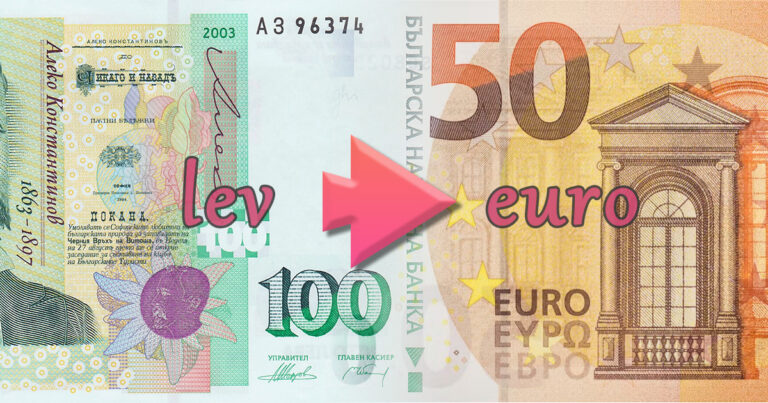
Since 1 January 2026, the official currency of Bulgaria has been the euro. Older advice suggesting that you must exchange euros for Bulgarian lev before travelling is no longer relevant. For everyday expenses, tourists generally need only some euro cash and a bank card that works abroad.
More details on prices, cash and card payments are available in our article Money and Prices in Bulgaria in 2026. Here, we focus on financial risks and ways to avoid overpaying.
Currency Exchange and Unfavourable Rates
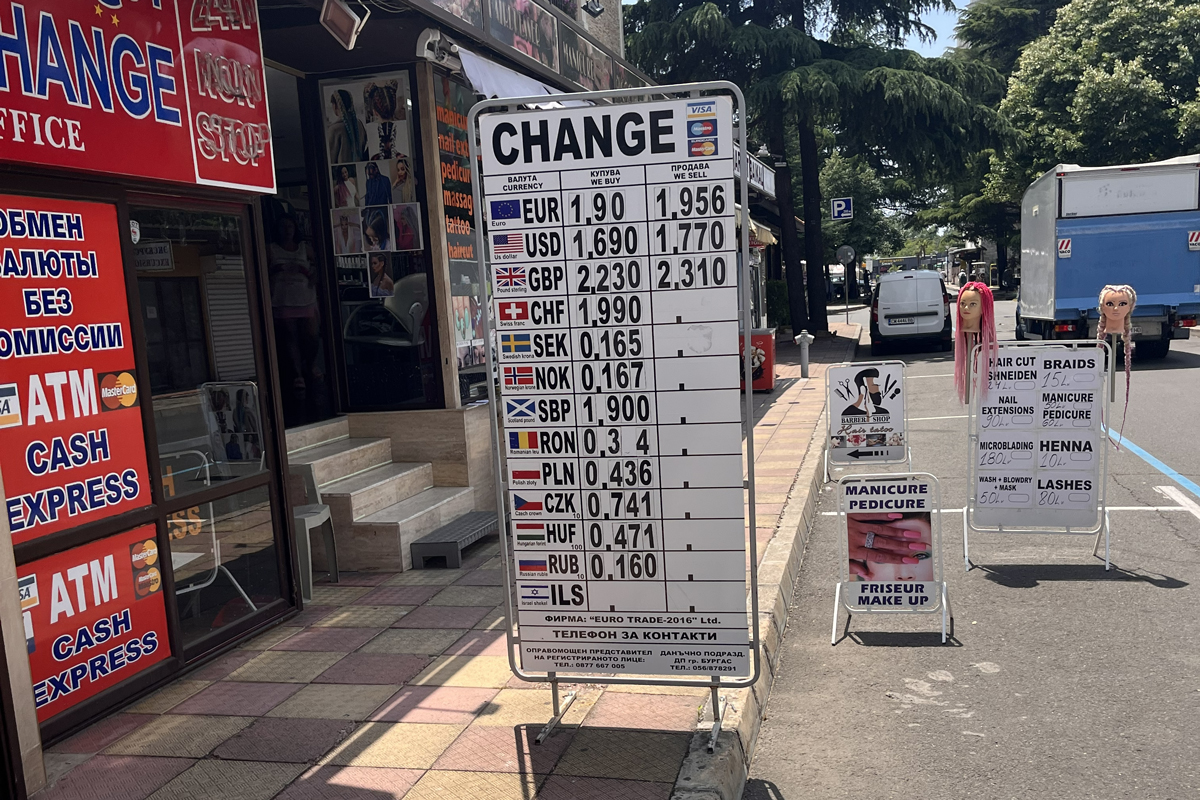
* The image shows exchange rates for Bulgarian lev from 2025. These rates are no longer in use.
If you need to exchange foreign currency for euros, do not rely solely on the large figures displayed on a sign. Ask how much money you will receive, whether a commission applies and whether the advertised rate covers the entire transaction. Before handing over your money, ask to see the final calculation.
Do not exchange money with random passers-by or agree to complete a transaction in another room. If the terms differ from what you were promised, walk away before handing over your cash. After the exchange, count the money at the counter and keep the receipt.
If you plan to exchange a substantial amount, such as more than $500-1,000, do not rush into exchanging it at a resort. Consider travelling to the nearest large city, where rates are often more favourable. At tourist-oriented Sunny Beach, exchange rates are always worse than those at exchange offices in Burgas, even when travel costs are taken into account. You can also combine the trip with shopping at shopping centres.
Currency Converter
You will receive
At the rate
Commission:
ATMs and Bank Cards
When withdrawing cash, use ATMs operated by banks or machines located inside bank branches or in clearly visible, well-lit places. Inspect the card slot and keypad before using the machine. If anything looks suspicious or the ATM displays an unusual message, cancel the transaction.
When paying by card, check the amount on the terminal and do not let anyone take your card into another room. If the terminal offers to charge you in your card’s currency instead of euros, compare the options. Conversion at the acquiring bank’s exchange rate may be less favourable than paying in the local currency and allowing your own bank to convert the amount. Check your bank’s fees and exchange rates to assess the specific costs.
What to Do If You Are Charged Too Much
First, ask the venue or seller to explain the transaction and request a receipt. If the amount on the receipt does not match your order, keep the evidence: a photo of the menu, the receipt, your booking confirmation and the bank notification. If you suspect fraud, contact your bank and ask whether you can dispute the payment. If anyone threatens you or prevents you from leaving, move to a safe place and call 112.
Safety in Bulgarian Cities and Resorts
The level of risk depends not only on the country but also on the location, time of day and type of trip. In cities, be aware of the usual risks associated with urban areas. At resorts, pay particular attention to beaches, nightlife and the large influx of visitors during the holiday season.
Sofia
In the capital, take ordinary precautions on public transport, at railway stations and in crowded places. Do not leave your phone or bag unattended in cafés, and choose well-lit streets late at night. When travelling from the airport, use an official taxi or public transport. More details are available in our guide to getting from Sofia Airport to the city centre.
Varna and Burgas
In Varna and Burgas, pay particular attention to your belongings in city centres, on beaches and on public transport. When swimming, do not leave your phone, wallet or documents on your towel. In the evening, stick to well-lit streets and avoid suspicious offers from strangers, especially those involving paid entertainment or transport.
Sunny Beach and Nessebar
Sunny Beach is a busy resort with bars, clubs and large numbers of holidaymakers during the peak season. It is especially important to confirm the cost of services in advance, check bills carefully and book taxis through reliable channels. Do not take large amounts of cash to the beach or leave valuables unattended on an open hotel balcony.
In Nessebar, including the Old Town, keep an eye on your bags in narrow, crowded streets. When travelling between Nessebar and Sunny Beach, keep your phone and documents with you, especially on crowded public transport.
Plovdiv
Plovdiv generally does not require any special safety measures beyond standard precautions for a city. Keep an eye on your belongings in crowds, do not leave luggage visible inside your car, and agree on the terms of paid services in advance. If you go out in the evening, choose well-lit streets and use transport you trust.
Bansko and Borovets
At ski resorts, you should consider slope safety and weather conditions in addition to ordinary urban risks. Do not enter closed runs, follow staff instructions and avoid skiing off-piste unless you have the necessary experience and a suitable guide. Before a winter trip, make sure your insurance covers skiing and potential mountain rescue costs.
Can You Drink Tap Water in Bulgaria?
Tap water in Bulgaria generally meets drinking-water requirements, but quality can vary depending on the town, the condition of the local water network and temporary restrictions. It is therefore not possible to guarantee that water from every tap is safe in all circumstances.
Under normal conditions, residents of many Bulgarian cities use tap water for drinking and cooking. If the water is clear, has no unusual smell and local authorities have not issued any restrictions, tourists can generally use it for everyday purposes. However, advice may differ following water-supply failures, during temporary advisories or in certain remote areas.
Look out for the following:
- If the water is cloudy, discoloured or has an unusual smell, do not drink it until the cause has been established.
- If a building displays a warning about water quality, use bottled water for drinking and cooking.
- In small settlements and private houses, check whether the property is connected to the central water supply.
- Infants and people with weakened health should follow their doctor’s individual advice, especially if there are concerns about water quality.
Bottled water is available in supermarkets, small shops and petrol stations. There is no need to buy it solely out of concern about tap water throughout the country, but it remains a practical option if there is a local advisory or you have doubts about a particular water source.
Emergency Numbers in Bulgaria
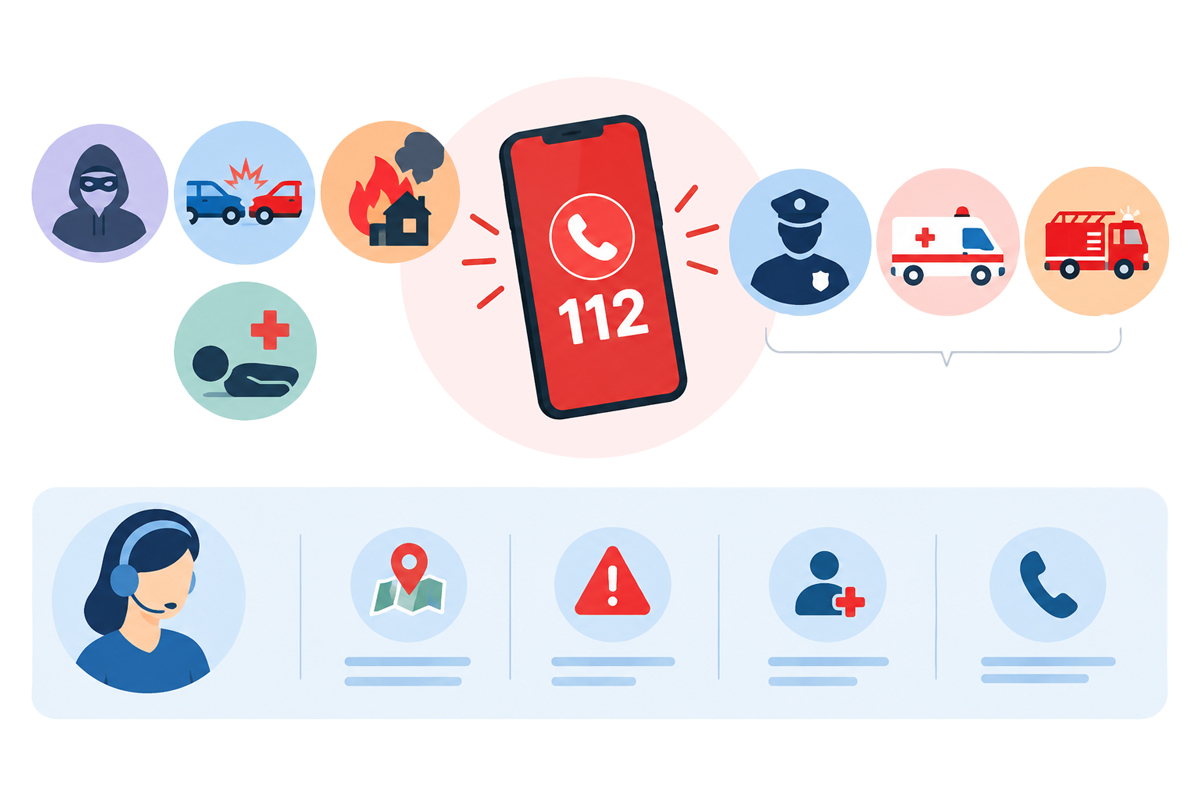
The main Bulgaria emergency number is 112. It is available 24 hours a day, free of charge, including from mobile phones. You can use it to request the police, an ambulance or the fire service.
Call 112 if there is an immediate threat to life or health, a robbery involving threats, a serious road accident, a fire or another emergency. The number is not intended for timetable enquiries, complaints about everyday inconveniences or issues that do not require an immediate response.
When calling, calmly tell the operator:
- Where you are: the address, street name, nearest landmark or your location on a map.
- What happened and whether anyone is injured.
- Whether you need the police, medical assistance or the fire service.
- Your phone number and any other information the operator requests.
If you are the victim of a theft but there is no immediate threat, contact the nearest police station. Block your bank cards if they are missing, and keep copies of your documents and payment records. If you have lost your passport, also contact your country’s consulate.