
Contents
About Bulgarian Winemaking
Few people know that many of the flavors and aromas found in Bulgarian wine are closely connected to the climatic conditions in which the grapes ripen. Wine is an essential part of local meals, weddings, and even casual gatherings with friends.
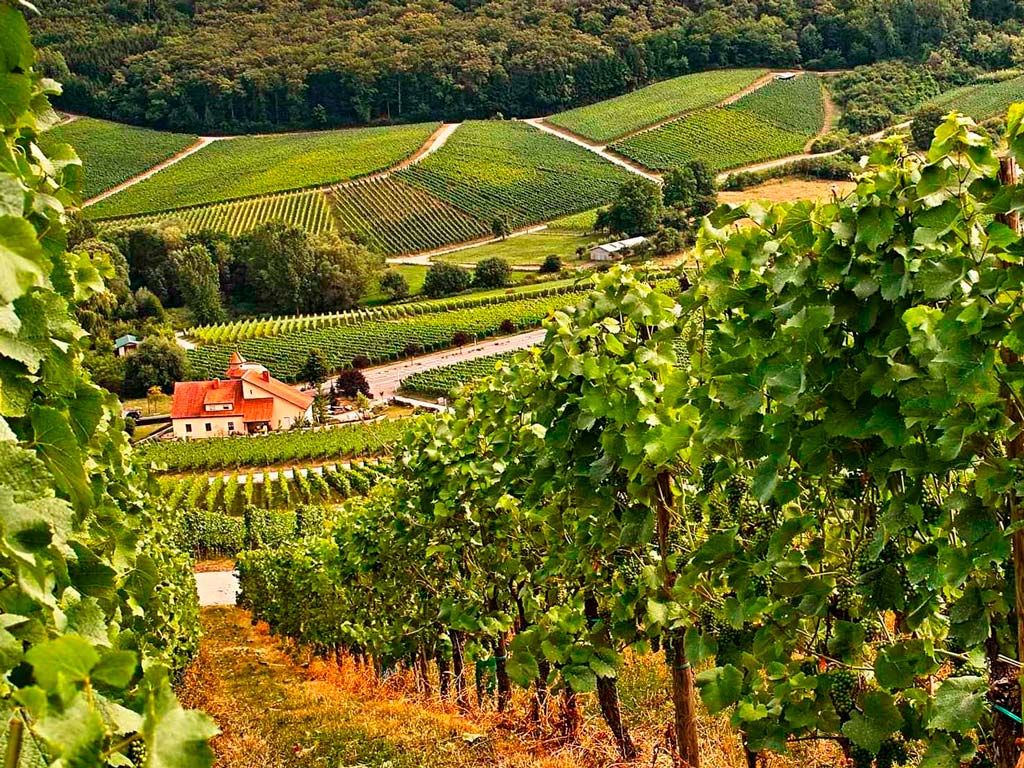
This small country on the Black Sea combines the characteristics of a temperate climate and a transitional Mediterranean climate zone. Summers are pleasantly warm and long, while mild winters bring sufficient rainfall. Together, these conditions create excellent conditions for growing grapes that are rich in flavor and aroma.
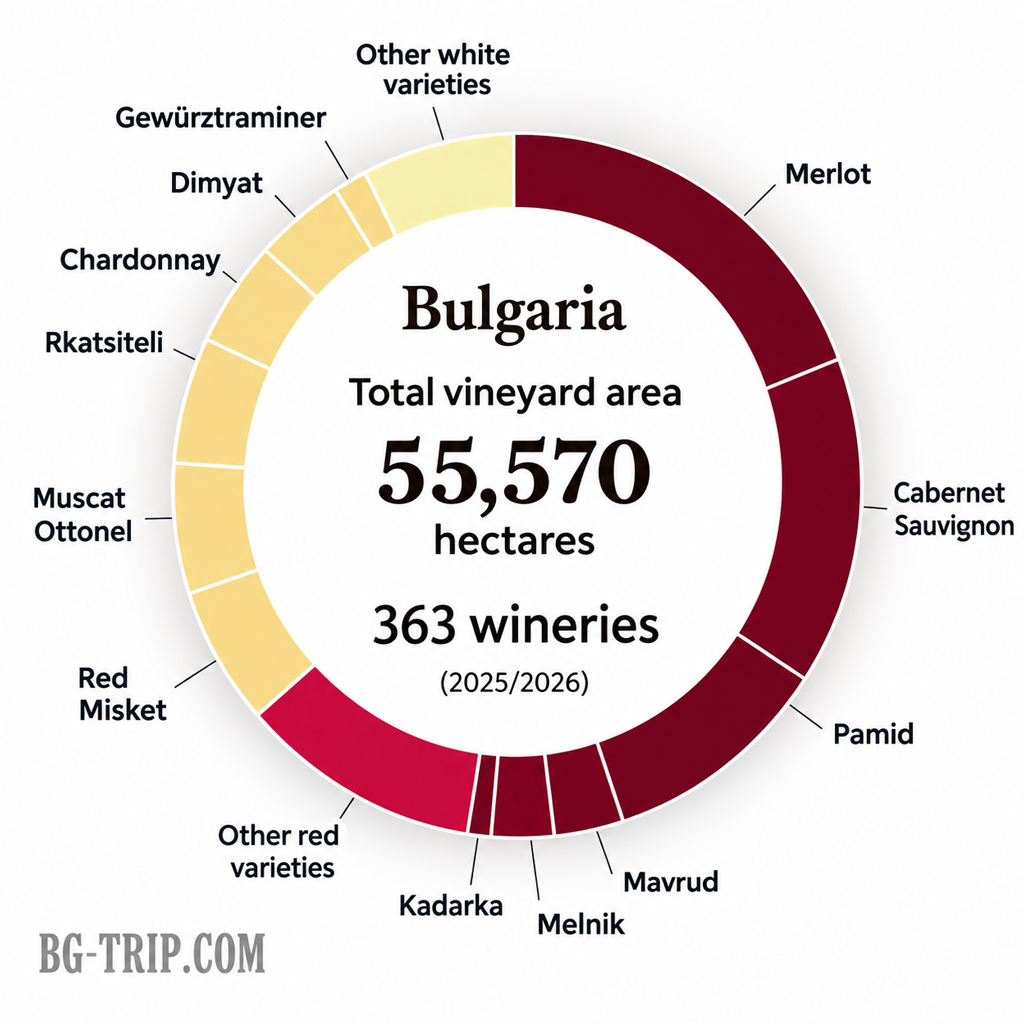
There are 260 officially registered wineries across the country. Around 80% of wine is consumed domestically, although export markets are also developing.
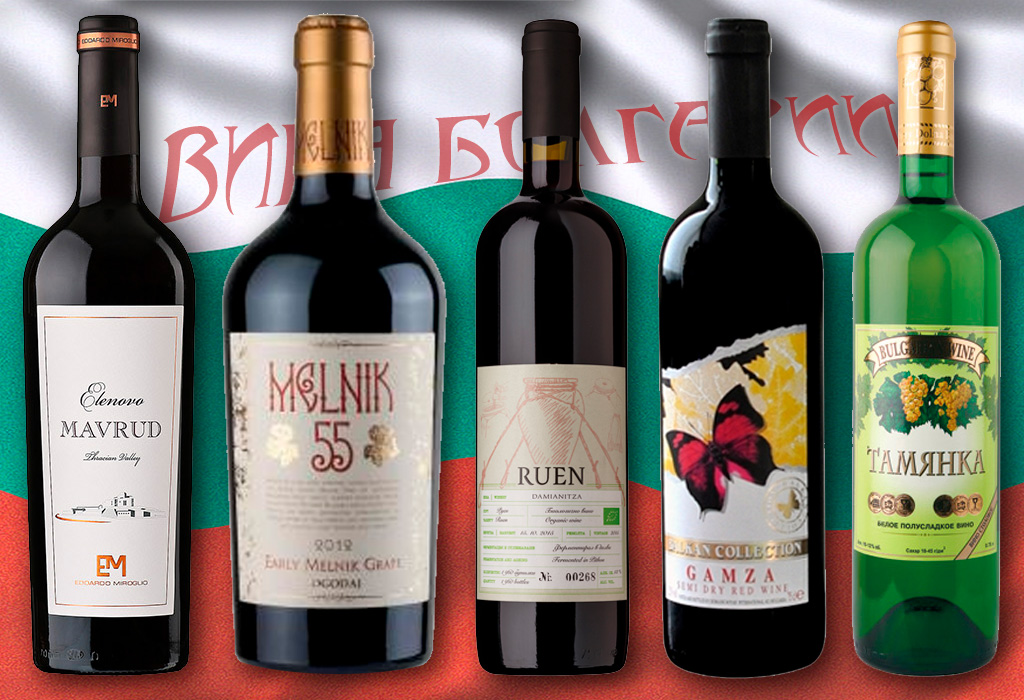
Bulgaria has its own local grape varieties, such as Mavrud, Melnik 55, Rubin, Gamza, and Ruen for red wines, and Dimyat, Misket, Tamyanka, and Bouquet for white wines. These varieties form the foundation of the country’s winemaking tradition. Bulgaria is also a place where small producers make wine from their own family vineyards for personal consumption. This is so common that it sometimes seems as though everyone makes wine here, and Bulgarians are very proud of it regardless of the quality.
In addition to the varieties mentioned above, most vineyards are planted with international grape varieties such as Cabernet Sauvignon, Merlot, Cabernet Franc, Syrah, and Pinot Noir for red wines, and Chardonnay, Sauvignon Blanc, Misket, Gewürztraminer, and Pinot Grigio for white wines.
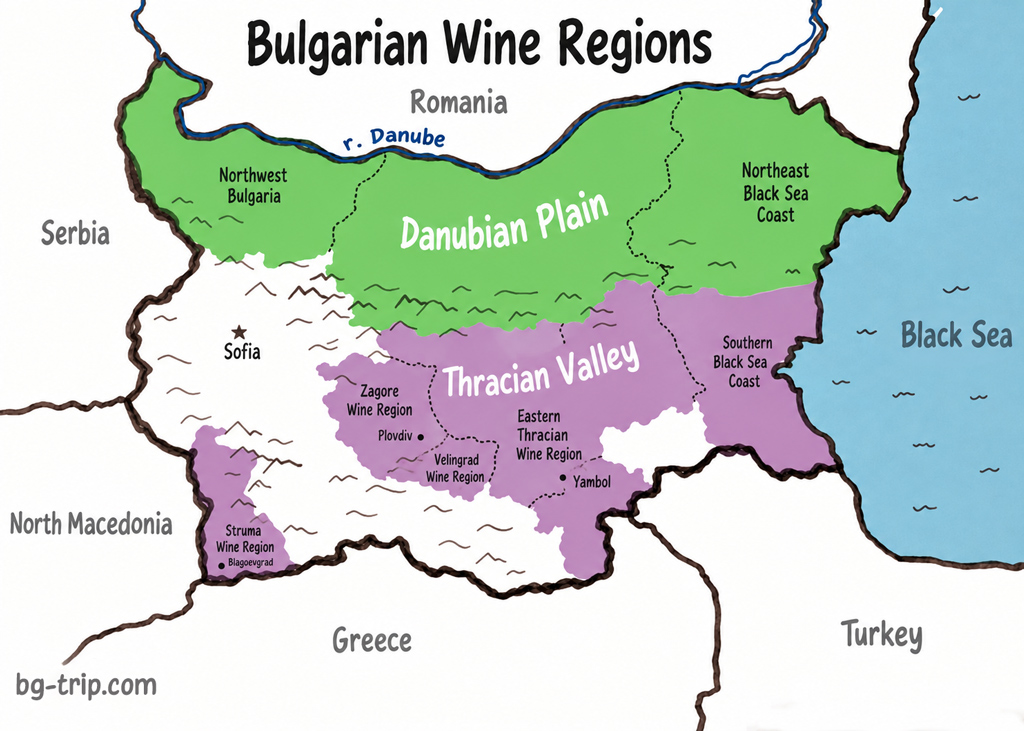
Broadly speaking, Bulgarian wine regions can be divided into two parts, with the country split into northern and southern areas. Within these areas are smaller regions that produce wines using their own techniques. Well-known names include Melnik and the Struma Valley, Southern Sakar, Yakata, the Rose Valley, Sredna Gora, and the Black Sea Coast.
White Wines
To properly understand and appreciate the quality of a wine, it is important to know what to expect from it, under what conditions it was produced, and which grape variety was used. Bulgarian white wines are produced by wineries in the northern region, including Svishtov, Ruse, and Suhindol, as well as in the eastern region, including wineries around Varna and Khan Krum. Bulgarian wines are distinguished by their refined and delicate flavors, with unique nuances that can make it seem as though something besides grapes was used to produce them.
But no! Only grapes. If you prefer lighter wines, be sure to try Traminer, Misket, classic Tamyanka, Muscat, and Galatea. Chardonnay in its traditional style is less common, but its freshness combined with an oaky character is captivating. Many young “village” wines have a muscat-like flavor and a rustic charm. Soft cheese or Bulgarian brined cheese served with the countless varieties of fruit found in this sunny country can further highlight the distinctive flavor and lightness of these wines.
The northern region, known as the Danube Valley, covers all of northern Bulgaria and is famous for its white grape varieties. In the northwest, near the Serbian border and the world-famous Belogradchik Rocks, Oggi, the owner of Borovitza Winery, takes care of 50–60 old grapevines, preserves the local Gamza grape variety, and produces world-class Pinot Noir.
Red Wines
These impressive wines are produced in the southern and southwestern regions of Bulgaria, including Plovdiv and Asenovgrad, in the Sub-Balkan mountain region, including the Sliven wine region, and also to some extent in the northern region, where wines such as Kadarka, Cabernet, and Gamza are produced by wineries in Svishtov and Ruse.
The flavor of Bulgarian red wines is light with some astringency in those from the northern and southwestern regions, while wines from the south tend to be more complex, full-bodied, and rich. These wines are festive and celebratory, and tourists often buy them as souvenirs. The best known include Mavrud, Melnik, Thracian wines, and Gamza. And, of course, Bear’s Blood!
Wine in Bulgaria is considered part of the country’s national heritage. Most wines are varietal, meaning they are made from a single grape variety. Bulgarian winemakers favor their traditional grape varieties, although blends can also be found today. Semi-sweet and sweet, dry and semi-dry, table wines and sparkling wines – it is difficult to decide which ones are the best. There are even wines made with honey or flavored with rose, which are quite popular.
Semi-Sweet Wines
Semi-sweet wines may be of particular interest, including Monastery Cellar, Troyan, Hemus, Balkan Fire, Melnik, Ruino, as well as dessert wines such as Biser, Varna, Slavyanka, Tarnovo, Rubin, and Pomorka.
Some Bulgarian semi-sweet wines that are particularly worth trying include:
“Kadarka” is a very full-bodied red semi-sweet wine with a deep purple color. Kadarka can be considered one of the most popular wines in Bulgaria, so be sure to try it! Despite its popularity, it is not particularly expensive, and in Bulgaria you can buy a bottle for €4–8.
“Tamyanka” is a white semi-sweet wine with an alcohol content of 10–12%, made from several grape varieties.
Dry Wines
White
“Balkan Collection Muscat” is a semi-dry wine with a magnificent, persistent floral bouquet;
“Muscat Uni-Blanc” is a wine with a pleasant finish and notes of peach and rose;
“Balkan Collection Chardonnay” is a wine with a lingering character and notes of grapefruit, lemon, and apple;
“Chardonnay – Barrique” is a full-bodied wine with a golden-green hue and a well-rounded flavor, combining notes of tropical fruit with hints of oak.
“Snow Wine” is a unique Bulgarian wine made from the Dimyat grape variety. The grapes for this wine are harvested before the first snowfall. The cold removes excess moisture, while the fructose becomes concentrated to 28–30%. Snow Wine is considered a dry wine, but the partially dried grapes retain a certain concentration of sugar, giving it a slightly sweet taste. A bottle costs €9–15.
Red
“Cabernet Sauvignon Royal Reserve” is a wine with a classic vanilla aroma and subtle fruity notes;
“Cabernet Sauvignon Reserve” has a refined freshness of fruit and clove spice, with a hint of vanilla;
“Balkan Collection Cabernet Sauvignon” is a dark ruby-colored wine with a distinctive grape aroma;
“Mavrud” is an almost black, highly concentrated wine with abundant fruit flavors and a barely perceptible hint of medicinal herbs. Original Mavrud is becoming increasingly difficult to find on Bulgarian store shelves because vineyards are being reduced in favor of Cabernet Sauvignon;
“Balkan Collection Merlot” is a wine with a romantic character and a persistent aroma of ripe grapes;
“Merlot Cabernet Sauvignon” is a varietal wine with a concentrated flavor and a soft bouquet of spicy aromas;
“Melnik – Balkan Collection” is a wine with a delicate bouquet of ripe grapes;
“Merlot Reserve” is a dry red wine with a smooth character and pronounced raspberry flavor;
“Gamza – Balkan Collection” has a refined taste with bright, fresh aromas of ripe fruit.
Some Facts About Bulgarian Winemaking
- Be sure to try wines labeled DGO.
- The best-known Bulgarian wine is “Gamza.” Bulgarians say that this wine cannot be mistaken for any other.
- Drink only young wines: an old red wine may have lost its freshness.
- On February 14, Bulgaria celebrates the wine festival of Trifon Zarezan. The popular name for the celebrations is “TRIFUN THE DRUNKARD.”
- The most interesting Bulgarian wine is Snow Wine (Eiswein), made from grapes that have been exposed to frost, sometimes with honey added.
- The most unusual wines include special fortified, highly aromatic, and sweet wines made from grapes affected by mold.
When talking about Bulgarian wines, it is worth remembering the old saying that “there is no accounting for taste.” Still, this palette of flavors and aromas offers plenty to choose from, whether you want to enjoy a special wine, find a worthy gift for friends or relatives, or add an impressive bottle to your collection of fine wines.
Prices of Bulgarian Wine
In Bulgarian shops, wine usually costs between €2–3 and €20. In large supermarkets and hypermarkets, some brands may be available at higher prices.
Wine sold by the liter typically costs between €4 and €10. Do not overlook these places, as you can often taste the entire selection completely free of charge and choose the wine that suits you best.
Where to Buy Bulgarian Wine
If you visit Bulgaria, the easiest way to try Bulgarian wine or buy it as a souvenir is to visit supermarkets and small local shops, where it is available in a wide range. Look out for wine shops selling wine by the liter, known as Dionis. These shops usually have knowledgeable staff who can tell you more about the wines and offer tastings from their selection.
You can also shop through Bulgarian online wine stores. Here are some examples:
Tell us which Bulgarian wines you like!