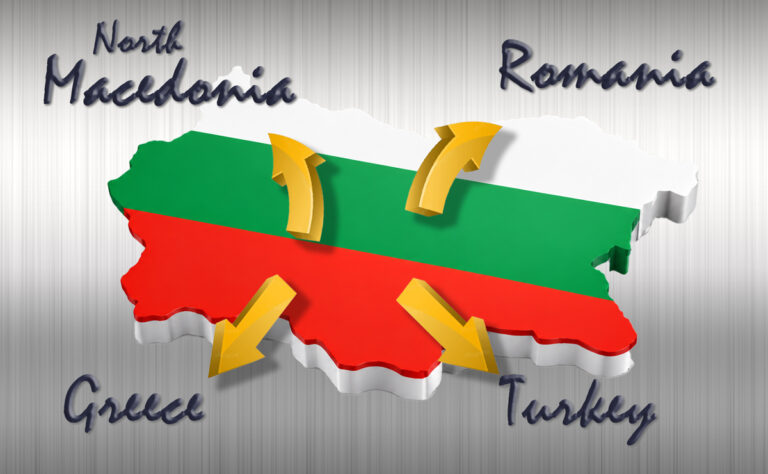
Bulgaria’s proximity to Greece makes it possible to diversify your sightseeing program without covering long distances.
A 3-day excursion from Bulgaria to Greece will allow you to visit as many interesting places as possible in such a short period of time. Here are some of them.
Contents
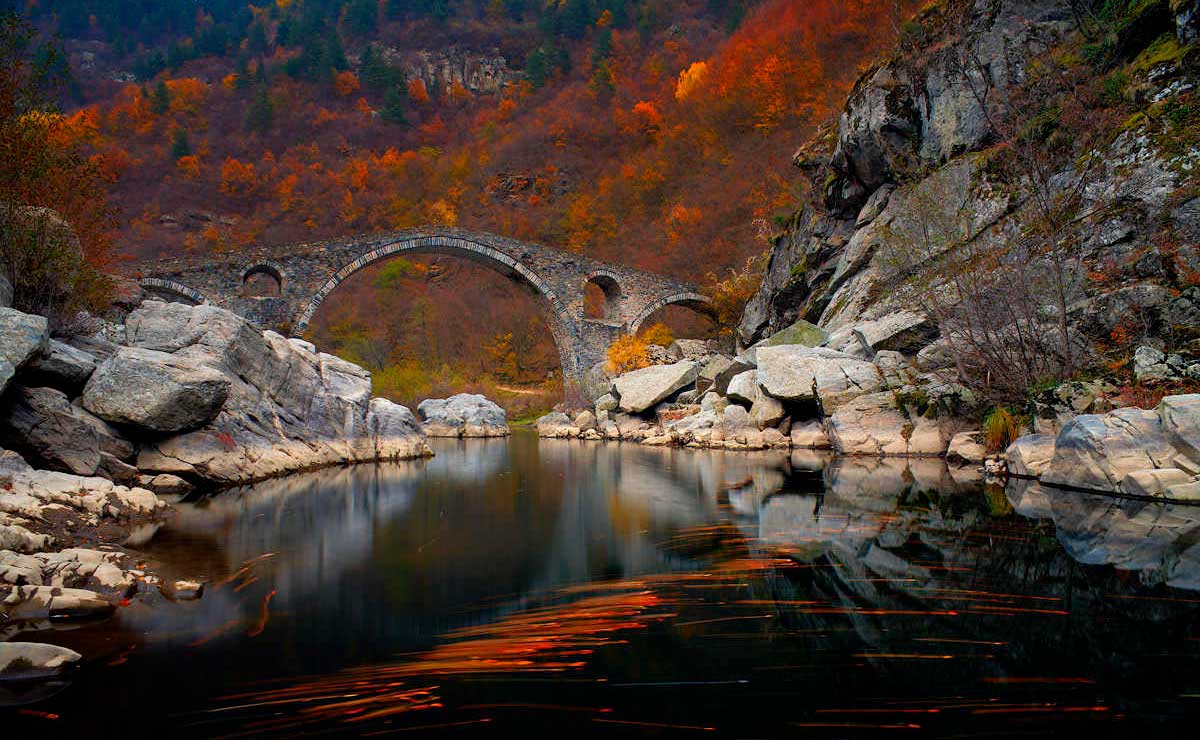
Devil’s Bridge (Bulgaria, Rhodopes)
Bulgaria is home to a remarkable bridge that was built 500 years ago! It is called the Devil’s Bridge, and according to numerous legends, its construction could not have been completed without supernatural forces.
The main legend says that back in the darkness of the Middle Ages, when the bridge was built in the early 16th century, the devil appeared to a young man who was building a bridge across a turbulent river. “I will help you,” said the Lord of Darkness, and the surrounding rocks trembled at his voice. “Your bridge will stand forever, and no human effort will be needed to keep it stable. But you will have to fulfill my conditions…”
Those devilish “buts”! The devil demanded that his likeness be immortalized during the construction of the bridge, but not remain visible at all times. It had to be possible to touch the image, while the image itself could not be tangible. The young man agreed and fulfilled these conditions! That is why the bridge has stood for 500 years.
The story goes that the young man fell ill and died afterward, taking the secret to his grave. But Bulgarian scholars solved this legendary mystery. If you look through the opening in the largest arch of the structure, the rocks there resemble the face of the devil. However, only half of the face can be seen, while the other half is reflected in the flowing water. What a natural wonder!
There are also many other legends about the bridge, including one about a stone bearing the imprint of the devil’s footprint. They are all fascinating, but it is better to discover them for yourself in this slightly eerie place. Climb onto this legendary structure, 56 meters long and 3.5 meters wide, known in Bulgarian as Sheitan Kyupriya, and listen…
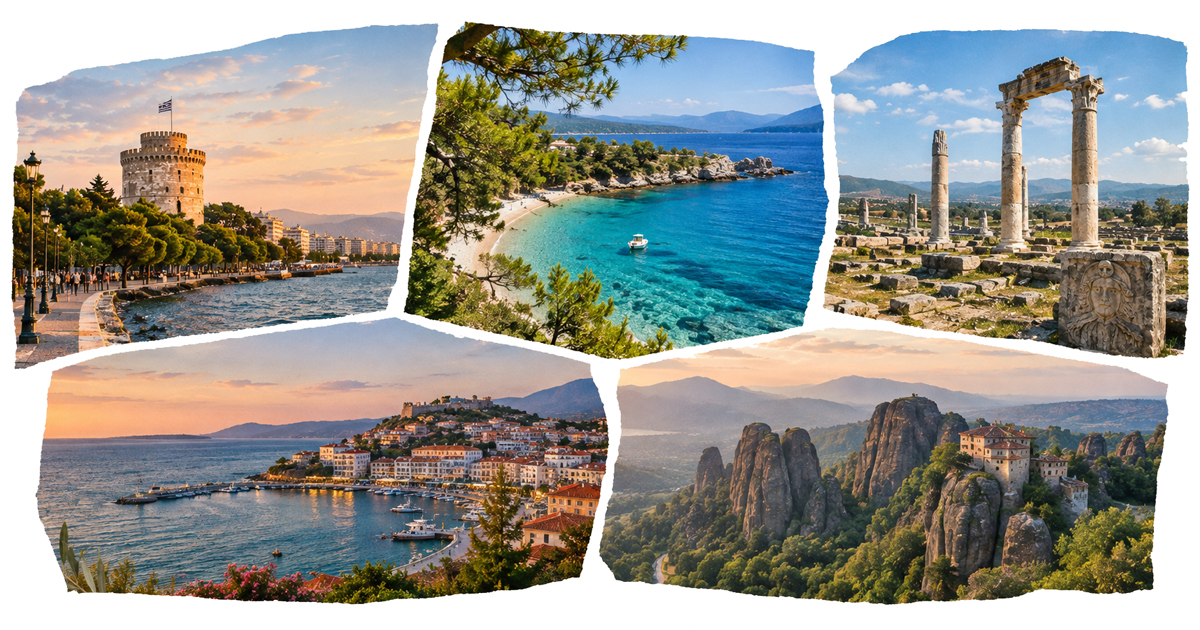
Lighthouse (Greece, Kavala)
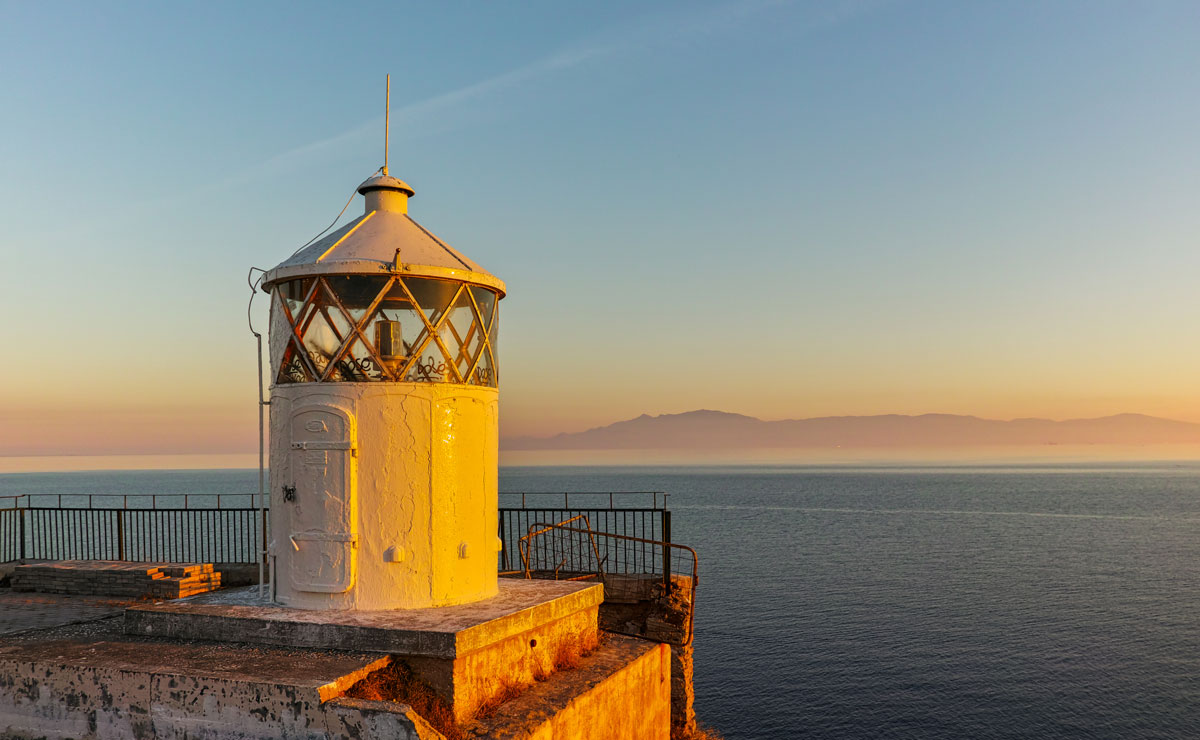
If you ask where the best place is to admire the ancient Greek city of Kavala, there is one obvious answer. It is the 19th-century lighthouse, from where you can see the wonderful island of Thasos on one side, Mount Athos rising in the west, and the coast of Keramoti stretching out to the east in all its beauty. Here, the waves lap against the shore, and the sea seems to merge with the horizon.
The lighthouse itself is a small white tower with a lantern on top. There is a small paved and fenced area around it, which offers spectacular photo opportunities!
Aqueduct, Old Town, Mehmet Ali’s House, Town Hall (Greece, Kavala)
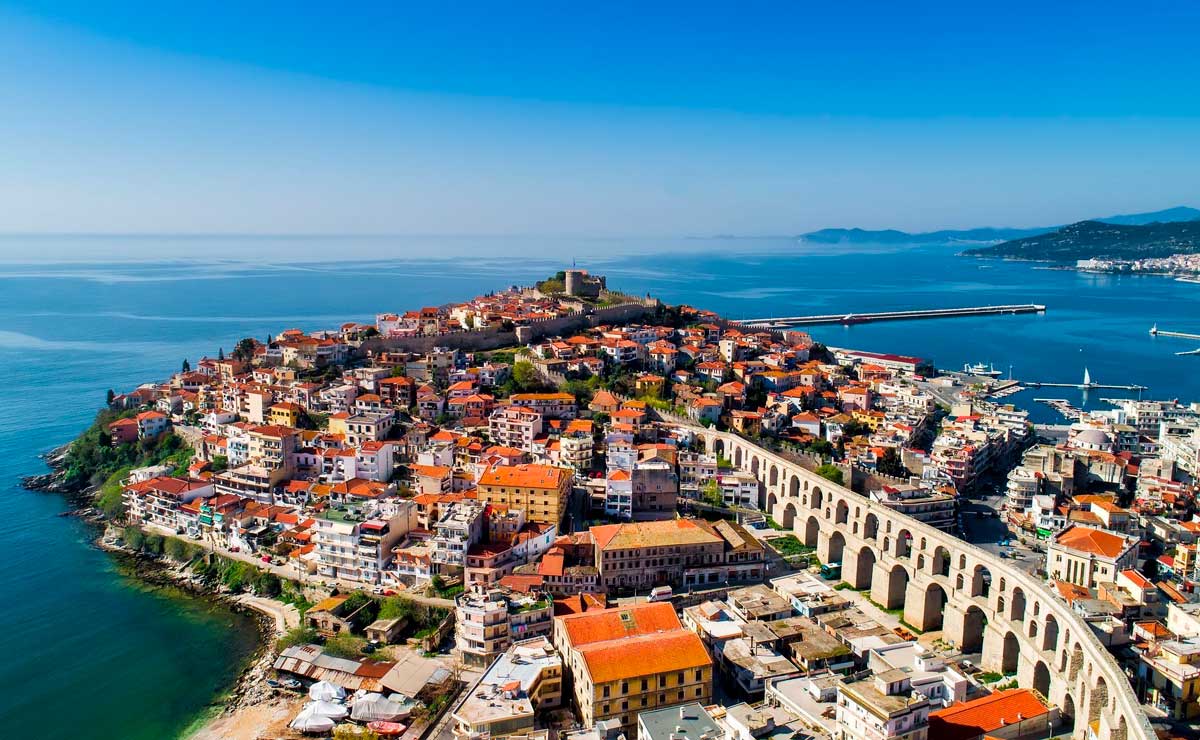
The city of Kavala itself looks like one large open-air attraction. Its main highlight is the ancient Kamares Aqueduct, which dates back to Byzantine times and was rebuilt in the 16th century by Sultan Suleiman the Magnificent, remaining largely intact to this day. This impressive structure is 20 meters high and 280 meters long, with 60 surviving arches. The aqueduct has three levels and continued to serve its original purpose of supplying water to the city until the beginning of the last century.
The aqueduct connects the New and Old Town of Kavala, which captivates everyone who comes here. There are magnificent architectural landmarks, including the Imaret, an outstanding example of Islamic architecture (now a five-star hotel), Mehmet Ali’s House, built in the 18th century and now home to a museum, the Halil Bey complex with its 16th-century mosque, and the Church of the Virgin Mary.
Mehmet Ali’s House deserves special mention. Its builder was the founder of the last dynasty of Egypt, and his house was the largest residential building in Greece in the 18th century. It attracts visitors with its somewhat ornate Oriental beauty, while the bronze statue of Ali gazes indifferently at everything happening around it.
In Kavala, you will also visit the magnificent Town Hall, built in 1895 by Hungarian industrialist Pierre Herzog and later transferred to the city, as well as the Fortress with its central circular tower, arsenal, and guardhouse, which towers over the city as if floating somewhere high above it. All of this creates the remarkable and unique atmosphere of Kavala, where every house, square, and even paving stone seems to breathe with history.
Archaeological Site and Museum (Greece, Philippi)
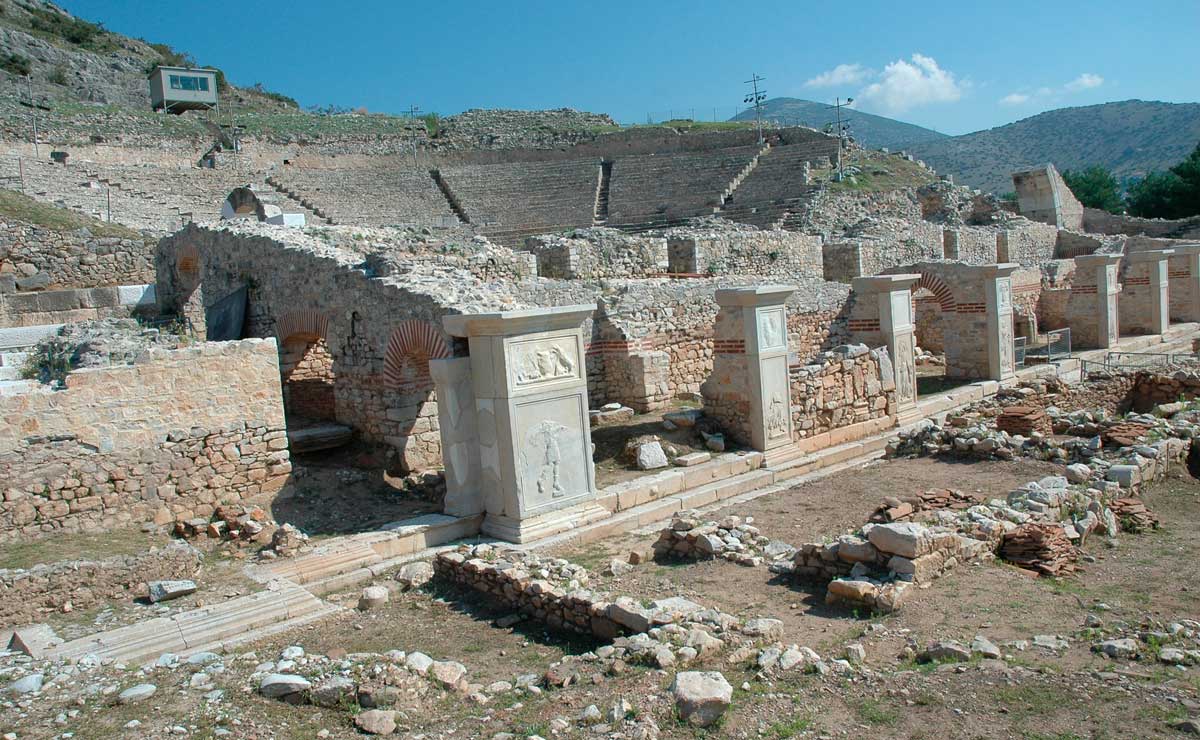
While Kavala itself offers many sights associated with Islamic influence, just 17 km away there is a wonderful place connected with Christian heritage. This is where ancient Philippi is located, and the Christian community here was founded by the Apostle Paul himself. He arrived here in 49 AD, and today you can follow the route of the Apostle along the surviving Via Egnatia.
There is plenty to see here: the ruins of once-magnificent Christian churches, the walls of the prison of the Apostle Paul, and an ancient theater where festivals are still held today. This is a monumental ancient architectural site included on the UNESCO World Heritage List. The city was originally founded by the Macedonian king Philip II, and it owed its initial prosperity to him. But after a disciple of Jesus Christ came here, these places became sacred.
Approximate Excursion Program from Bulgaria to Greece
Excursion Cost
The minimum total cost of the excursion for a group of up to 4 people is €750.
For a group of 4 people – €190 per person (total €760).
For a group of 5 people – €175 per person (total €875).
For a group of 6 people – €155 per person (total €930).
The price includes: travel in a comfortable car, excursion services, museum entrance tickets, and accommodation at one of the hotels in Kavala (2 people per room).
Not included: meals.