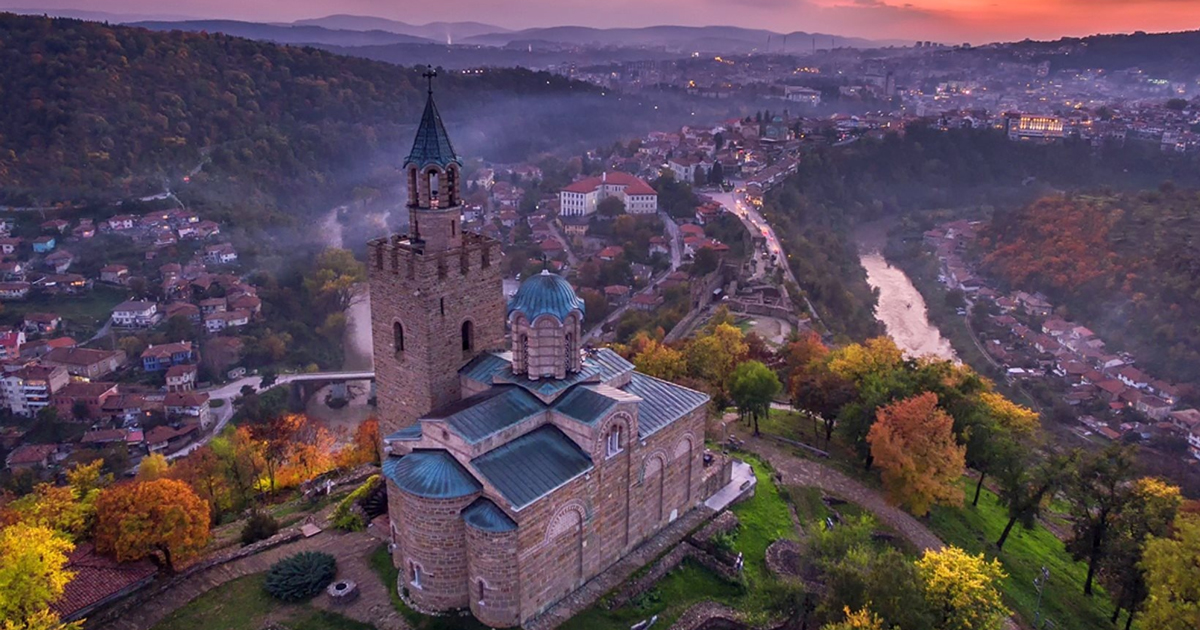



Veliko Tarnovo is one of Bulgaria’s most fascinating historic cities. It is built on the slopes of hills overlooking the Yantra River, and its Old Town is a maze of cobbled streets, traditional houses, churches and viewpoints. The city’s main attraction is Tsarevets Fortress, once the residence of the Bulgarian tsars during the Second Bulgarian Empire.
A trip to Veliko Tarnovo offers a chance to explore the country’s medieval history, admire traditional Bulgarian architecture and enjoy the atmosphere of a charming city at an unhurried pace. Most of the main sights are relatively close to one another.
This travel guide covers the main Veliko Tarnovo attractions, walking routes, transport, parking and prices. It also explains how much time to allow for your visit, where to eat and which interesting places are worth exploring around the city.
Contents
- Veliko Tarnovo: An Overview
- Top Attractions in Veliko Tarnovo
- Veliko Tarnovo Old Town
- Veliko Tarnovo in One Day: Itinerary and Costs
- Veliko Tarnovo in Two Days
- Map of the Places and Attractions Featured in This Guide
- How to Get to Veliko Tarnovo
- Where to Park in Veliko Tarnovo
- Where to Eat in Veliko Tarnovo
- Places to Visit Near Veliko Tarnovo
- When to Visit
- Frequently Asked Questions
Veliko Tarnovo: An Overview
Veliko Tarnovo is located in central northern Bulgaria, about 220 km from Sofia. The city is known as the former capital of the Second Bulgarian Empire, which existed from 1185 to 1396. During this period, Tarnovo was the country’s most important political, cultural and spiritual centre.
The city developed across several hills, with the Yantra River flowing between them. This gives Veliko Tarnovo its distinctive terrain: streets climb and descend along the slopes, houses stand at different levels, and many parts of the city offer views over the gorge and the opposite riverbank.
There are three features that matter most to visitors:
- Historic architecture. Medieval fortresses, Orthodox churches, Bulgarian National Revival houses and traditional craft workshops.
- Panoramic views. Viewpoints are scattered along the old streets and near the main landmarks. The city is particularly striking at sunset, when the buildings are illuminated.
- A compact centre. The main attractions are within walking distance of one another, although the steep slopes make comfortable shoes and a reasonable level of fitness important.
Veliko Tarnovo is easy to explore independently. You will hardly need public transport to visit the Old Town: walking between the sights is much more rewarding, giving you time to explore small courtyards and stop at viewpoints along the way.
The best time to visit is from April to June and from September to October. The weather is more comfortable for walking along the hilly streets and spending time outdoors during these months.
Top Attractions in Veliko Tarnovo
If this is your first visit to Veliko Tarnovo, start at Tsarevets Fortress and then make your way to the Old Town. This order lets you first explore the history of the medieval capital and then take in its architecture and modern neighbourhoods.
Tsarevets Fortress
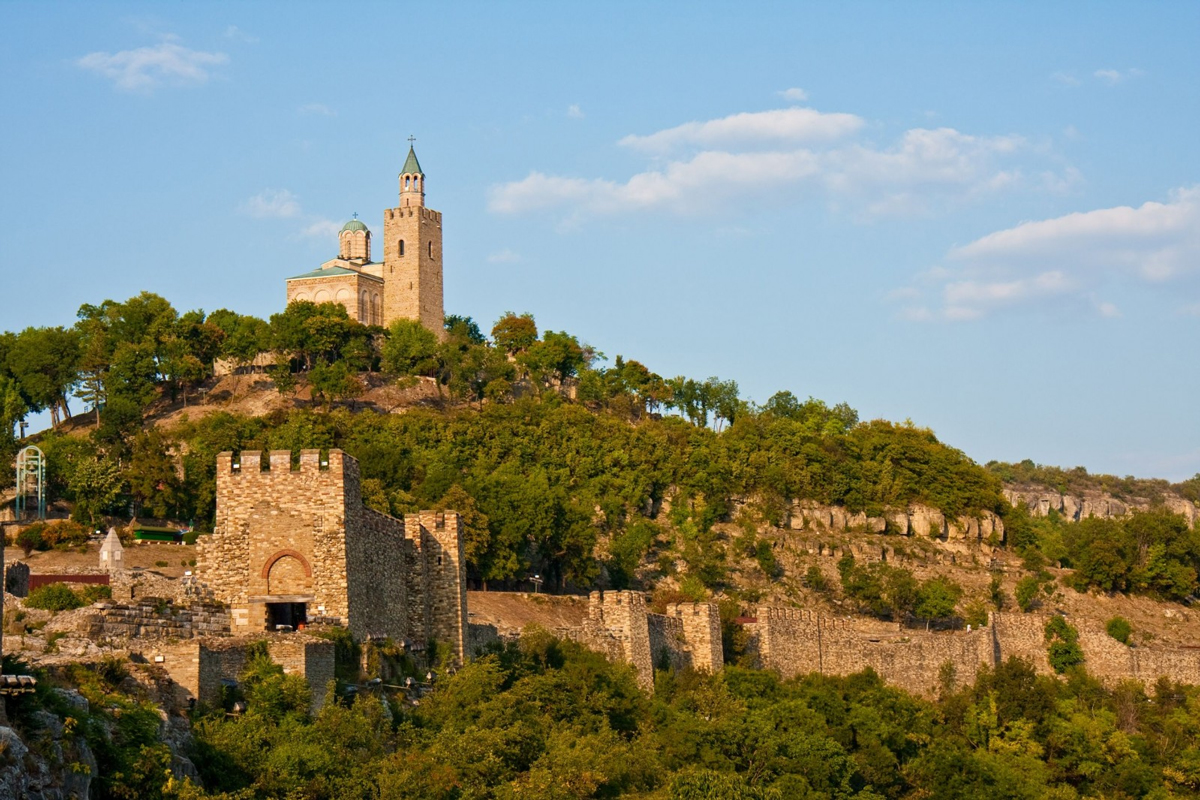
Tsarevets is the city’s main historic landmark and an essential stop on any sightseeing tour. The hill was home to the royal residence, the Patriarchal complex and the administrative centre of the Second Bulgarian Empire.
The fortress walls enclose a large part of the hill. Inside, you can explore the ruins of the palace complex, the remains of residential buildings, churches and service structures. The main landmark is the Patriarchal Church of the Ascension of Christ, which stands at the top of the hill.
The fortress offers panoramic views over Veliko Tarnovo and the Yantra Valley. Allow around 1.5 to 2 hours for your visit: the site is quite extensive, and some sections involve climbing stone paths.
Tsarevets is particularly worth visiting towards the end of the day. The softer light brings out the outlines of the fortress walls, while the historic cityscape can be seen from above.
Admission for adults is €7.67. A family ticket for parents with children aged 7 to 18 costs €10.23. From November to March, the fortress is open from 09:00 to 17:00, with last admission at 16:00. From April to September, visiting hours are extended to 08:00–20:00.
General Gurko Street
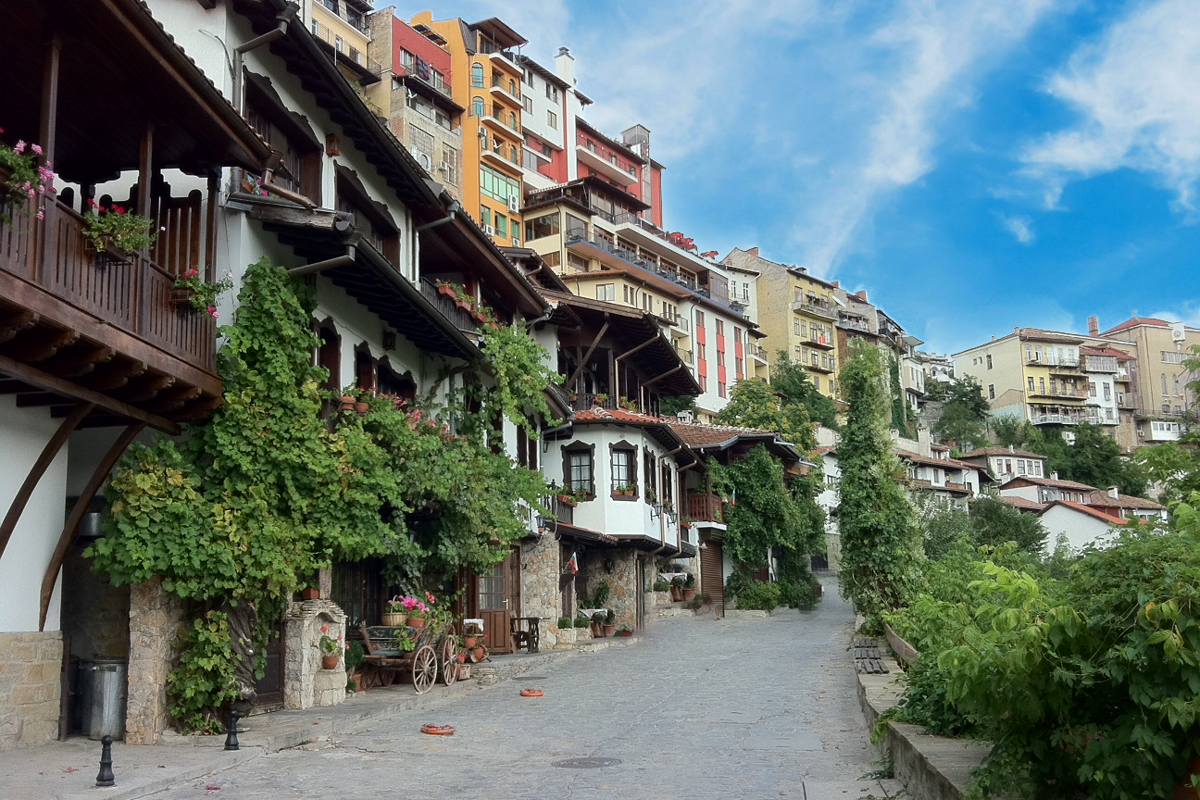
General Gurko Street is one of the most picturesque spots in the Old Town. It runs along the hillside above the Yantra River and is lined with old houses featuring wooden balconies, stone foundations and projecting upper floors.
The street’s architecture captures the atmosphere of the Bulgarian National Revival. The houses seem to rise above one another, creating a distinctive urban landscape. Narrow passageways, staircases and small terraces overlooking the river can be found between the buildings.
It is a lovely place to wander without a particular destination, photograph traditional façades and take a closer look at the details of the historic buildings. Small hotels, cafés and restaurants line the street.
The Sarafkina House is also worth a visit. This 19th-century historic building houses an ethnographic exhibition and offers an insight into the lifestyle of the city’s wealthier residents at the time.
Samovodska Charshia
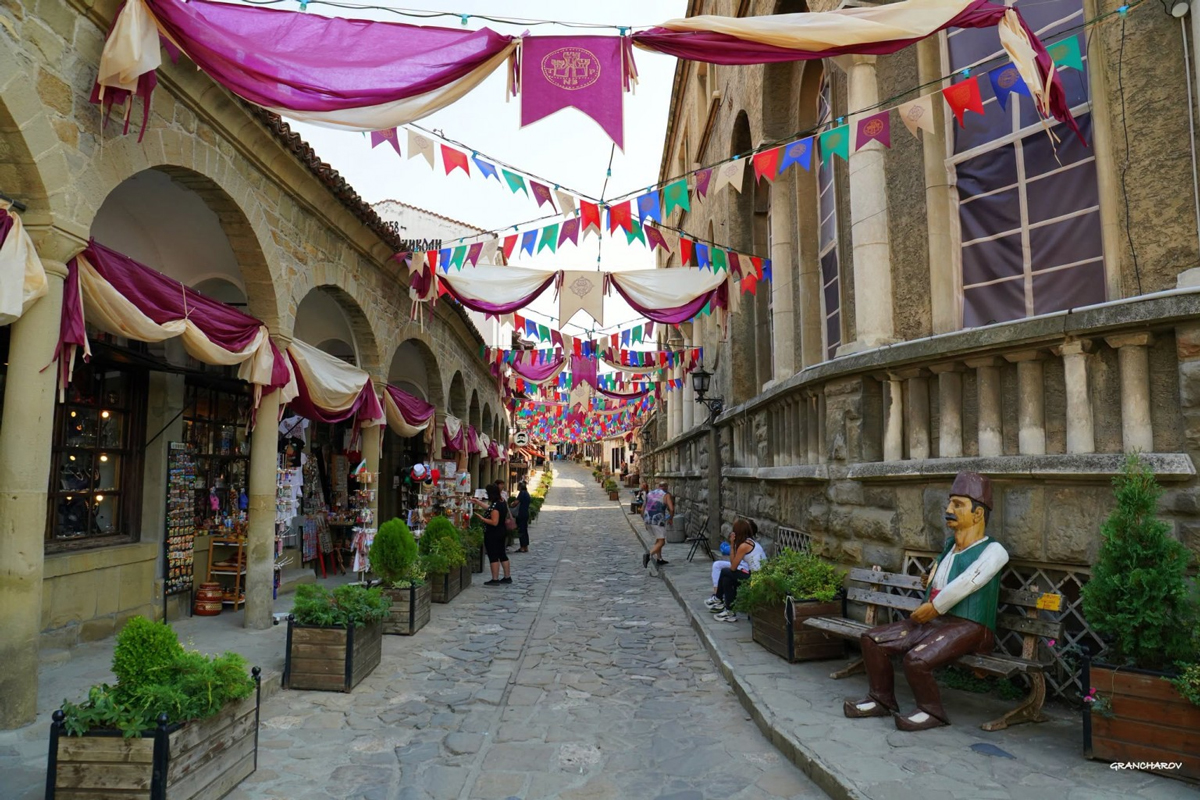
Samovodska Charshia is a historic shopping street that is now considered one of the city’s most atmospheric places. In the 19th century, it was home to craftsmen and merchants. Today, small workshops and souvenir shops keep that tradition alive.
As you walk along the street, you will see pottery, ceramics, wooden items, jewellery and other handmade goods. Some craftspeople work in open workshops, allowing visitors to watch them make their products.
The street is also home to small pastry shops, bakeries and cafés. It is a good place to take a break during your sightseeing: try some Bulgarian pastries, have a coffee and pick up a souvenir connected with local traditions.
The best time to visit is in the first half of the day, when the shops are open but the main tourist crowds have yet to arrive.
Asenevtsi Monument
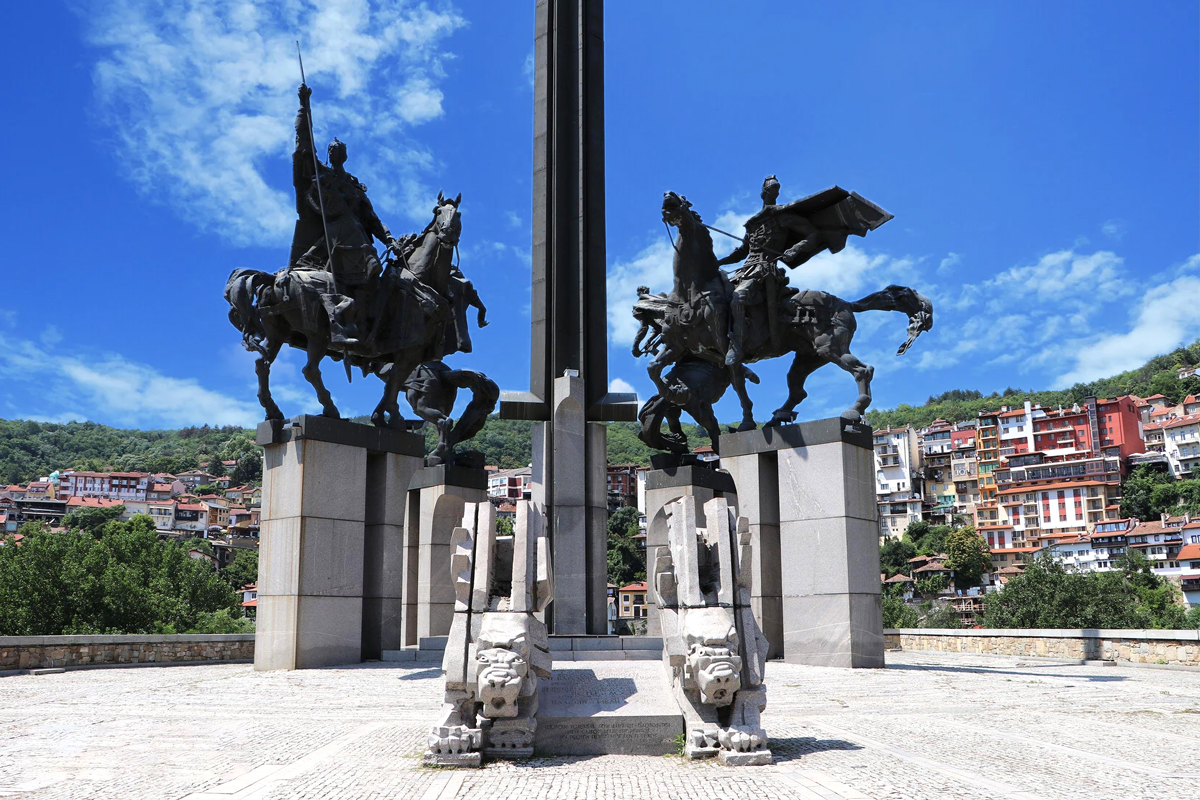
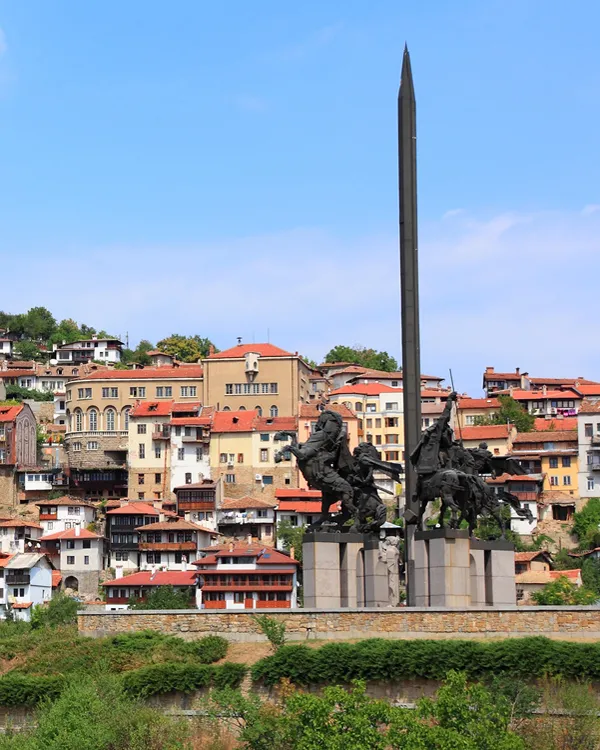
The Asenevtsi Monument is dedicated to the Bulgarian rulers Peter, Asen, Kaloyan and Ivan Asen II. The uprising led by the brothers Asen and Peter in 1185 marked the restoration of Bulgarian statehood and the establishment of the Second Bulgarian Empire.
The monument was unveiled in 1985 to mark the 800th anniversary of the uprising. At the centre of the composition is a towering equestrian figure holding a sword, with the other sculptures arranged around it.
The monument stands on an open square near the Yantra River, next to the Boris Denev Art Gallery and Stambolov Bridge. It is one of the best viewpoints in Veliko Tarnovo, offering clear views of the old houses, surrounding hills and winding river.
Admission is free. You only need 15–30 minutes to visit, although it is worth staying longer for panoramic photos.
Church of the Forty Martyrs
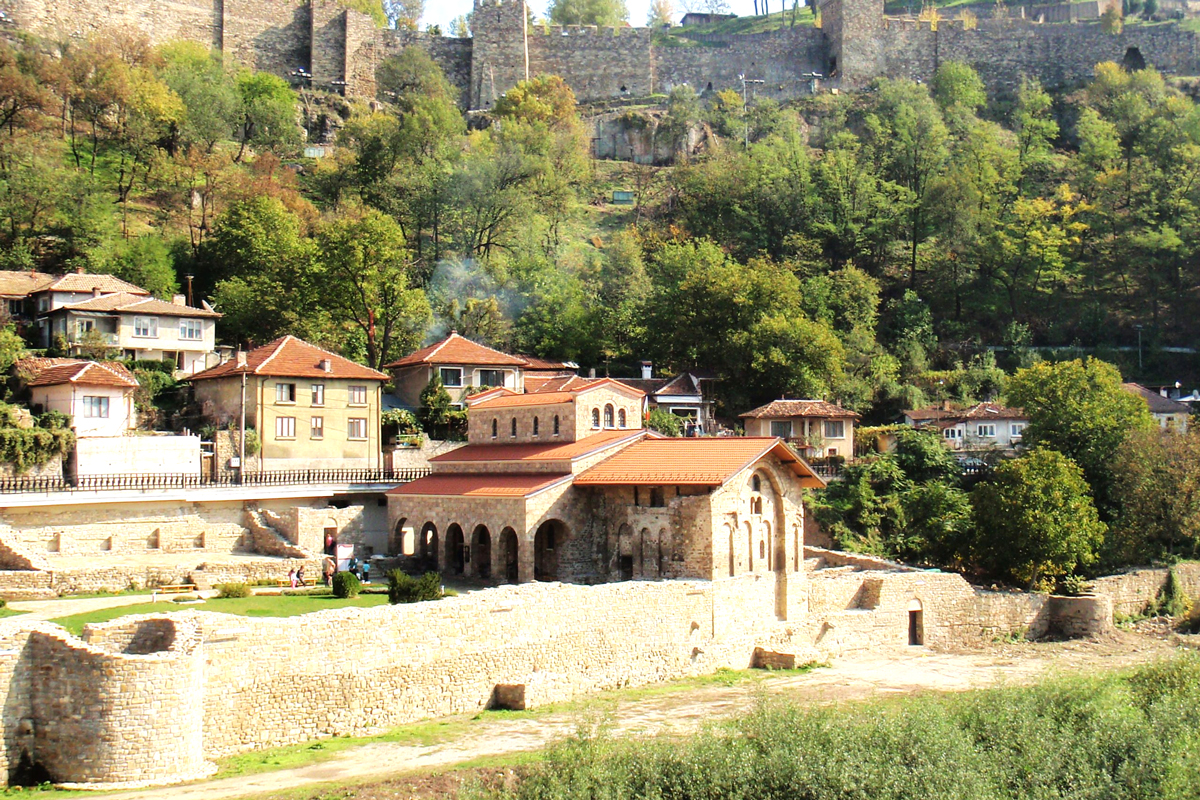
The Church of the Forty Martyrs stands at the foot of Tsarevets Hill, close to the Yantra River. It was built in the 13th century by order of Tsar Ivan Asen II to commemorate the Bulgarian victory over the forces of the Despotate of Epirus in 1230.
This is not only a religious monument but also an important site in Bulgarian history. Inside are historic columns bearing inscriptions associated with the reigns of several Bulgarian tsars.
The church is particularly interesting for visitors who want to learn more about the country’s history. Allow around 20–30 minutes to explore the interior.
A standard ticket costs €5.11. The family ticket for visitors with children costs €7.67.
Trapezitsa Hill
Trapezitsa is the second major medieval fortified hill in Veliko Tarnovo. During the Second Bulgarian Empire, it was home to residential quarters for the nobility, churches and defensive structures.
Today, the site is an archaeological complex with remains of fortress walls and medieval churches. It is usually quieter than Tsarevets, making it a good choice for visitors who want to explore a less busy part of the historic city.
You can reach the top by funicular, when it is operating, or by walking up the hill. Bear in mind that a visit to Trapezitsa takes time both to get there and to explore the site, so it is better saved for the second day of a short trip.
Konstantsalieva House in Arbanasi
Konstantsalieva House is not in Veliko Tarnovo itself, but in the nearby village of Arbanasi. It is one of the finest examples of traditional 17th-century Bulgarian residential architecture.
The building resembles a small fortress, with massive stone walls, enclosed inner spaces and relatively few windows on the lower floor. This design helped protect the wealthy owners during turbulent times.
The interior recreates the setting of a prosperous merchant’s home. You can see furniture, interior details and objects from traditional everyday life.
An adult ticket costs €7.67. Allow 30–45 minutes for your visit.
Veliko Tarnovo Old Town
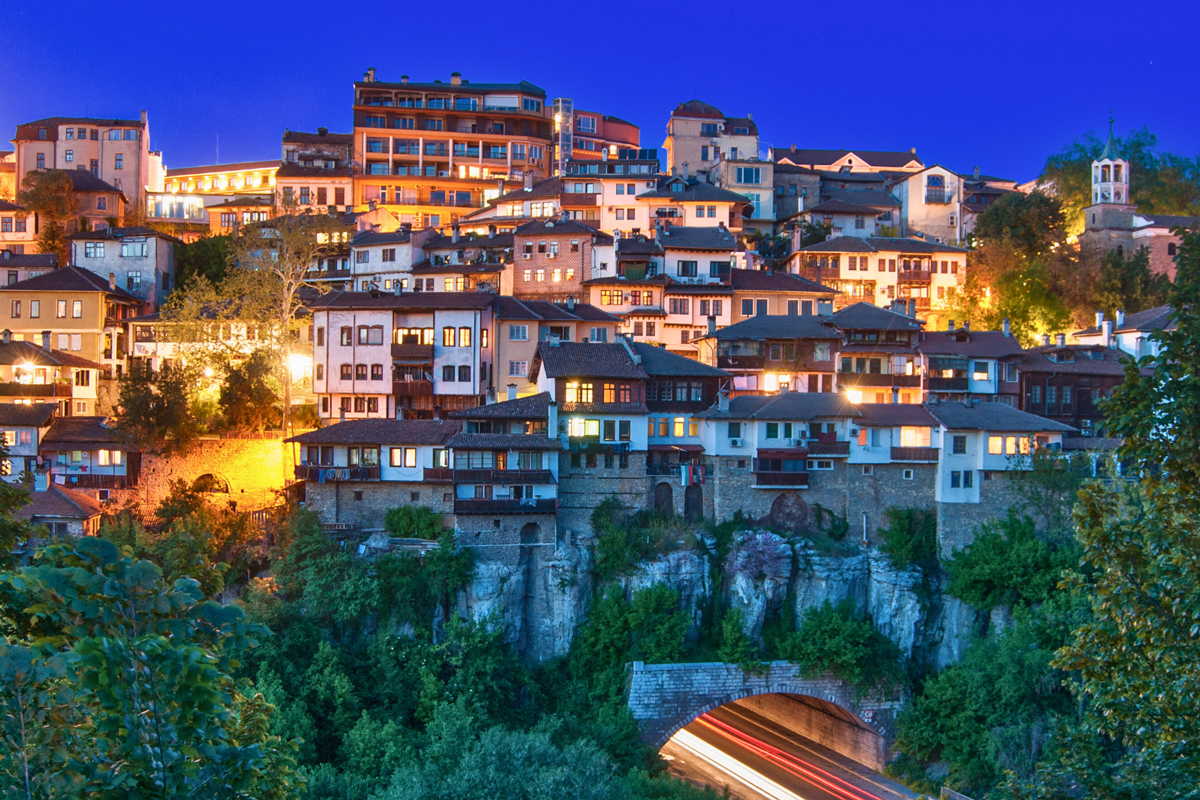
Veliko Tarnovo Old Town is the historic part of the city, where traditional buildings from several centuries have been preserved. This is where you will find General Gurko Street, Samovodska Charshia, old churches, craft workshops and many of the city’s best viewpoints.
Walking through the Old Town lets you see the city from different perspectives. The upper streets offer a closer look at the architecture and façades, while the lower lanes open up views of the river and the opposite hillsides.
- General Gurko Street – old houses and Yantra views
- Samovodska Charshia – workshops and souvenir shops
- Old Town lanes – historic architecture and photo spots
- Saedinenie Square – the Archaeological Museum
- Stambolov Bridge – views of the Asenevtsi Monument
There is no need to rush through every street. Veliko Tarnovo is best enjoyed through its details: small courtyards, staircases, house façades and unexpected views that appear around the next corner.
Veliko Tarnovo in One Day: Itinerary and Costs
If you only have one day, focus on Tsarevets Fortress and the historic centre. This is enough to see the main attractions and get a feel for the former Bulgarian capital.
Here is a suggested one-day Veliko Tarnovo itinerary:
Route Map
The itinerary allows for a relaxed pace, with time for photographs and breaks. If you are interested in museums, you can use some of the time to visit Sarafkina House or the archaeological exhibition.
If you are travelling from Sofia for just one day, remember to factor in the return journey. The bus takes around 3–3.5 hours each way, so it is best to take an early departure if you want enough time to explore the city.
Veliko Tarnovo in Two Days
Two days is an ideal amount of time to explore the city and its surroundings. You can visit the main attractions without rushing, see several museums and take a trip to Arbanasi.
The second day’s plan may look rather short because it is arranged around the scheduled bus service. If you have a car, you can make the trip much more varied.
Route Map
This itinerary combines the main historic landmarks, traditional architecture, panoramic views and a taste of Bulgarian cuisine.
You can also make a similar two-day trip from Sofia instead.
Map of the Places and Attractions Featured in This Guide
For an independent trip, it is best to mark the main attractions on a map in advance. The historic centre is spread across several hills, so the distance between two points does not always reflect the actual travel time: even a short walk may involve a long climb or a flight of steps.
For a first visit, the following order works well:
- Tsarevets Fortress.
- Church of the Forty Martyrs.
- General Gurko Street.
- Samovodska Charshia.
- Saedinenie Square.
- Asenevtsi Monument.
A walk taking in the main sights will take around 5–7 hours. The total may increase depending on which museums you visit and how long you spend at each stop.
Keep in mind that the Old Town is not suited to completely flat, easy walks. There are plenty of cobbled streets, staircases and steep climbs. Shoes with good grip will be much more comfortable than ordinary city trainers with smooth soles.
How to Get to Veliko Tarnovo
Veliko Tarnovo is connected to Bulgaria’s major cities by bus and rail. For most visitors, the most convenient options are an intercity bus or a car.
How to Get from Sofia to Veliko Tarnovo
The distance from Sofia to Veliko Tarnovo is about 220 km. By car, the journey takes around 3–3.5 hours, depending on traffic and the route.
Buses depart from Sofia Central Bus Station. Services are operated by Union Ivkoni, Biomet and Grup Plus. A one-way ticket costs €14.5-15.5.
Depending on the operator and service, the bus arrives at Veliko Tarnovo South Bus Station or at a city bus stop. From the bus station, you can take a taxi to the historic centre.
Travelling by train is less convenient: there is no direct train from Sofia. You usually need to travel to Gorna Oryahovitsa and then change to a local train, bus or taxi.
How to Get from Plovdiv to Veliko Tarnovo
You can also travel from Plovdiv to Veliko Tarnovo by bus, train or car.
The direct Plovdiv Express – 2000 bus takes around 3 hours and 20 minutes. It runs daily, although services are much less frequent than on the route from Sofia.
Driving takes slightly less time – up to 3 hours. This is a good option if you plan to visit other historic sites in central Bulgaria as well as Veliko Tarnovo.
Train services are also available. If you choose to travel by rail, check the specific departure station and whether a transfer is required.
Getting Around the City
You can explore the main attractions in the Old Town on foot. To get to Arbanasi, you will need a car, taxi or bus.
Public transport is also useful if you are staying far from the historic centre. However, a car is more likely to be a hindrance within the main tourist area: narrow streets, limited parking and steep terrain make driving difficult.
Where to Park in Veliko Tarnovo
If you arrive by car, it is best to sort out parking before you start exploring. There is little free space in the historic centre, and some streets are mainly intended for local residents or have restricted vehicle access.
The centre has a paid Blue Zone. Parking costs €0.4 for 30 minutes and €0.8 per hour. It usually operates on weekdays from 08:00 to 18:00.
You can pay by SMS to 1362, at a parking meter or through the MPark app. Payment options depend on the specific parking area.
For longer stays, it is better to use one of the park-and-ride car parks:
- Sergeant School. Located at 8 Belyakovsko Shose Street. Electric bus No. 100 runs from here towards the city centre and Tsarevets.
- Frenkhisar. This car park is at 11 Grigoriy Tsamblak Street. It is also served by electric bus No. 100.
- Kraybrezhna. A guarded car park at 47 Kraybrezhna Street. A suitable option if you want to leave your car for an extended period.
At the park-and-ride car parks, the first three hours cost €0.51, €1.02 and €1.53 respectively. Each additional hour costs €0.26.
If you plan to spend a full day in Veliko Tarnovo, it is best to leave your car at one of these car parks and continue on foot or by public transport.
Where to Eat in Veliko Tarnovo
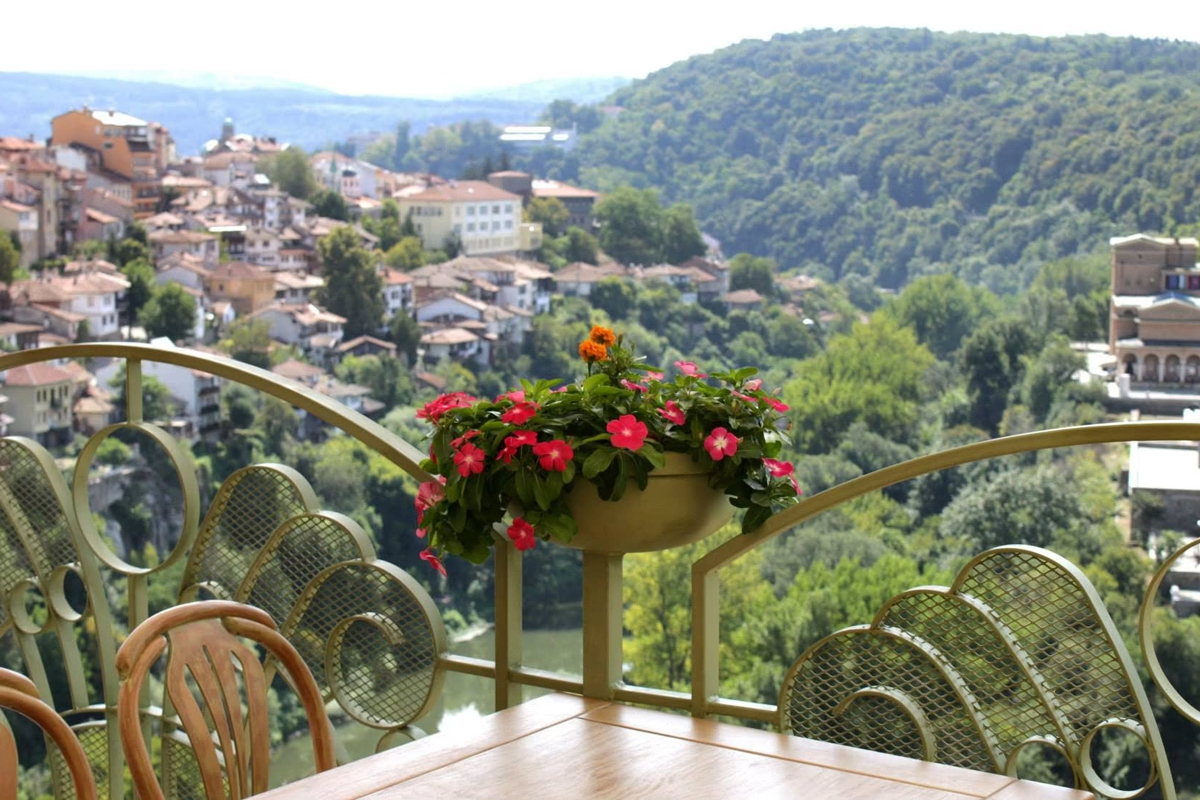
Food is another reason to spend some time in the city. Veliko Tarnovo has traditional Bulgarian mehanas, restaurants with panoramic terraces, small cafés and bakeries.
Here are a few places worth considering.
Shtastliveca
The restaurant is on Stefan Stambolov Street and is known for its panoramic windows and terrace overlooking the Yantra Valley. The menu features Bulgarian dishes and European cuisine.
Try the meat dishes, traditional baked casseroles and salads. A main course costs €8–14.
Hotel-Mehana Gurko
A traditional mehana on General Gurko Street. It is in the historic part of the city and is a good place to try Bulgarian cuisine.
The menu includes kavarma, stuffed cabbage or vine leaves (sarmi), grilled dishes and meat with vegetables. Main courses also cost €8–14.
Han Hadji Nikoli
The restaurant is housed in a historic former inn on Samovodska Charshia. It is a good choice for a leisurely lunch or dinner in traditional surroundings.
A main course costs €12–20 on average.
Stratilat
A small café on Samovodska Charshia, conveniently located for a break while exploring the Old Town. You can stop here for coffee, dessert or pastries.
Coffee and dessert cost €3–6.
Bulgarian Dishes to Try
During your trip, look out for these traditional dishes:
- Kavarma. A meat and vegetable stew, often cooked and served in a clay pot.
- Banitsa. A pastry made with thin layers of dough and sirene cheese. A good choice for breakfast or a quick snack.
- Shopska salad. A salad made with tomatoes, cucumbers, peppers and Bulgarian cheese.
- Tarator. A cold soup made with a fermented milk product, cucumber, garlic and dill.
- Kebapche. Grilled minced-meat sausages seasoned with spices.
If you want to save money, have breakfast at a local bakery. Banitsa costs €1–2, while a set lunch at an inexpensive restaurant costs €5.11–15.
Places to Visit Near Veliko Tarnovo
If you have an extra day, take the time to explore the area around the city. Historic villages, monasteries and natural attractions are all within a short drive.
Arbanasi
Arbanasi is a small historic village on a hill, 4 km from Veliko Tarnovo. In the past, it was home to wealthy merchants and members of the Bulgarian nobility.
The main reasons to visit are its traditional stone houses, old churches and peaceful atmosphere. The most interesting sights include Konstantsalieva House, the Church of the Nativity of Christ and the Church of the Holy Archangels Michael and Gabriel.
Allow 2–3 hours to explore the village.
Preobrazhenski Monastery
Preobrazhenski Monastery is about 7 km from Veliko Tarnovo, in a scenic spot at the foot of the mountains. It is one of the best-known monasteries in the region.
The monastery is notable for its architecture, history and wall paintings. Particular highlights are the works of Zahari Zograf, one of the best-known Bulgarian painters of the National Revival period.
It is worth visiting if you want to complement your history tour with an introduction to Bulgaria’s Orthodox heritage.
Nicopolis ad Istrum
Nicopolis ad Istrum is an archaeological site about 20 km from Veliko Tarnovo. It contains the remains of an ancient Roman city founded by Emperor Trajan in the early 2nd century.
Fragments of streets, public buildings, squares and other urban structures have survived on the site. It is an interesting destination for anyone interested in ancient history and archaeology.
When Is the Best Time to Visit Veliko Tarnovo?
The city welcomes visitors throughout the year, but your experience will depend to a large extent on the season.
Spring. April and May are good months for long walks. Temperatures are comfortable for exploring the fortress and historic neighbourhoods, and the hills around the city turn green.
Summer. June, July and August are suitable for trips with plenty of time outdoors. On hot days, it is best to visit Tsarevets in the morning or towards the evening.
Autumn. September and October are among the best months to visit. There are fewer tourists, and the softer light makes the panoramic views particularly beautiful.
Winter. Veliko Tarnovo is also worth visiting in the colder months. There are fewer tourists, and the historic streets take on a special atmosphere. However, daylight hours are shorter and museums have reduced opening hours.
Spring and autumn are good choices if you want to enjoy a quieter walk without large crowds.