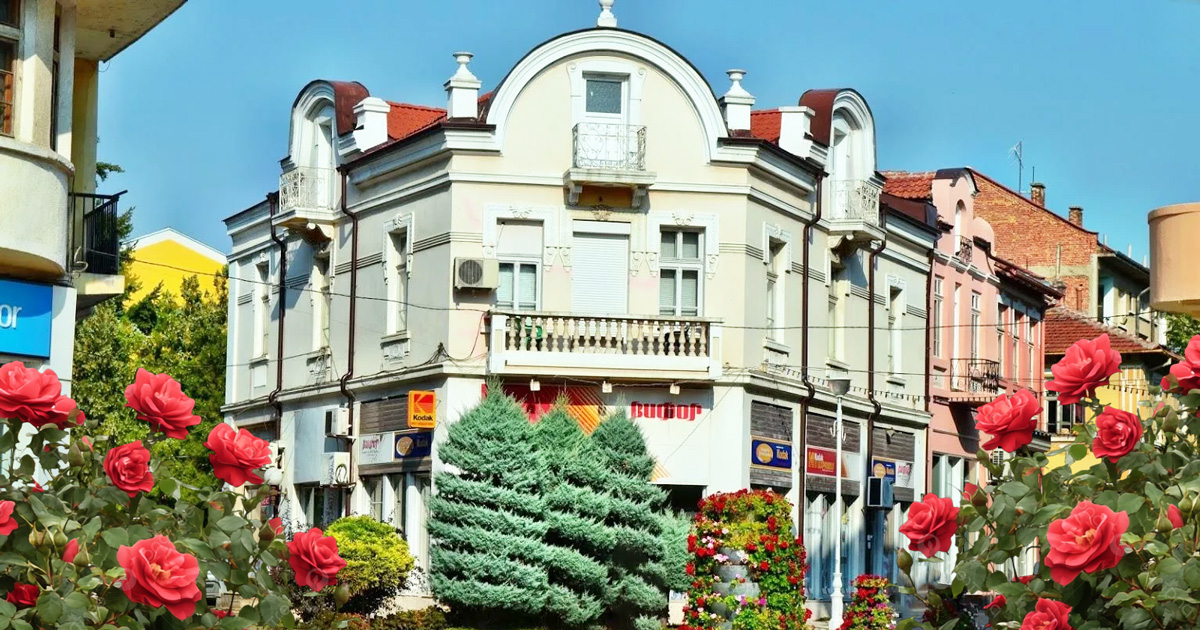



Kazanlak is one of the most interesting towns in central Bulgaria. Its name is known far beyond the country’s borders thanks to the rose oil produced in the region and the annual Rose Festival. However, the Rose Valley is about much more than blooming fields and festival celebrations. It is also home to ancient Thracian tombs, museums, traditional ethnographic complexes and small towns with a rich history.
A trip to Kazanlak is best combined with a journey from Sofia or Plovdiv. One day is enough to see the town’s main attractions, while two days are better if you want to explore the surrounding area and visit the rose fields. This guide covers the places worth including in your itinerary, how to get to the region, estimated costs and ready-made plans for an independent trip.
Contents
- Where the Rose Valley is and what makes Kazanlak famous
- When to visit the Rose Valley
- What to see in Kazanlak and the Rose Valley
- Map of Kazanlak and the Rose Valley
- How to get to Kazanlak
- Ready-made itineraries for Kazanlak and the Rose Valley
- Where to stay in Kazanlak
- How much a trip to Kazanlak and the Rose Valley costs
- Useful tips before your trip
- Frequently asked questions
Where the Rose Valley is and what makes Kazanlak famous
The Rose Valley lies in central Bulgaria, between the Stara Planina and Sredna Gora mountain ranges. Its main tourist centre is Kazanlak, a town in Stara Zagora Province that is often called the capital of Bulgaria’s oil-bearing rose industry. The region is known for growing Rosa damascenaThe Damask rose is a thorny perennial shrub, up to 1.5-2 metres tall, with pink or white flowers., producing rose oil and preserving traditions passed down through generations.
The name “Rose Valley” does not refer to a single settlement, but to a large area of rose fields, villages and cultural attractions. Besides Kazanlak, it includes Pavel Banya, Karlovo, Kalofer and several smaller villages. When planning a trip, it is important to consider the distances between attractions: not all rose fields, museums and ethnographic complexes are within the town itself.
The region is also known by another historical name: the Valley of the Thracian Kings. Numerous burial mounds and archaeological sites associated with Thracian rulers have been discovered around Kazanlak. The best-known site is the Thracian Tomb of Kazanlak, which is included on the UNESCO World Heritage List.
A trip here therefore brings together several different experiences: discovering Bulgaria’s rose-growing traditions, visiting historical museums, exploring archaeological sites and enjoying the natural landscapes of central Bulgaria.
When to visit the Rose Valley
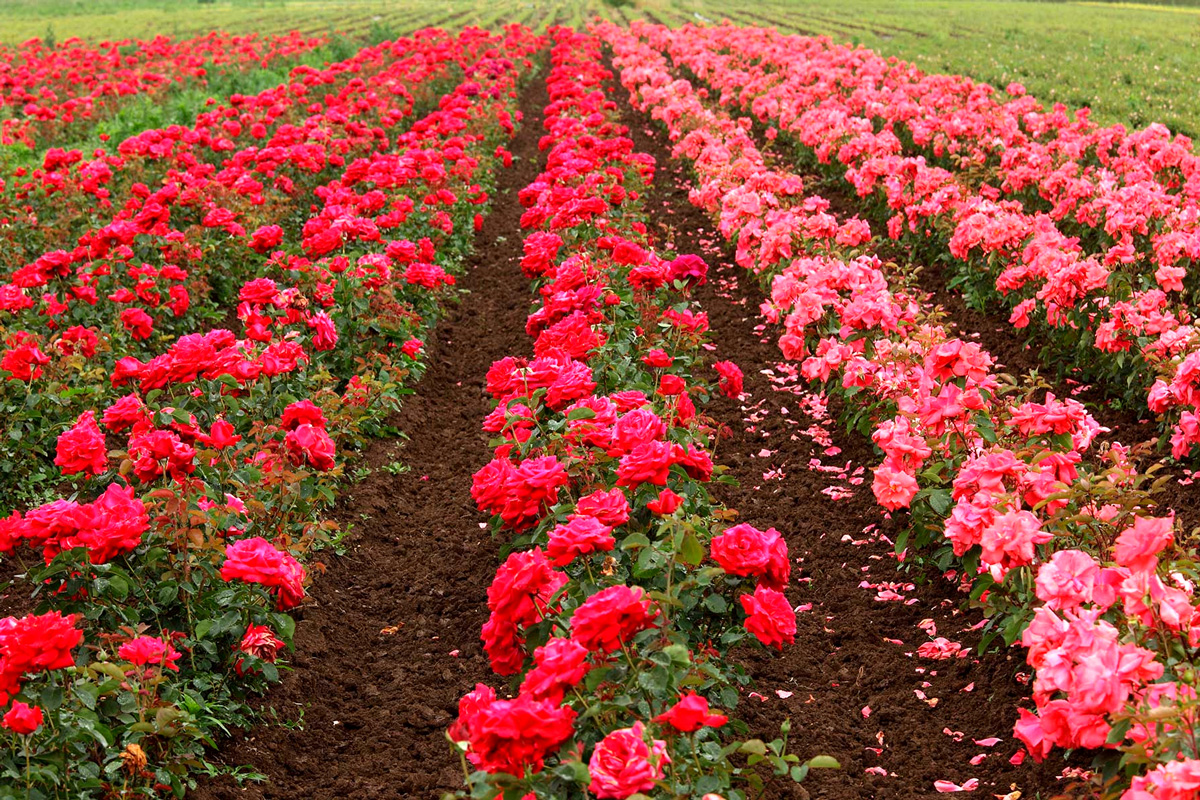
The main season for visiting the Rose Valley is from late May to early June. This is when the oil-bearing roses bloom, rose-petal harvesting and rose-oil distillation take place, and Kazanlak hosts its annual Rose Festival. It is the most interesting time to visit if you want to see the rose fields and learn about traditional rose-oil production.
Rose blooming and harvesting
The main flowering period for Rosa damascena usually falls in the last weeks of May and the first weeks of June. Petals are harvested early in the morning, when the flowers contain the highest concentration of essential oil. This is why traditional rose-picking ritualsRose picking is the traditional season for harvesting Damask rose petals in Bulgaria. often take place at sunrise, with tourist activities usually starting later in the morning.
If seeing the rose fields is your main reason for visiting, plan your trip for late May or early June. Exact dates depend on the weather and the conditions in each season. Outside the flowering period, the region still has museums, ethnographic complexes and attractions dedicated to rose-oil production.
The Rose Festival in Kazanlak
The Rose Festival is the region’s best-known annual event. It has been held since 1903, with the main celebrations traditionally taking place during the first week of June. The programme includes folk festivities, concerts, international cultural events, rose-picking demonstrations and the coronation of the Rose Queen.
The Rose Festival will take place in Kazanlak
The main festival events will be held on these dates. Some festival activities begin as early as May.
The most interesting events for independent travellers include:
- Rose picking – traditional harvesting of petals in the fields, with local residents and visitors taking part.
- Rose-oil distillation – demonstrations of how rose oil is produced using traditional distillation equipment.
- The coronation of the Rose Queen – one of the festival’s central ceremonies.
- The festive parade – a carnival-style event featuring local groups and visitors.
- Concerts, folk performances and themed exhibitions dedicated to the culture of the Rose Valley.
If your trip coincides with the festival week, book accommodation in Kazanlak or a nearby settlement well in advance. The town welcomes far more visitors than usual during this period, and the best places to stay tend to be booked first.
What to see in Kazanlak and the Rose Valley
Kazanlak’s main attractions are relatively close to one another, so you can visit some of them on foot. To reach the rose fields, Damascena Complex and archaeological sites outside the town, you will need a car or a transport plan arranged in advance.
The Rose Museum in Kazanlak
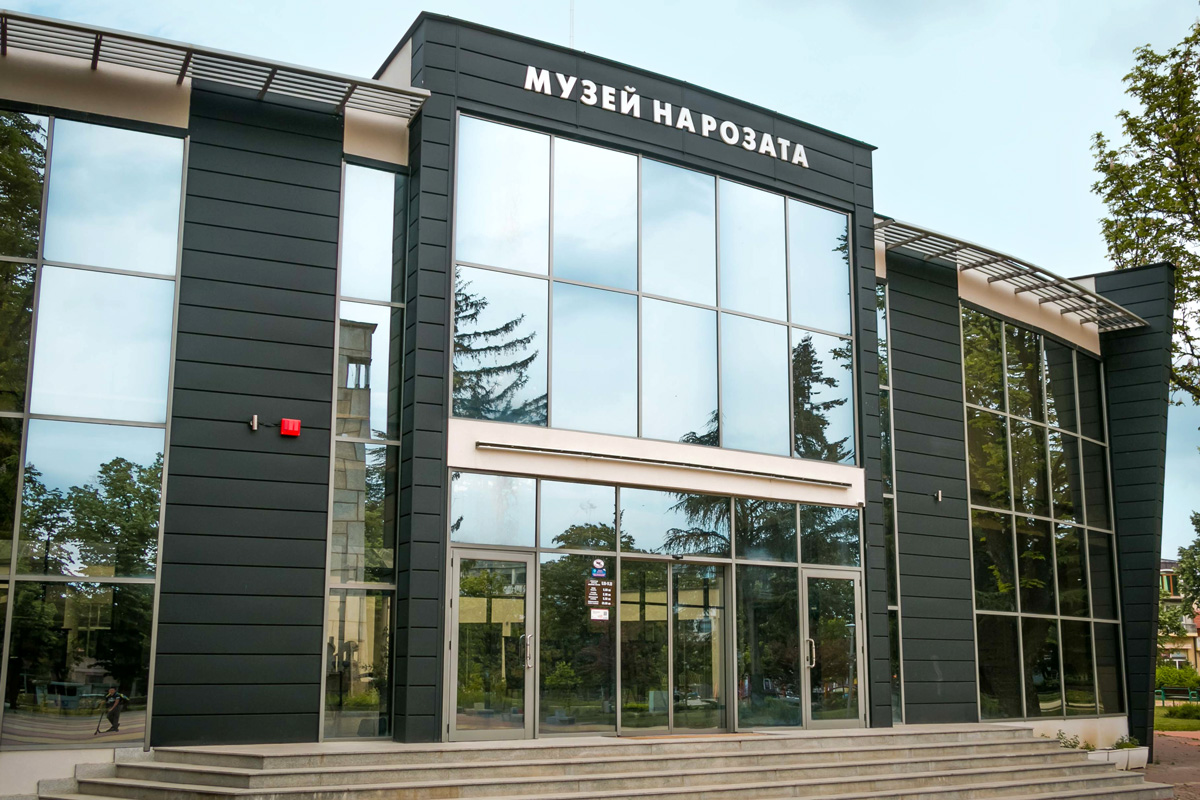
The Rose Museum is one of the town’s main attractions and a good starting point for learning about the history of Bulgarian rose growing. Its exhibitions cover the cultivation of oil-bearing roses, petal harvesting, and the production and trade of rose oil.
The displays include tools used in the rose fields, old vessels for storing rose oil and rose water, photographs and documents related to the development of local production. Highlights include a reconstructed early 20th-century laboratory and a traditional oil-storage vessel used in the middle of the last century.
The museum shop sells rose oil, cosmetics, scented products and souvenirs. It is a good place to learn how natural rose oil differs from more affordable products that simply have a rose fragrance.
Practical information:
- Address: 1 Voinishka Street, Rozarium Park.
- Opening hours: daily, 09:00-17:30.
- Adult admission: €3.
- Children under 7: free.
The museum is easy to combine with a walk through Rozarium Park. It is a pleasant place to spend some time after visiting the exhibition, especially during the rose-blooming season.
The Thracian Tomb in Kazanlak
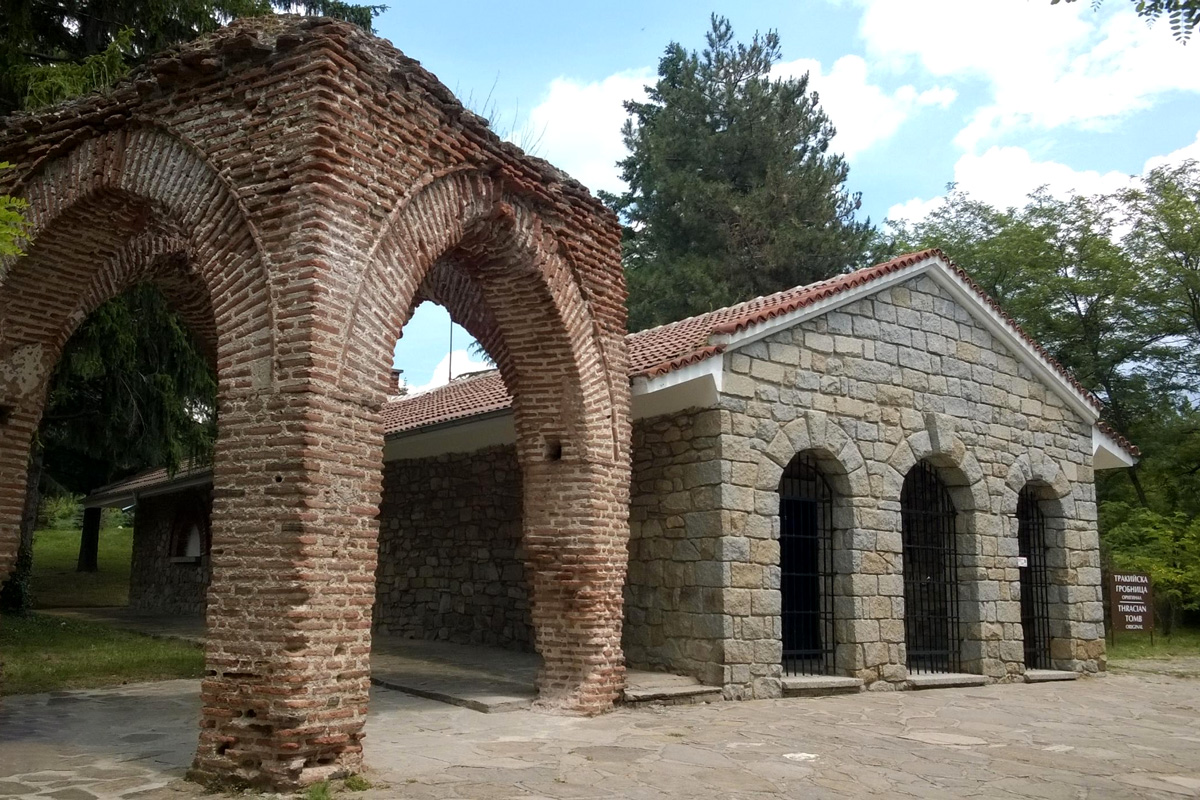
The Thracian Tomb of Kazanlak is one of Bulgaria’s best-known archaeological sites. It was discovered in 1944 on Tyulbeto Hill. Dating from the late 4th century BC, the tomb is famous for its wall paintings depicting funeral rituals and scenes from the life of the Thracian elite.
The monument was added to the UNESCO World Heritage List in 1979. Its greatest value lies in its well-preserved frescoes, considered an outstanding example of Hellenistic art.
There is one important detail to bear in mind when visiting: the original tomb is closed to the public to protect the ancient paintings from changes in temperature and humidity, as well as from the effects of visitors. Tourists can visit an exact 1:1 replica built next to the original monument. Its interior reproduces the architecture of the burial chamber and the wall paintings.
Practical information:
- Location: Tyulbeto Park, Kazanlak.
- The replica of the tomb is open to visitors.
- Adult admission: €3.
- Allow 30-45 minutes for your visit.
If you are interested in the wider history of Thracian heritage, explore the Valley of the Thracian Kings. It contains other burial complexes and mounds associated with the rulers of ancient Thrace.
Iskra Historical Museum
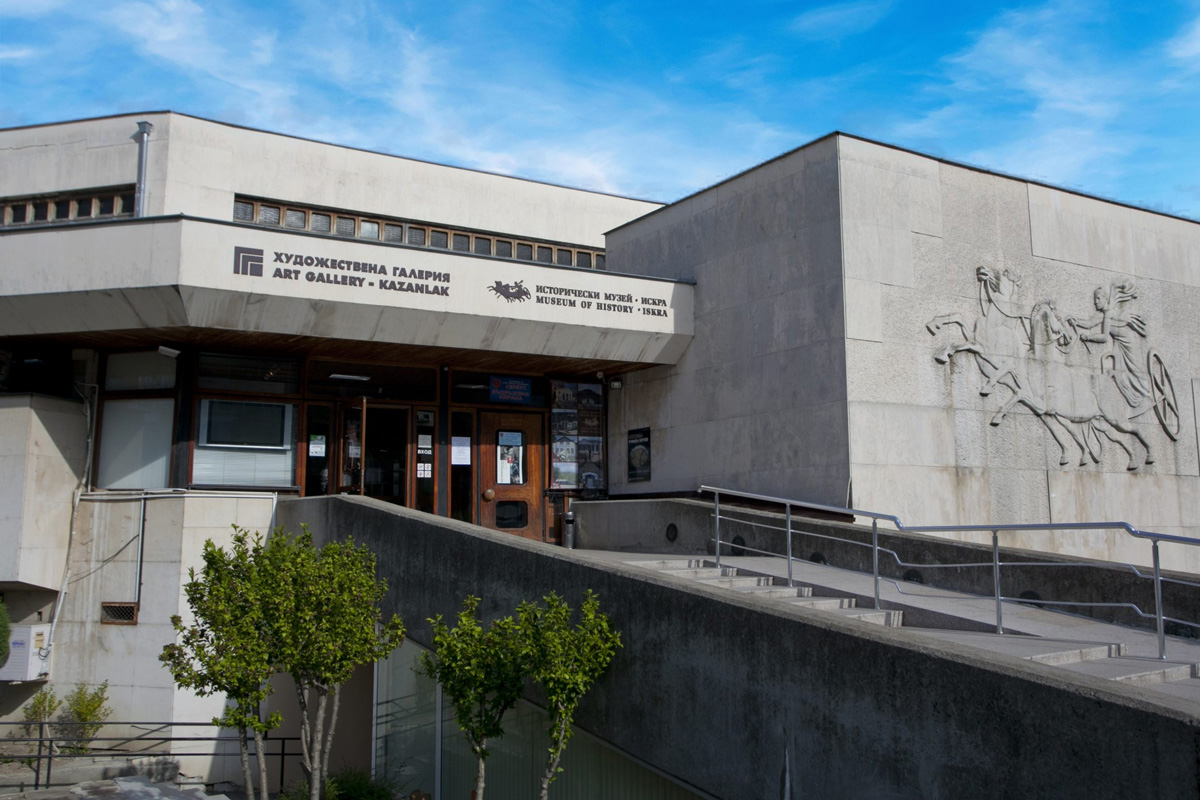
Founded in 1901, Iskra Historical Museum houses archaeological finds, everyday objects, documents and materials covering the history of Kazanlak and its surroundings. Its archaeological collection, particularly the exhibits related to Thracian culture, is especially important.
The museum treasury displays finds from the Valley of the Thracian Kings, including gold and silver objects, weapons, jewellery and parts of horse harnesses. After visiting the Thracian Tomb, the collection helps you better understand the burial customs and material culture of the ancient rulers.
Practical information:
- Address: 9 Sts Cyril and Methodius Street.
- Opening hours: daily, 09:00-17:30.
- Adult admission: €4.
If you plan to visit several museums and historical sites, check the terms of the combined tickets. They can be cheaper than buying individual admissions.
Kulata Ethnographic Complex
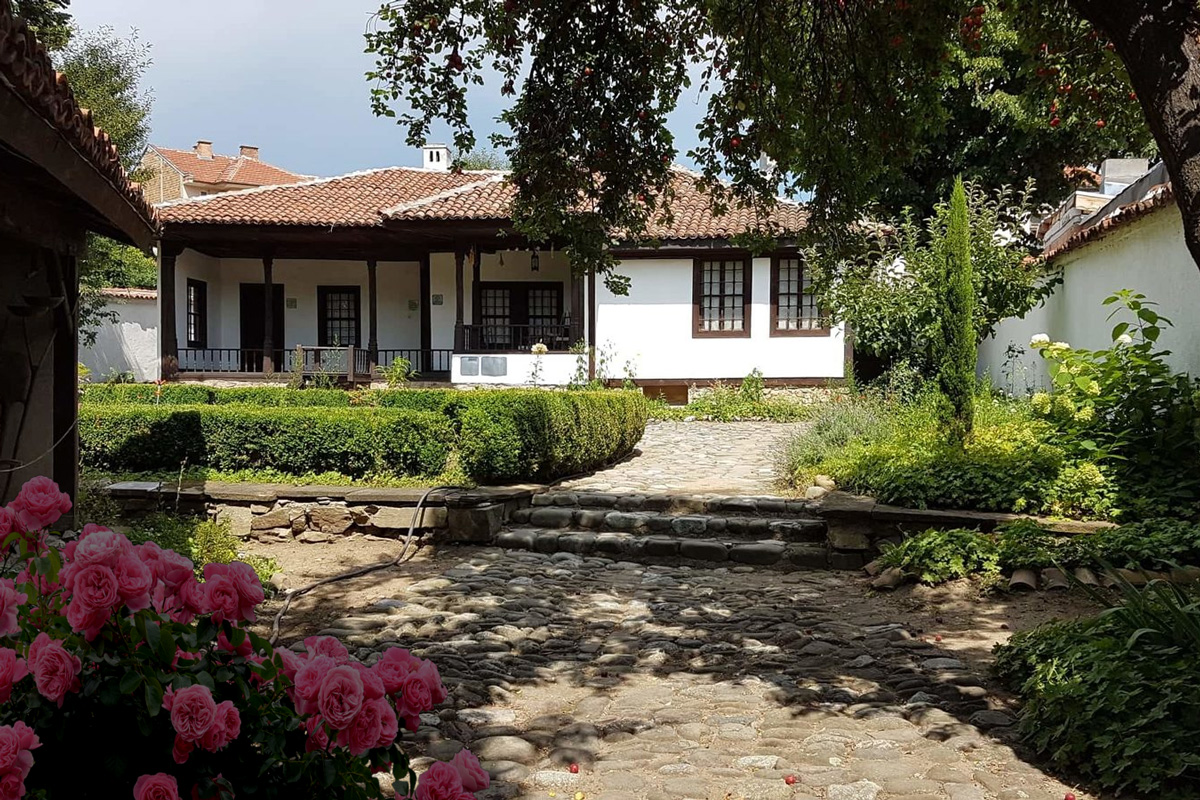
Kulata introduces visitors to the traditional way of life in Kazanlak and the history of local crafts. The complex brings together old houses, household objects and exhibitions dedicated to everyday life in the region during the 19th and early 20th centuries.
Part of the exhibition focuses on rose oil. Visitors can learn about traditional methods of distilling rose petals, see old equipment and discover products made from oil-bearing roses. Depending on the visit programme, you may also get to taste rose jam and rose liqueur.
Kulata is worth including in your itinerary if you are interested not only in the history of rose-oil production but also in the everyday culture of the Rose Valley.
Damascena Complex in Skobelevo
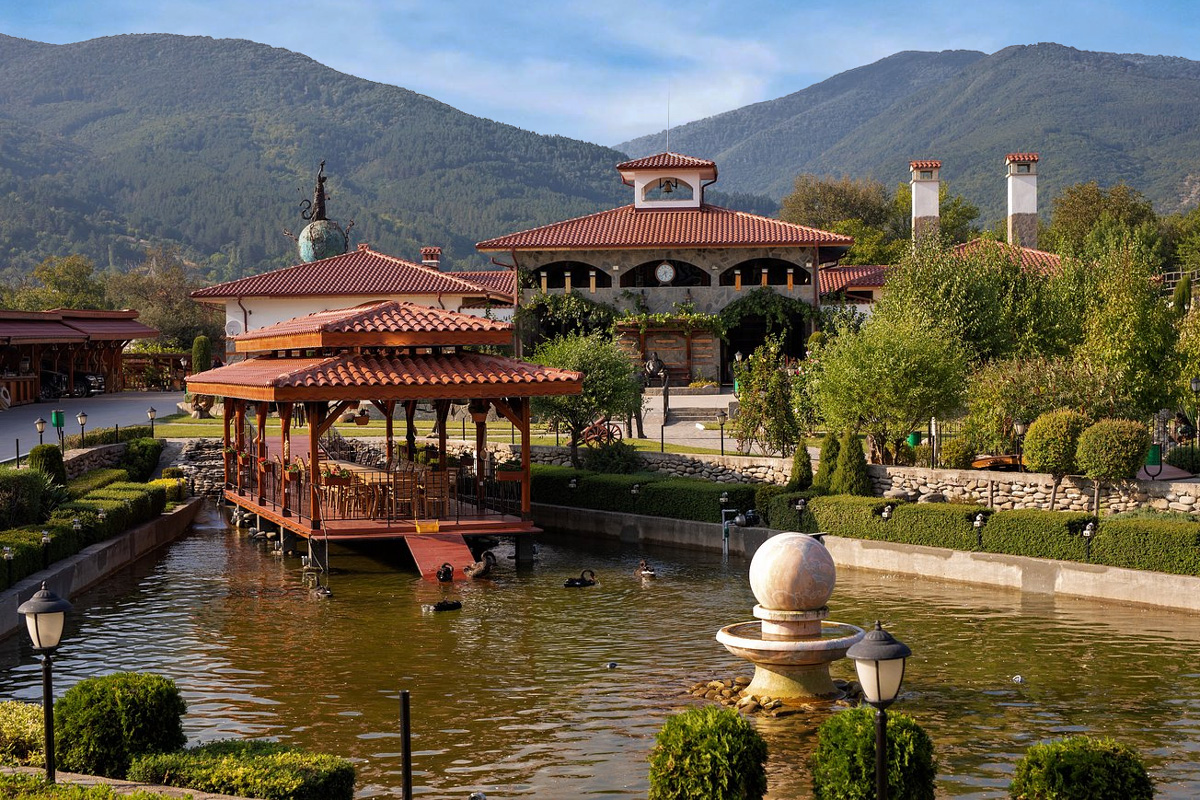
Damascena Ethnographic Complex is located in the village of Skobelevo, between Kazanlak and Pavel Banya. It is a private rose distillery and tourist complex dedicated to growing Rosa damascena and producing Bulgarian rose oil.
The grounds include an old distillation facility, a modern distillery, an ethnographic collection, rose gardens, a park and a restaurant. Visitors can learn about traditional essential-oil production methods, and during the season they may see a demonstration of the process.
Unlike the Rose Museum in town, Damascena lets visitors experience not only historical exhibits but also the setting in which rose growing takes place. You can easily spend several hours here, walking around the grounds, visiting the themed exhibitions and browsing the shop selling local products.
Practical information:
- Address: Skobelevo village, Pavel Banya Municipality.
- Winter adult admission: €8. Summer admission: €12.
- Children under 7 and visitors with disabilities: free.
- Opening hours: daily, 09:00-17:00.
The complex is outside Kazanlak, so travelling by car is the most convenient option. If you are combining it with the town’s attractions, allow a separate part of the day for the visit.
The Valley of the Thracian Kings
The Valley of the Thracian Kings is an archaeological area containing numerous burial mounds and tombs scattered around Kazanlak. Members of the Thracian elite were buried here, and archaeological discoveries have helped shed light on the history of the ancient Odrysian Kingdom.
One of the best-known monuments is the tomb of Seuthes III, discovered in the Golyama Kosmatka mound. Finds associated with this burial include a bronze statue head, gold jewellery and horse harness fittings. Some of these archaeological treasures are kept at Iskra Historical Museum.
Not all the mounds are located within Kazanlak itself, so you will need a car to visit several sites independently. If you only have one day, it is better to focus on the town’s museums and the replica of the Kazanlak Tomb, leaving the archaeological complexes outside town for a separate trip.
Map of Kazanlak and the Rose Valley
A map is particularly useful when travelling independently around the region: attractions are spread not only across central Kazanlak but also across neighbouring settlements. The map shows the places mentioned in this article.
How to get to Kazanlak
Kazanlak is located in central Bulgaria, and the easiest way to reach it is from Sofia or Plovdiv. There are bus and rail connections between the towns, while travelling by car gives you more flexibility when visiting rose fields and attractions outside Kazanlak.
Getting from Sofia to Kazanlak
The road distance from Sofia to Kazanlak is approximately 200 km. The drive takes around three hours, depending on the route and traffic conditions.
Buses depart from Serdika Bus Station in Sofia. According to the Union-Ivkoni timetable, there are departures at 12:00 and 17:00, with a journey time of around three hours. One-way tickets start at €11.
The train is another option for travelling from Sofia. The journey takes approximately three hours, but the timetable depends on the date, and some services may involve a transfer or a replacement bus for part of the route.
If you are planning a day trip, choose an early train or travel by car. The midday bus departures do not leave enough time to explore the region properly and return to Sofia the same evening.
Getting from Plovdiv to Kazanlak
The distance between Plovdiv and Kazanlak is approximately 100 km. Driving takes around 1.5 hours. This is the more convenient route for a day trip, especially if you plan to visit only the attractions within the town.
Buses depart from Plovdiv’s North Bus Station and Rodopi Bus Station. The timetable lists departures at 07:00 and 12:30, with a journey time of around two hours. The morning bus is the better choice for a day trip, as it gets you to Kazanlak in the first half of the day.
A car is more practical if you want to visit Damascena Complex and the rose fields. Public transport between individual settlements runs on a limited schedule, so avoid planning a packed itinerary without checking the return departure times.
Getting around Kazanlak and the surrounding area
You can visit the main attractions in central Kazanlak on foot. The Rose Museum, historical exhibitions and other town attractions are all within the urban area, so you do not need separate transport to see them.
For trips to Skobelevo, the rose fields and remote archaeological sites, it is better to use a car or taxi. Kazanlak has a municipal bus network, but routes to nearby villages and service frequency are not always convenient for visitors.
A single urban bus ticket costs €0.70 when bought from the conductor and €0.50 when purchased from a ticket machine or through a mobile app. Fares on some suburban routes depend on the distance travelled.
Ready-made itineraries for Kazanlak and the Rose Valley
The ideal length of your trip depends on what you want to see. One day is enough to explore Kazanlak, but the rose fields, Damascena Complex and archaeological sites outside town require more time. Below are some basic plans you can use for an independent trip.
One-day itinerary from Sofia
A day trip from Sofia is suitable for travellers who want to see Kazanlak’s main attractions without staying overnight. The best options are travelling by car or taking an early train. If you go by bus, take the arrival time and return services into account.
Two-day itinerary from Sofia
Two days offer a more relaxed way to explore the region. This itinerary gives you enough time to visit the museums without rushing, see the rose fields and make a trip to Damascena Complex. Staying overnight in Kazanlak is the most convenient option, as it saves you from travelling back and forth from Sofia each day.
One-day itinerary from Plovdiv
Plovdiv is closer to Kazanlak, making a day trip more convenient than travelling from Sofia. If you have a car, you can combine the town’s museums with a visit to Damascena Complex or a rose field.
When to allow three days
Three days are useful if you want to explore the Rose Valley and the Valley of the Thracian Kings in greater depth rather than limiting your visit to Kazanlak. You can then add Shipka, Karlovo, Pavel Banya and several archaeological sites outside the town. A car will make getting around much easier on this type of itinerary.
Where to stay in Kazanlak
If you are only visiting for a few hours, there is no need to stay overnight in Kazanlak. However, if you plan to visit the rose fields, attend festival events and explore attractions outside the town, it is better to stay for one or two nights.
For an independent trip, choose accommodation in central Kazanlak or near the bus and train stations. This makes it easier to reach the town’s museums, cafés and public transport stops. If you are travelling by car, look for hotels with parking.
Demand for accommodation rises noticeably during the Rose Festival. Book well in advance for festival week, especially if you want to stay in the town centre and walk to the main event venues.
How much a trip to Kazanlak and the Rose Valley costs
The cost of your trip depends on your departure city, transport and the number of attractions you plan to visit. The most affordable option is to explore Kazanlak on foot and visit one or two museums. Adding Damascena, the rose fields and an overnight stay will increase your expenses.
Admission fees and transport
Iskra Museum offers combined tickets covering several attractions. If you plan to visit more than one exhibition, a combined ticket may be cheaper than paying for each admission separately. Children under 7 can visit the museum sites free of charge.
Admission to Damascena varies depending on the season. The ticket includes access to the complex grounds and exhibitions.
Attraction or service |
Price |
|---|---|
Rose Museum |
€3 |
Thracian Tomb |
€3 |
Iskra Historical Museum |
€4 |
Damascena Complex |
€8-12 |
Urban bus |
€0.50-0.70 |
Bus from Sofia to Kazanlak |
from €11 |
Useful tips before your trip
- Plan your trip for late May or early June. This is the most interesting time to see the rose fields and experience the region’s festival traditions.
- Head to the rose fields in the morning. Petal harvesting usually takes place early, so a visit later in the day may not let you see the traditional rose-picking ritual.
- Do not confuse the original tomb with the replica. Visitors can enter the exact replica of the Thracian Tomb, while the original is protected from the effects of tourism.
- A car is more convenient for exploring the surrounding area. It makes it easier to combine Kazanlak, Skobelevo, the rose fields and remote archaeological sites.
- Allow extra time if you are visiting during the festival. Roads, parking areas and hotels are busier during the celebrations.
- Compare the combined museum tickets. If you are visiting several Iskra sites, they can help reduce your expenses.